ABC Dumplings Journal
Allergen-Aware Gluten-Free Dumpling Night: A Practical Hosting Guide
Plan an allergen-aware gluten-free dumpling night with smart prep zones, safe frozen-food handling, sauce choices and ABC Dumplings links.
This guide is part of the ABC Dumplings journal. You can also shop ABC Dumplings flavors or vegetarian bok choy, tofu and mushroom dumplings while reading.
Why allergen-aware hosting belongs at the dumpling table
Dumpling night feels relaxed when everyone can reach for the platter without needing to negotiate every bite. That is the whole point of planning an allergen-aware gluten-free dumpling night before guests arrive. The goal is not to turn dinner into a medical checklist or make promises a host cannot verify. The goal is to create a warm table where gluten-free shoppers, vegetarian guests, sesame-sensitive friends, children and curious eaters can see that the host has thought through the obvious pressure points. Dumplings are especially good for this kind of meal because they are portioned, cook quickly and pair with simple sides. They can also create confusion if wrappers, sauces, fillings and cooking tools are mixed casually. ABC Dumplings already gives the meal a clear anchor with gluten-free wrappers and familiar flavor choices. From there, the host's job is practical: read labels, ask direct questions, keep flavors separated when needed and serve the food hot enough to be safe and satisfying.
Start with labels, then ask people directly
A front-of-package phrase is useful, but it is not the whole conversation. The FDA explains that foods labeled gluten-free in the United States must meet specific requirements, including a gluten limit of less than 20 parts per million when unavoidable gluten is present; hosts can read the agency's consumer explanation at FDA gluten-free labeling guidance. That helps when buying packaged dumplings, tamari or side dishes, but it does not replace asking guests what they personally avoid. One person may avoid wheat for celiac disease. Another may avoid soy, sesame, pork, shellfish or a specific sauce. A vegetarian guest may be comfortable with dairy or egg but not chicken broth. A simple message before dinner is enough: tell me any ingredients you avoid, and I will keep your plate separate. That sentence lowers anxiety. It also gives the host permission to say when something cannot be guaranteed instead of improvising at the table.
Map the Big Nine before choosing sauces
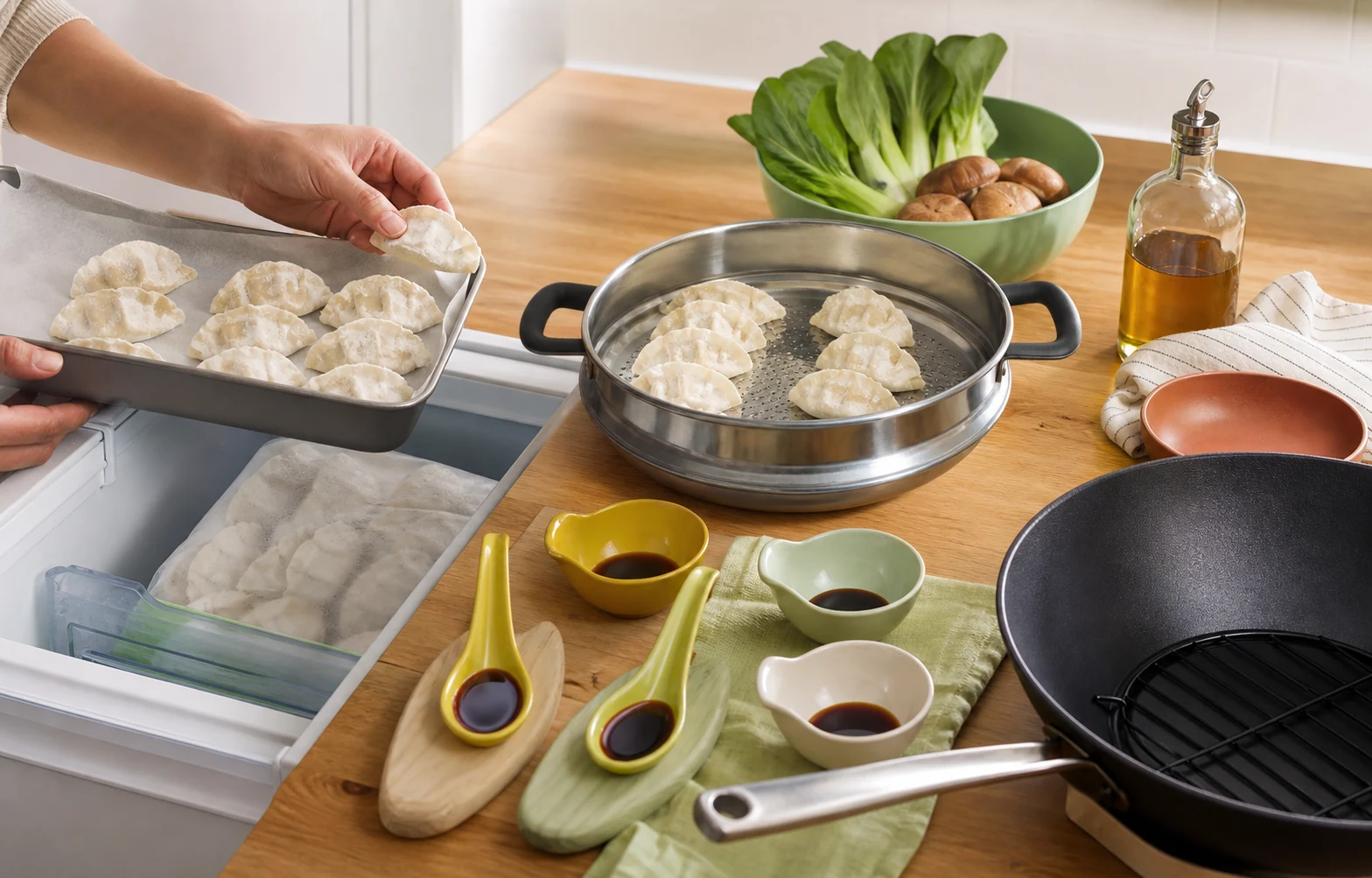
The easiest place to lose control of an allergen-aware menu is not always the dumpling. It is the sauce tray. Soy sauce may contain wheat unless it is a gluten-free tamari. Chili crisp can contain sesame, soybean oil, peanuts, tree nuts or wheat-based ingredients depending on the brand. Store-bought dressings and marinades can hide fish, shellfish, sesame or soy. FDA and USDA food-safety materials identify the major U.S. food allergens as milk, eggs, fish, Crustacean shellfish, tree nuts, peanuts, wheat, soybeans and sesame; the FDA's sesame update is a useful reference at Sesame Is the Ninth Major Food Allergen. For a dumpling night, make one mild gluten-free tamari-style sauce, one vinegar-ginger sauce and one optional spicy sauce. Keep the sesame oil and chili crisp on the side if you are not sure. Separate spoons matter because a beautiful sauce bar can become confusing once everyone starts dipping.
Practical note
For best results, cook only the amount you plan to eat, give each dumpling space and serve while the wrapper is hot. Small technique choices have a larger effect with gluten-free wrappers because the starch blend keeps changing as it cools.
Choose the right ABC Dumplings flavor for the room
A mixed table benefits from clear choices. The vegetarian bok choy, tofu and mushroom dumplings are the natural first plate when you have guests who avoid meat, although hosts should still check packaging for current ingredients and ask whether honey, soy or sesame are concerns. Organic chicken and chive feels classic, juicy and easy to pair with broth or greens. Organic pork and chive brings a deeper comfort-food note for guests who eat pork. If you are serving more than one flavor, do not rely on memory once the dumplings leave the pan. Use separate plates, separate serving tongs and a consistent left-to-right order. Place vegetarian dumplings on a different platter before meat dumplings hit the table. If one guest has a serious allergy, prepare that person's serving first with clean tools and keep it apart from shared serving traffic.
Set up a freezer-to-table flow
Frozen food rewards sequence. Pulling dumplings from the freezer too early can make wrappers sticky, which is bad for texture and harder for careful separation. The USDA notes in its Freezing and Food Safety guidance that freezing keeps food safe by slowing the movement of microorganisms and enzymes, while FoodSafety.gov explains that foods held continuously at 0 F or below remain safe indefinitely even though quality can change. For a home dumpling night, keep the bag frozen until the steamer, pan or pot is ready. Take out only what you need. Return the rest to the freezer quickly. Put cooked dumplings on a clean platter, not the tray that held frozen pieces. This simple flow protects quality, reduces confusion and keeps the host from juggling half-thawed food while guests are already waiting.
Practical note
For best results, cook only the amount you plan to eat, give each dumpling space and serve while the wrapper is hot. Small technique choices have a larger effect with gluten-free wrappers because the starch blend keeps changing as it cools.
Cook hot and verify the center
Warm is not the same as done. ABC Dumplings product pages already point cooks toward a 165 F center for meat fillings, and that aligns with FoodSafety.gov's safe minimum internal temperature chart for poultry and mixed dishes that require 165 F. A digital food thermometer is the cleanest way to check when cooking for guests, especially if dumplings are larger, crowded or moved from freezer to pan at different times. For pan-frying, let the bottoms set, add water, cover to steam through, then uncover and crisp. For steaming, give each dumpling room so wrappers do not merge. For boiling, stir gently and avoid tearing the skins. If you are cooking vegetarian and meat dumplings in the same session, cook the vegetarian batch first or use separate equipment if any guest needs that extra separation. Serve hot, then cook another batch rather than holding too many dumplings under a tight lid.
A practical hosting checklist
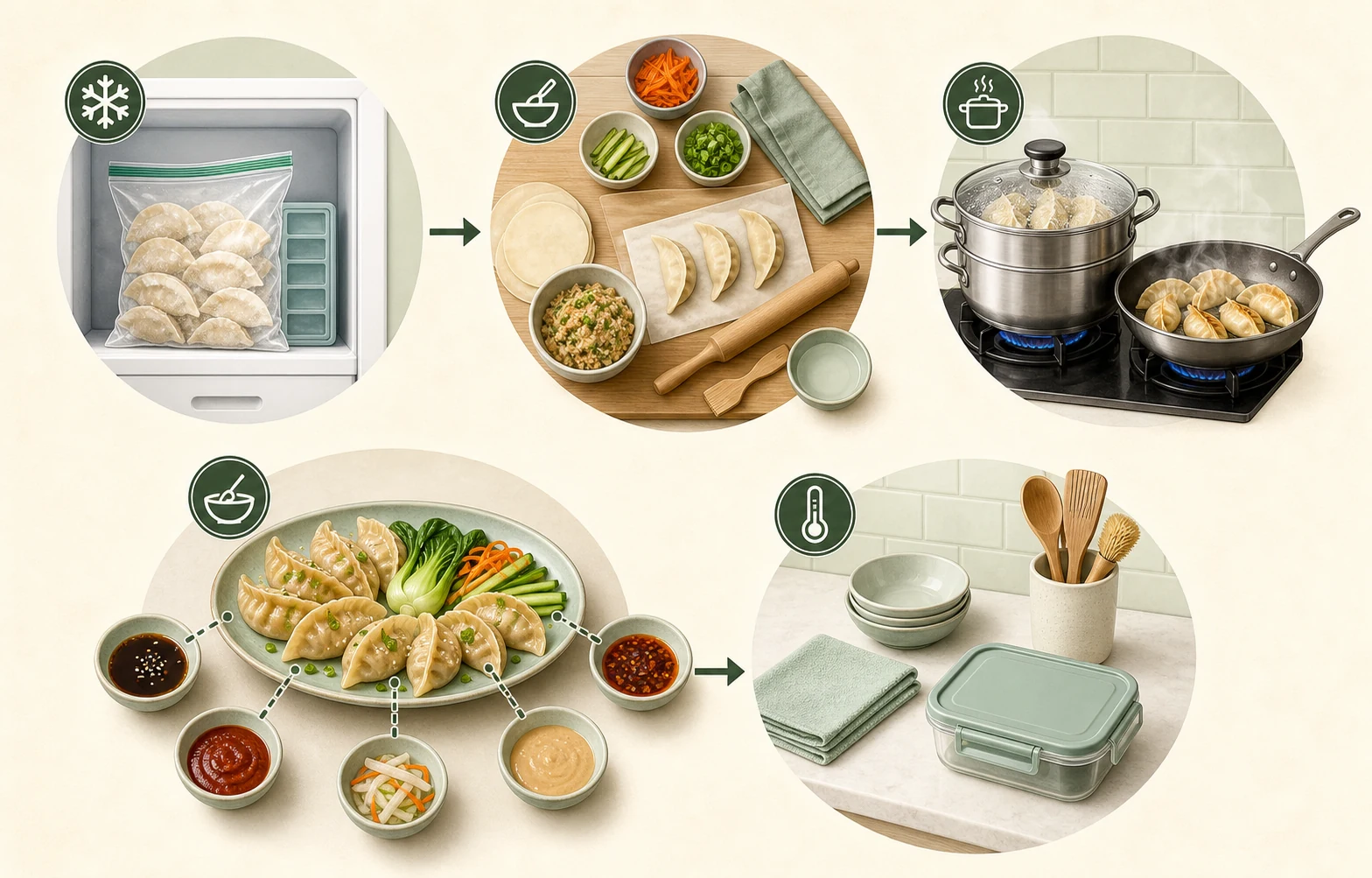
Use this checklist as a calm hosting rhythm, not as a promise that the meal is suitable for every medical need.
- Ask guests about allergies, gluten-free needs, vegetarian preferences and pork or sesame concerns before shopping.
- Read labels on dumplings, tamari, chili crisp, vinegar, broth, packaged sides and garnishes.
- Choose one primary dumpling flavor for the group, then add a second flavor only if you can keep serving tools clear.
- Keep frozen dumplings frozen until the cooking setup is ready.
- Use separate plates, spoons and tongs for sauces and flavors that need separation.
- Cook meat dumplings to a verified 165 F center and serve while hot.
- Tell guests what each platter contains, and do not guess when you are unsure.
Build a low-risk sauce and side-dish plan
The best allergen-aware menus are edited. Instead of offering six sauces and five sides, choose fewer things you can explain. A basic gluten-free tamari, rice vinegar and ginger dip covers most dumpling flavors. A cucumber salad can be dressed separately so sesame oil or chili can stay optional. Bok choy with garlic, plain rice, quick pickles and a clear broth make the table feel complete without forcing a complicated ingredient web. If you want a creamy or peanut-style sauce, place it far from the main dumpling platter and give it a dedicated spoon. If you want chili crisp, check the label and treat it as an add-on, not the house sauce. This approach still feels generous because dumplings carry the warmth of the meal. The sides are there to add freshness, color and pacing rather than to prove how many dishes the host can manage.
Use clear language without making claims
Hosts should be precise and humble. It is fine to say, this sauce is made with gluten-free tamari according to the bottle I bought. It is not wise to say, this whole kitchen is guaranteed allergen-free, unless that is actually true. The same posture belongs on a food brand's blog. ABC Dumplings can talk about gluten-free wrappers and clean ingredients while still reminding shoppers to review current packaging and decide based on their own needs. A frozen dumpling meal can be thoughtful without pretending to be medical advice. If a guest has celiac disease, severe allergies or strict religious dietary requirements, let that guest define what level of separation is necessary. Some people are comfortable with label reading and separate spoons. Others need dedicated pans, unopened packages or may prefer to bring their own food. Respecting that difference is part of hospitality.
Make the table feel premium, not anxious
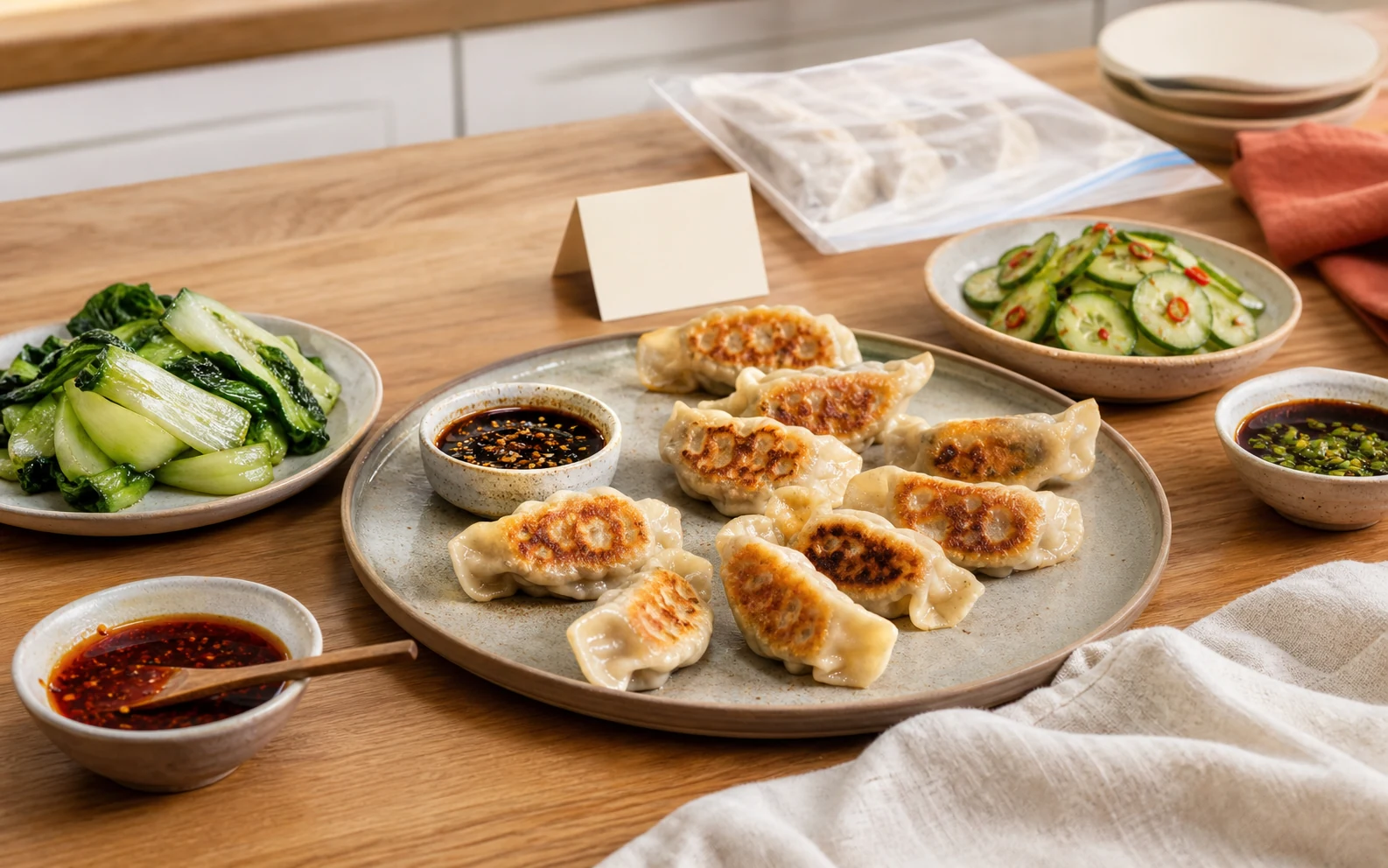
Allergen-aware hosting can still look beautiful. Use small ceramic bowls for sauces, a wide platter for dumplings and one calm explanation before people eat. Keep the label conversation away from the moment of hunger by handling it earlier in the day. Serve the first batch hot and modest, then cook more once everyone settles. The table should feel like dinner, not a compliance meeting. This is where ABC Dumplings fits the tone well: the food is practical enough for a weeknight, but it carries family memory, clean ingredient cues and a freezer-ready convenience that lets the host pay attention to guests. Pair dumplings with tea, sparkling water, sliced citrus or a simple broth. Use color from cucumbers, bok choy, carrots and scallions. A premium meal is not always elaborate. Often it is the meal where the host removed friction before anyone noticed it.
Retail and reseller considerations
Allergen-aware shoppers read faster than most brands expect. In the freezer aisle, they look for the dietary signal, the ingredient panel, the cooking method and the flavor cue in a few seconds. Retailers and resellers can help by placing gluten-free dumplings where shoppers can compare them easily and by keeping product pages, case-pack information and handling notes current. If a store has customers asking for cleaner Asian freezer options, the become a reseller page is the right next step. If a shopper wants ABC Dumplings at a local market, the suggest a store page turns that demand into a useful lead. The business case is straightforward: allergen-aware and gluten-free shoppers are often loyal when they find a product that tastes like comfort food rather than compromise.
Final takeaway
An allergen-aware gluten-free dumpling night succeeds when the host keeps the promise narrow and the hospitality broad. Read the label. Ask guests early. Keep sauces simple. Separate tools when needed. Cook from frozen with a clean sequence. Verify heat for meat fillings. Serve hot and let the table relax. That is enough to make dinner feel cared for without making it stiff. Dumplings have always been good at gathering people because they are small, shareable and generous. Modern frozen dumplings add convenience, but the heart of the meal is still attention. When that attention includes gluten-free needs, allergen questions and food-safety basics, the freezer becomes more than backup dinner. It becomes a practical way to host people well.