ABC Dumplings Journal
From Field to Freezer: The Agro Story Behind a Better Dumpling
Learn how vegetables, starches, proteins, cold-chain handling and cooking performance connect in a cleaner frozen dumpling.
This guide is part of the ABC Dumplings journal. You can also shop ABC Dumplings flavors or clean label dumpling guide while reading.
Why an agro story belongs on a dumpling site
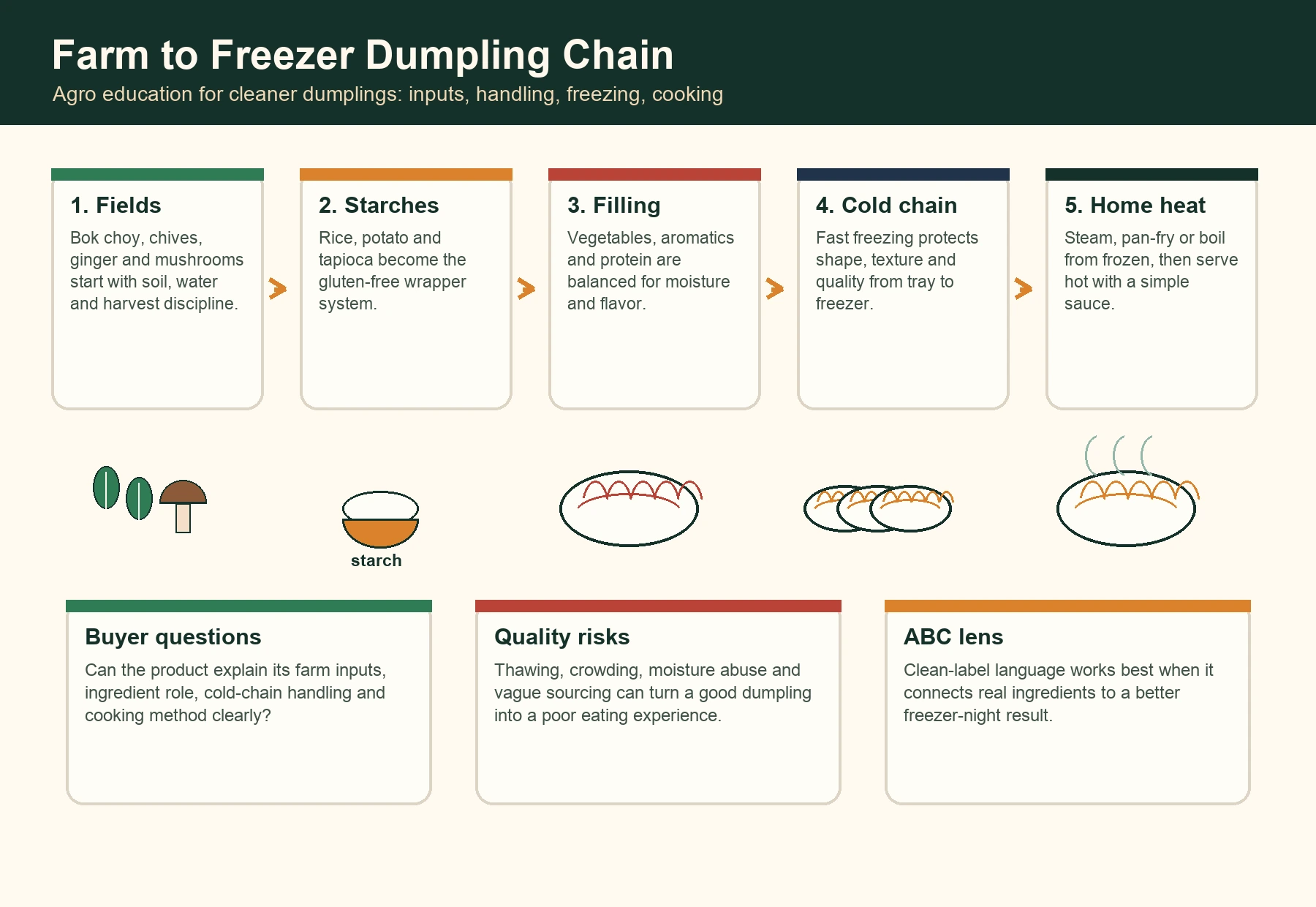
A dumpling looks small on the plate, but it carries a surprisingly long agricultural story. Bok choy, chives, mushrooms, ginger, garlic, rice flour, potato starch, tapioca starch, chicken, pork and tofu all arrive with their own growing, handling and quality questions. A brand can talk about clean ingredients only when it can explain why those ingredients matter after freezing, cooking and serving. That is the educational value of a farm-to-freezer view. It helps shoppers see that a better dumpling is not created by a single premium claim. It is created by a chain of choices that begins in fields and ends when the wrapper stays tender, the filling tastes balanced and the meal reaches the table hot.
Start with fields, not slogans
Agriculture gives food brands their first proof point. Leafy greens need freshness and careful post-harvest handling. Mushrooms bring savory depth but also moisture that must be balanced. Ginger and garlic are small ingredients, yet they shape the aroma of the entire filling. Rice, potato and cassava-based tapioca starches become more than pantry words once they are asked to replace wheat in a wrapper. The FDA's Produce Safety Rule is a useful reminder that produce quality begins with growing, harvesting, packing and holding practices, not with marketing copy. A dumpling brand does not need to turn dinner into a farm audit, but it should respect that every vegetable carries field-level discipline before it reaches a filling bowl.
Organic is a regulated sourcing language
ABC Dumplings already uses organic chicken and organic pork language in its product story, so it is important to treat the word organic as a sourcing standard rather than a decoration. The USDA National Organic Program develops rules for organic production, handling, labeling and enforcement; shoppers can read the agency's overview at USDA Organic Regulations. For a dumpling buyer, the practical takeaway is simple: sourcing language should be specific enough to be checked. Organic meat does not automatically make a dumpling delicious, and it does not remove the need for good cooking. It does give the product a clearer foundation than vague meat claims when the rest of the recipe is also built with care.
Practical note
For best results, cook only the amount you plan to eat, give each dumpling space and serve while the wrapper is hot. Small technique choices have a larger effect with gluten-free wrappers because the starch blend keeps changing as it cools.
Wrapper crops are part of the supply chain too
Many shoppers think of agriculture as vegetables and meat, but a gluten-free dumpling also depends on starch agriculture. Rice flour gives body. Potato starch can soften the bite. Tapioca starch can add elasticity and translucence. Those ingredients come from crops, processing and milling decisions long before the wrapper touches filling. If the starch blend is weak, the dumpling can crack, gum up or fall apart. If it is too heavy, the wrapper can taste dull even when the filling is good. This is why a clean label conversation should not stop at whether an ingredient sounds familiar. The better question is what job that ingredient performs in the real cooking sequence.
Cold chain turns ingredients into freezer food
Fresh ingredients are only the beginning. Frozen food has to pass through mixing, forming, tray handling, freezing, storage, transport and home preparation without losing its promise. The USDA FSIS Freezing and Food Safety guidance explains that food kept constantly frozen at 0 F remains safe, while quality still depends on time and handling. That difference matters for dumplings. Safety is the floor. Quality is the reason someone buys the same bag again. A good dumpling needs a wrapper that can freeze without shattering, a filling that does not leak excess water and instructions that help the home cook avoid thawing and refreezing cycles.
Practical note
For best results, cook only the amount you plan to eat, give each dumpling space and serve while the wrapper is hot. Small technique choices have a larger effect with gluten-free wrappers because the starch blend keeps changing as it cools.
A supply chain should improve texture
Texture is the clearest place where sourcing and processing show up. Bok choy can bring freshness, but too much uncontrolled water can make the filling loose. Mushrooms bring umami, but they need the right chop and seasoning balance. Protein gives the bite structure, but it should not dominate the vegetables. Starches give the wrapper shape, but they need moisture and heat to behave. The best supply-chain story is therefore not a romantic list of farms. It is a practical explanation of how each input supports a finished texture: tender wrapper, juicy center, clean edges and a bottom that can crisp when pan-fried.
What clean label means in an agro context
Clean label should mean clarity, not minimalism at any cost. A dumpling may need konjac, rosemary extract, tamari, starches and oils because those ingredients do real work. The educational question is whether the work is understandable.
- Does the ingredient have a clear function in flavor, texture, safety or freshness?
- Does the sourcing language match a recognizable standard?
- Can the wrapper and filling survive freezer storage without becoming unpleasant?
- Do the cooking directions tell shoppers how to protect the intended texture?
- Does the brand avoid pretending that one claim solves every quality question?
Retail buyers read the chain quickly
A freezer buyer does not have time to read a long essay in the aisle. The supply-chain story has to become visible fast: gluten-free wrapper, organic protein where applicable, vegetable-forward flavor, clear cooking method and brand identity that feels credible. That is why packaging, product photography and blog education should support each other. The clean label dumpling guide explains the ingredient side; a farm-to-freezer article explains the movement side. Together, they help shoppers understand why the product belongs in a modern freezer rather than feeling like another anonymous dumpling bag.
Home cooks complete the chain
The last step in the supply chain happens in the kitchen. A customer can undo good sourcing by thawing dumplings on the counter, overcrowding the pan or serving them after they have sweated under a lid. That does not mean the customer failed. It means the product and website need to teach the method clearly. Keep dumplings frozen until cooking. Give them space. Use enough steam to heat the center. Let moisture evaporate before crisping. Serve promptly. These small instructions connect farm work to dinner results. Education makes the supply chain useful instead of invisible.
A better sauce strategy protects the ingredients
Sauce can either reveal the supply chain or bury it. If the filling uses chives, ginger, garlic, mushroom or broth, the sauce should not flatten everything into salt and heat. A simple tamari-ginger base, a little rice vinegar and optional chili on the side are enough for most dumplings. This is an agro point as much as a serving point: fresh ingredients deserve a finish that lets them remain legible. Heavy sauce can make a weak dumpling seem stronger for a moment, but it also prevents a good dumpling from showing what the filling actually contains.
How to judge a frozen dumpling like a food operator
Food operators look for repeatability. A dumpling that works once by accident is not enough. It should cook from frozen in a predictable window, stay intact, taste balanced across batches and photograph honestly on the plate. It should also be easy for staff, buyers or family members to explain. For ABC Dumplings, the strongest educational posture is to show how the product moves from ingredients to meal: crop inputs, starch system, filling balance, cold handling, cooking method and serving ideas. That chain gives resellers, shoppers and home cooks a shared language.
Agricultural water and harvest timing affect trust
Water is one of the least visible parts of a dumpling story, yet it touches produce before the shopper ever sees a bag. The FDA's pre-harvest agricultural water materials emphasize assessment and risk management for covered produce. A consumer article should not pretend to certify a farm from a distance, but it can explain why water, harvest timing and post-harvest handling matter. Greens that are harvested, cooled and handled well give the processor a better starting point. Ingredients that arrive stressed or inconsistent force the kitchen to compensate later. The farm-to-freezer chain is strongest when each step gives the next step less to fix.
Packaging carries the supply-chain promise
Packaging is not only a container. In a freezer aisle, it is the shopper's first supply-chain teacher. The front should make the flavor, wrapper promise and dietary signal clear. The back should help with cooking, ingredients and handling. Good packaging also protects the physical dumpling: corners, pleats and frozen surfaces can be damaged by rough movement. The food may be the hero, but the bag is the vehicle that gets the agricultural work to the freezer door. When packaging is clear and protective, it respects every ingredient that came before it.
How retailers can use the story
Retailers can turn the farm-to-freezer chain into a practical sales tool. Put gluten-free dumplings near complementary freezer items, but give them enough visual room to show the ingredient story. Use shelf tags or staff notes that point to cooking from frozen, clean ingredients and family-style serving. Encourage shoppers to start with one flavor and one simple sauce rather than positioning dumplings as a complicated specialty item. The more understandable the chain becomes, the easier the first purchase feels. Education should reduce friction, not make the shopper feel tested.
The takeaway
A farm-to-freezer dumpling story should make dinner feel more trustworthy, not more complicated. The reader does not need to become an agronomist to enjoy a plate of dumplings. They only need to understand that better frozen food depends on visible choices: produce handling, sourcing standards, wrapper starches, filling moisture, freezer discipline and home cooking. When those choices line up, convenience becomes a strength. The freezer stops being a place for compromise and becomes a place where good agricultural inputs can wait for the right night.