ABC Dumplings Journal
Freezer Burn and Gluten-Free Dumplings: A Quality Guide for Better Texture
Learn how freezer burn, ice crystals, storage habits and cooking choices affect gluten-free frozen dumpling texture, flavor and weeknight quality.
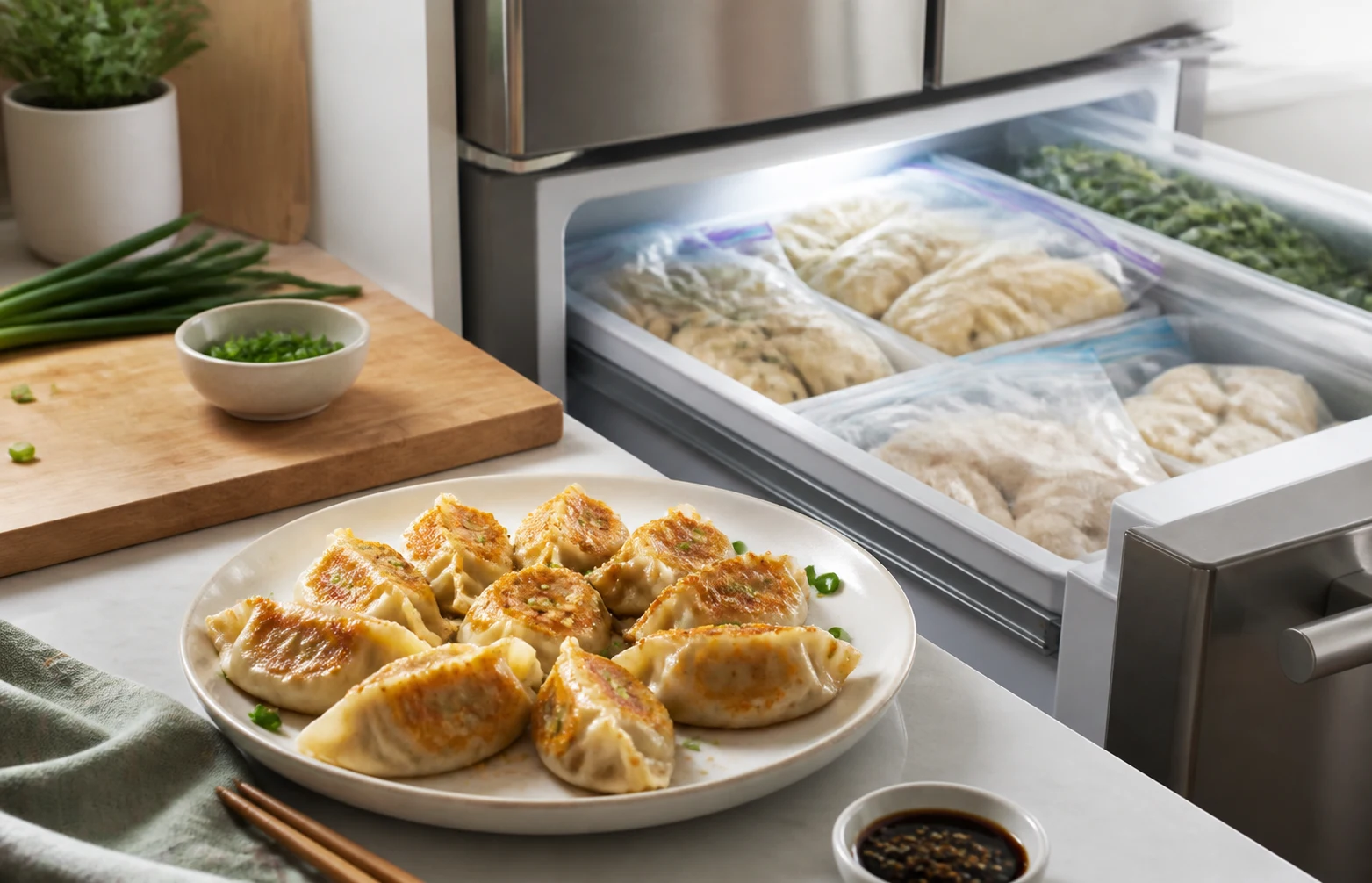
Freezer burn is one of those kitchen problems people notice before they can name it. The dumpling wrapper looks dry, a few pieces are frosty, the bag has been pushed around for weeks, and dinner suddenly feels less dependable. This guide explains how freezer burn, ice crystals and home storage habits affect gluten-free frozen dumplings, then turns that knowledge into practical shopping, storage and cooking choices. It is general food-quality and food-safety information, not medical, nutrition, legal or regulatory advice. For the meal itself, start with the ABC Dumplings shop, use the frozen gluten-free dumpling cooking guide for technique, and always follow current package directions.
Why freezer burn deserves a dumpling guide
Freezer burn can make good frozen food feel neglected. It happens quietly: a package is opened and not sealed well, a freezer runs dry and cold, a bag sits near the door, or a grocery trip leaves frozen items soft before they reach home. With dumplings, the issue is especially visible because the wrapper is thin and texture matters. A gluten-free wrapper has to hold filling, survive freezing, steam through, release from the pan and still feel tender at the table. If moisture leaves the surface or ice crystals build up aggressively, the wrapper can cook unevenly, crack at the edges or taste flat. This does not mean every frosty dumpling is unsafe, and it does not mean a careful cook should panic. It means freezer quality belongs in the same conversation as flavor and sauce. ABC Dumplings is designed as a premium frozen product, so the home freezer becomes part of the brand experience once the bag leaves the store.
Safety and quality are related but not identical
The most important distinction is safety versus quality. USDA FSIS explains in its Freezing and Food Safety guidance that food stored constantly at 0 F remains safe, while quality can suffer during longer storage. FoodSafety.gov makes the same practical point in its Cold Food Storage Chart: freezer timelines are quality guidelines, and food held continuously at 0 F or below can be kept indefinitely from a safety standpoint. For dumplings, that difference matters. A bag can be safe and still cook poorly because the wrapper is dried out, the filling has lost aroma or the pieces have stuck together after temperature swings. A premium freezer routine is not about fear. It is about protecting the bite people bought: tender wrapper, hot filling, crisp bottom if pan-fried and the familiar comfort of dumplings that do not feel like compromise.
What freezer burn looks like on dumplings
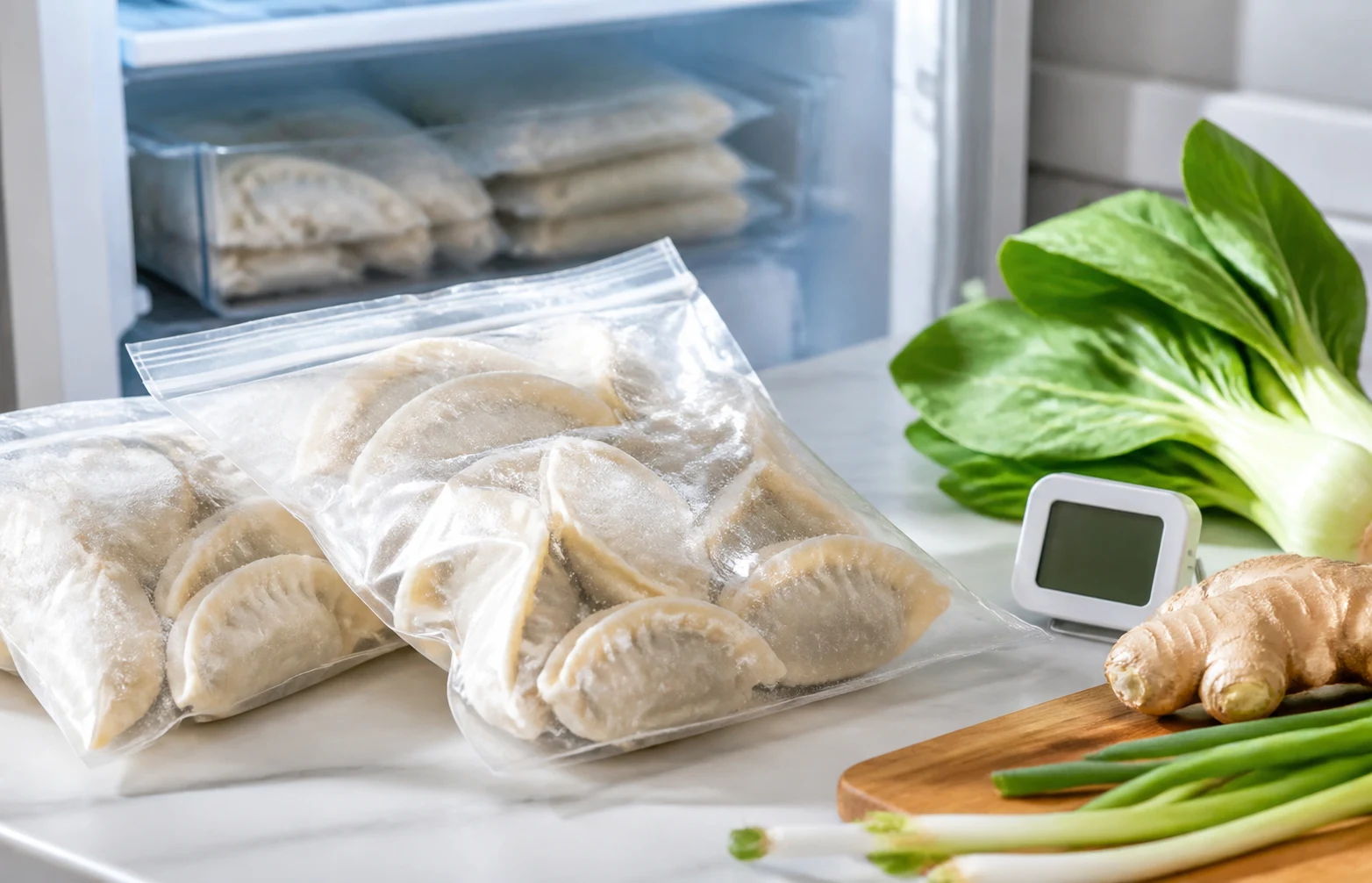
Freezer burn usually shows itself as dry, pale, leathery or icy patches on the food surface. On dumplings, look for white or gray dry spots, wrapper edges that seem brittle, heavy surface frost, excessive ice in the bag, torn packaging or pieces welded into a hard clump. A little loose frost inside a frozen-food bag is common and not automatically a sign of failure. The pattern matters. Light frost on a sealed bag that stayed frozen is different from a soft bag that refroze into one block. Dry wrapper edges are different from normal floury or starchy surface texture. Smell matters too: if an opened bag carries stale freezer odor, rancid notes or anything unusual, do not try to solve that with sauce. Quality issues can become dinner disappointments before they become safety issues. The practical rule is to inspect honestly before cooking, then decide whether the bag deserves a normal cook, a gentler method or the trash.
Why gluten-free wrappers are sensitive to freezer handling
A wheat wrapper and a gluten-free wrapper do not behave the same way. Wheat dough can rely on gluten for elasticity and structure. Gluten-free dumpling wrappers usually depend on a starch system, such as rice flour, potato starch, tapioca starch, water, oil and other structure-building ingredients. That system can cook beautifully, but it rewards good handling. When the surface dries, the wrapper may crack at the pleats. When the bag partially thaws, the dumplings may stick together and tear as they are separated. When a freezer door opens constantly, small temperature changes can encourage surface ice and texture drift. This is why freezer burn is not only a cosmetic issue for gluten-free dumplings. It can change the cooking path. A dumpling that should pan-steam cleanly might need more patience, more space, or a switch to steaming or broth. Better storage protects the wrapper before the skillet ever gets hot.
How ice crystals change texture
Ice crystals are part of frozen food, but size and movement matter. USDA FSIS notes that rapid freezing helps prevent large, disruptive ice crystals from forming and that slow freezing can create larger crystals that damage food cells during thawing. Home cooks are not running a factory freezer, but the principle still helps. Temperature swings can move moisture from one part of the product to another. Over time, the wrapper can dry where moisture leaves and become sticky or icy where moisture collects. With dumplings, that can mean a strange combination: brittle edges, frosty surfaces and filling that tastes less vivid. The answer is not to overthink the science. It is to reduce avoidable swings. Keep the bag sealed. Store it away from the freezer door when possible. Do not leave the bag open while deciding how many pieces to cook. Take what you need, press out extra air if the package allows, reseal and return the rest promptly.
The shopping trip is the first storage decision
Freezer quality starts before the bag reaches your kitchen. Choose frozen dumplings near the end of the grocery trip. Make sure the package feels solidly frozen, not soft at the corners. Avoid bags with broken seals, heavy ice clumps or obvious evidence that the product thawed and refroze. Put frozen foods together in the cart so they help keep each other cold. Use an insulated bag or cooler when the drive is long, the day is hot or there are errands after shopping. Once home, put dumplings away before unloading shelf-stable groceries. These steps sound basic because they are basic. They are also the difference between a bag that cooks like it should and a bag that starts dinner already stressed. If you cannot find ABC Dumplings near you, the find us page can help with availability, and the suggest a store page lets shoppers request a local freezer slot.
A freezer-quality checklist
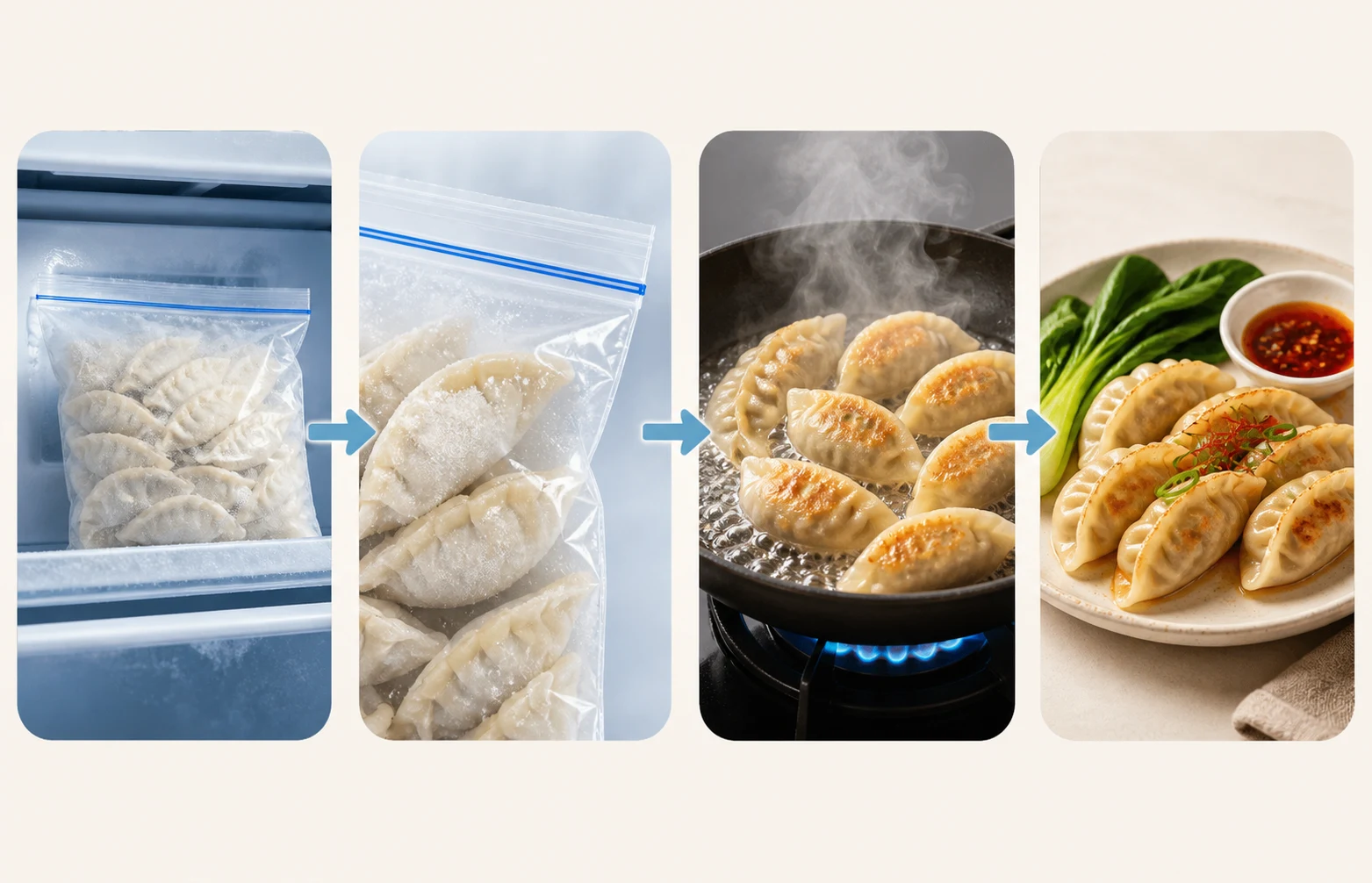
Use this checklist before buying, storing or cooking gluten-free frozen dumplings.
Before buying
- The package should be sealed, solidly frozen and free of major ice clumps.
- The dumplings should not feel like one refrozen block.
- The freezer case should look cold, organized and closed between shoppers.
- The product should fit your household's label needs, including gluten-free, allergen and flavor information.
At home
- Store dumplings at 0 F or below when possible.
- Keep opened bags sealed tightly and protected from air.
- Use older bags first, especially once opened.
- Keep vegetarian, chicken and pork flavors clear if household preferences matter.
- Cook from frozen unless the current package says otherwise.
What to do with an opened bag
An opened bag is where many freezer-quality problems begin. If the original closure is strong, reseal it carefully. If it is not, place the package inside a freezer-safe bag or container, label the flavor and open date, and press out extra air without crushing the dumplings. Do not pour loose dumplings into a bin where they can collect odors, ice and broken pieces. Keep the package upright or flat depending on freezer space, but avoid stacking heavy items on top. A gluten-free dumpling wrapper can be sturdy in cooking and still fragile under a bag of frozen fruit or a container of soup. If different flavors are open at once, keep them separate. That protects flavor identity, allergen clarity and hosting confidence. The freezer should make dinner easier to read at a glance, not turn every bag into a mystery.
When freezer burn is a quality issue, not a dinner emergency
Light freezer burn is often a quality issue. The dumplings may be drier, less aromatic or less pleasant, but that alone does not automatically tell you the food is unsafe if it has stayed continuously frozen and the package is intact. The decision changes when the temperature history is unclear, the bag is torn, the food smells off, the dumplings are soft, or there are signs of contamination. Do not taste questionable food to decide whether it is acceptable. When in doubt, discard it. That conservative posture is especially important when cooking for children, guests, older adults, pregnant people or anyone with a higher food-safety concern. For normal quality drift, adjust cooking expectations. A slightly dry dumpling may do better steamed, served in broth or cooked in a smaller pan-steam batch than aggressively crisped in a crowded skillet. Sauce can support the plate, but it should not hide poor storage.
Cook from frozen when texture matters
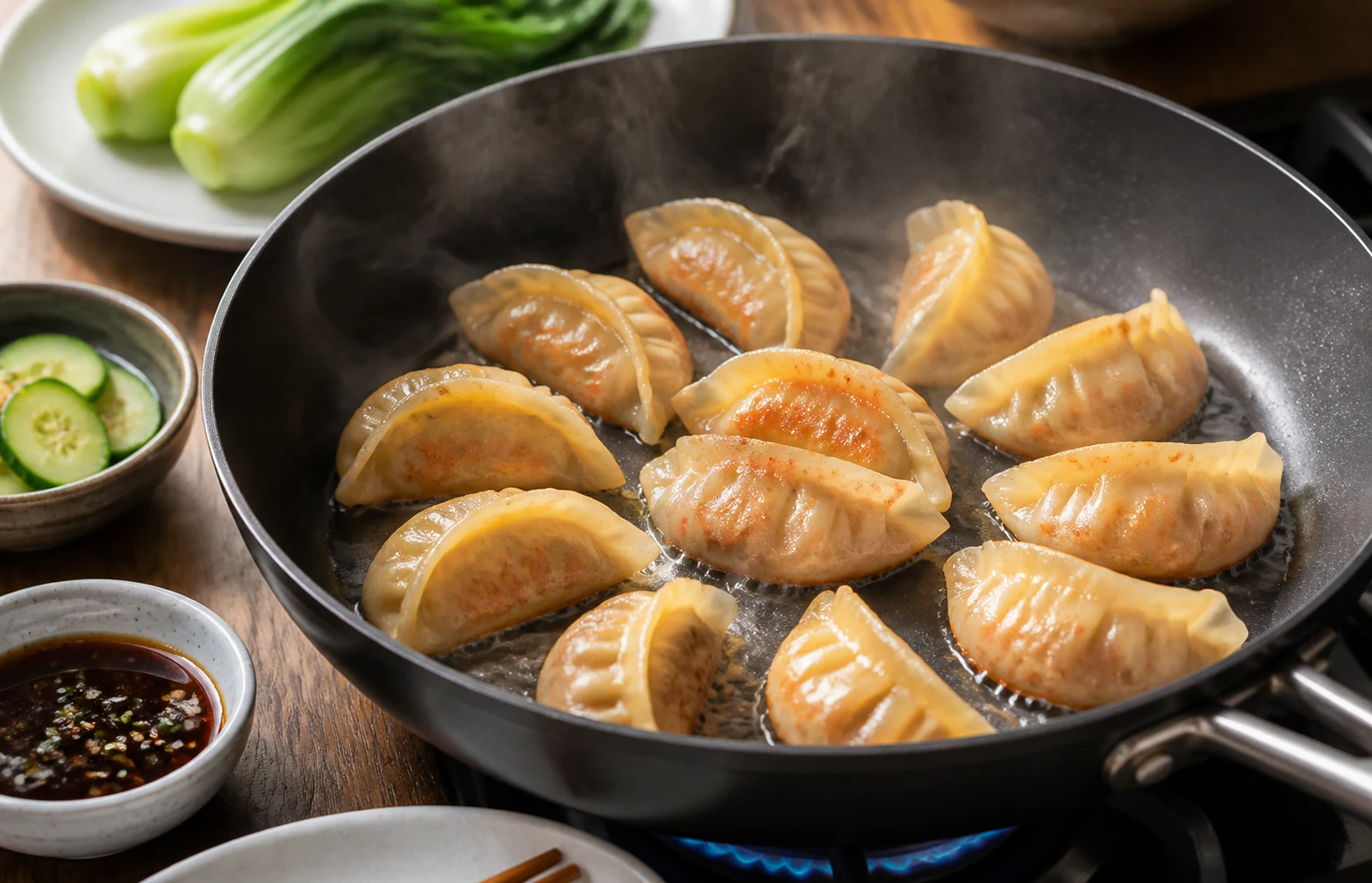
Most frozen dumplings are designed to cook from frozen, and gluten-free wrappers usually reward that instruction. Long counter thawing can make wrappers tacky, increase sticking and blur the heat path from surface to center. Set up the pan, steamer or pot first. Then open the bag, remove only the number of dumplings you need and return the rest to the freezer. For pan-steaming, use moderate heat, a light film of oil, enough spacing and a measured splash of water after the bottoms set. Cover to steam through, then uncover and let moisture evaporate so the base can crisp. For steaming, leave space between pieces and resist moving them too early. For boiling, keep the water active but not violent. The method should protect the wrapper, not punish it.
Use heat checks for meat dumplings
Quality habits do not replace food-safety habits. FoodSafety.gov's safe minimum internal temperature chart tells consumers to use a food thermometer and lists 165 F for poultry, leftovers and casseroles, with other meat categories carrying their own minimums. ABC Dumplings shoppers should follow current package directions and verify meat dumplings are hot at the center, especially when cooking from a very full pan, using a new appliance or serving guests. Do not rely only on wrapper color, steam or time. A crisp bottom can appear before the center is fully heated. Use clean tongs and a clean plate for cooked dumplings, not the tray or counter area that held frozen pieces. Vegetarian dumplings still need thorough cooking according to package directions, even though the specific risk questions differ from meat fillings.
Sauce can help texture, but it cannot fix neglect
A smart sauce can make a slightly dry dumpling more enjoyable. Ginger vinegar brings brightness. A gluten-free tamari-style dip can add savory depth when it fits the household. Broth can soften a wrapper that feels a little dry from storage. Cucumber, bok choy, scallions and quick pickles can make the plate feel fresh again. But sauce should support the dumpling, not cover a storage problem. If the bag smells stale, the wrapper is badly freezer burned, or the dumplings refroze into a hard mass after thawing, do not dress the problem with chili crisp and hope. For normal freezer dryness, use a gentler cooking method and a balanced plate. For questionable food, discard. Premium home cooking includes knowing when not to serve something.
Allergen-aware storage protects trust
Freezer burn is about quality, but freezer organization also affects allergen-aware hosting. FDA retail-food materials note that sesame joined milk, egg, fish, Crustacean shellfish, tree nuts, wheat, peanuts and soybeans as the ninth major U.S. food allergen as of January 1, 2023. Dumpling meals can include soy, sesame, pork, poultry, tofu, mushrooms, chili oils and packaged sauces, so labels matter after the bag is opened. Keep original packaging or transfer the label information with the food. Do not mix vegetarian and meat dumplings in one unlabeled freezer bag. Do not assume a sauce is gluten-free because the dumpling wrapper is. If a guest has celiac disease, food allergies or strict dietary requirements, ask what level of separation they need and use current labels rather than memory. A tidy freezer is not only prettier. It is more honest.
How retailers can protect the first cook
Retailers and resellers influence freezer burn before the shopper ever buys the bag. Cases should move from delivery to freezer storage quickly. Freezer doors should close cleanly. Product should not sit in the aisle while staff finish another task. Bags should be faced without crushing, rotated so older stock sells first and checked for damage, heavy frost or thaw cues. This is not glamorous operations work, but it protects repeat purchase. A shopper who cooks the first bag successfully may come back for the vegetarian mushroom-tofu flavor, organic chicken and chive, or organic pork and chive. A shopper who gets a refrozen clump may blame the brand even if the product was mishandled after delivery. Buyers interested in stocking ABC Dumplings can use the become a reseller page for the next conversation.
A better home freezer setup
The best home freezer setup is simple enough to maintain. Create one visible area for quick dinners. Keep dumplings flat or protected from heavy items. Put opened bags in front and unopened bags behind them. If your freezer has a door shelf that warms quickly, use it for items less sensitive to texture and keep dumplings deeper inside. Add a small freezer thermometer if you are not sure the appliance is holding temperature well. USDA FSIS advises keeping freezers at 0 F or below for long-term storage. That is a useful target because it makes the freezer a dependable ingredient, not a guessing game. Once the system is readable, weeknight dinner gets faster: choose a flavor, cook a small hot batch, add one vegetable and one sauce, and return the rest of the bag before the freezer warms.
A practical rescue plan for slightly dry dumplings
If the dumplings are still safe but a little dry from normal freezer storage, choose a gentler plate.
Steam-first rescue
Steam the dumplings with space, then finish briefly in a pan only if you want light browning. This protects fragile wrapper edges.
Broth-bowl rescue
Cook the dumplings according to package directions, then serve in hot broth with bok choy, scallions and ginger. Broth can make minor dryness feel less obvious.
Small-batch pan-steam
Use fewer dumplings than usual, moderate heat and enough water to steam through before crisping. Crowding makes dry wrappers more likely to tear.
Do not use a rescue plan for food with an off smell, damaged packaging, uncertain thaw history or signs that it should be discarded.
What not to claim
This article should stay conservative because freezer advice is easy to overstate. Freezer burn does not automatically mean a food is unsafe, but it can signal quality loss and sometimes points to poor handling. Freezing at 0 F can keep food safe from a storage standpoint when it stays frozen, but it does not undo contamination, fix damaged packaging or remove the need to cook properly. Gluten-free labeling has a regulated meaning, but it does not make a meal allergen-free or medically appropriate for every person. Clean-label ingredients can make a product easier to understand, but they do not replace current labels, good cooking or honest hosting. The strongest brand voice is practical: here is what to look for, here is how to protect the wrapper, here is when to cook, and here is when to throw something away.
Sources and further reading
- USDA FSIS: Freezing and Food Safety
- FoodSafety.gov: Cold Food Storage Chart
- FoodSafety.gov: Safe Minimum Internal Temperatures
- FDA: Gluten and Food Labeling
- FDA: Sesame Added as a Major Food Allergen
Final takeaway
Freezer burn is not a reason to fear frozen food. It is a reason to treat frozen food like real food. Buy dumplings near the end of the trip. Keep the bag cold on the way home. Store it sealed, flat and protected from air. Use opened bags before they become forgotten. Inspect frost, dryness, odor and clumping honestly. Cook from frozen with space and patience. Verify heat for meat dumplings, use clean serving tools and build the plate with one fresh side and one clear sauce. When a bag has been stored well, ABC Dumplings can deliver exactly what the freezer is supposed to offer: comfort that waits for a busy night without losing its sense of care. The wrapper stays tender, the filling stays warm and the meal still feels connected to American-born Chinese food memory rather than emergency dinner.