ABC Dumplings Journal
Wholesale Freezer Program Checklist for Gluten-Free Dumplings
A practical wholesale freezer program checklist for gluten-free dumplings, covering retail fit, cold-chain handling, labels, demos, margins and reorder planning.
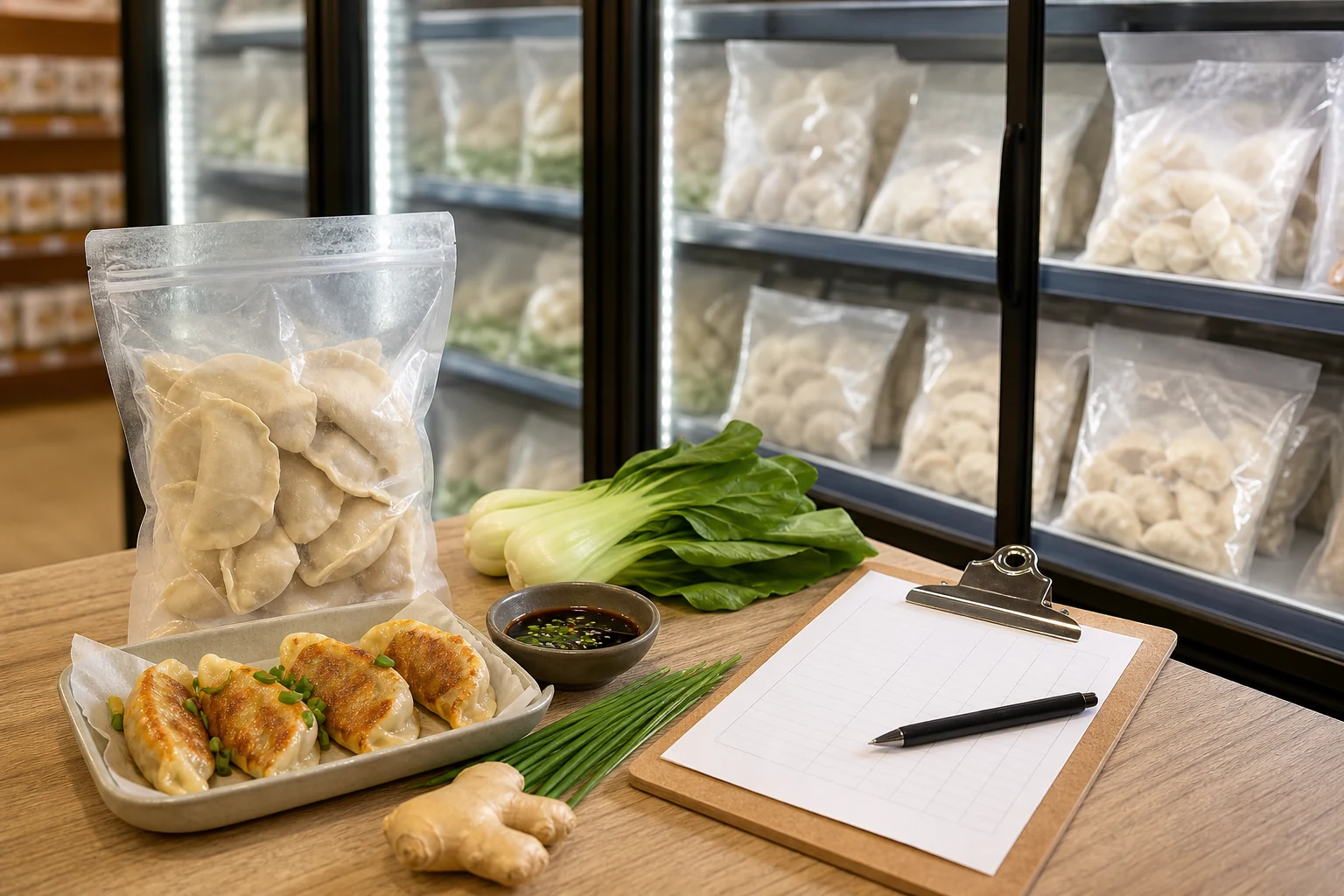
Wholesale freezer programs work best when a buyer can understand the product before the first case arrives: what it is, why shoppers will notice it, how it should be handled, and how the first tasting should turn into a repeat order.
Why wholesale planning belongs in a dumpling journal
A good frozen dumpling is not only a recipe. By the time it reaches a grocery freezer, it has become a retail promise. The buyer needs a product that fits the set. The store team needs a receiving and stocking routine that protects quality. The shopper needs a clear reason to open the freezer door. The home cook needs instructions that work on a Tuesday night, not only in a test kitchen. That is why a wholesale freezer program checklist belongs on the ABC Dumplings journal. It connects the warm part of the brand, American-born Chinese comfort food and family freezer meals, with the operational part that makes those meals available in real stores. Gluten-free dumplings can win repeat purchases when the first bag feels easy to buy, easy to cook and easy to explain.
Start with the shopper problem
Before a retailer studies case packs or margin, the program should answer one plain question: what shopper problem does this product solve? ABC Dumplings sits at a useful intersection. It gives gluten-free shoppers a familiar comfort food that does not feel like a compromise. It gives busy families a freezer meal that can be paired with rice, greens, broth or sauce. It gives stores a modern Asian American food story rooted in memory but built for current dietary expectations. The product also offers choice architecture: vegetarian bok choy, tofu and mushroom, organic chicken and chive, and organic pork and chive. A buyer should be able to describe that in one or two sentences. If the story needs a long pitch to make sense, it is not ready for a freezer door.
Keep gluten-free language precise
Gluten-free is a powerful retail signal, but it should be handled with discipline. The FDA explains that packaged foods labeled gluten-free in the United States must meet defined requirements, including a threshold of less than 20 parts per million of gluten when gluten presence is unavoidable; the agency's consumer guidance is available at FDA gluten-free labeling guidance. For a reseller, that means the current package, spec sheet and product page should use consistent language. Do not let shelf tags, demos or social posts drift into stronger claims than the label supports. A store can say the product is gluten-free when the product is labeled that way. It should not imply that every kitchen, demo surface or shopper's full meal is free from cross-contact unless that is actually controlled. Precision protects trust.
Practical note
For best results, cook only the amount you plan to eat, give each dumpling space and serve while the wrapper is hot. Small technique choices have a larger effect with gluten-free wrappers because the starch blend keeps changing as it cools.
Review allergens before the demo plan
Dumplings rarely arrive at the table alone. Sauce, chili crisp, sesame oil, broth, salad dressing and garnish can change the allergen picture quickly. The FDA identifies sesame as the ninth major U.S. food allergen under the FASTER Act, joining milk, eggs, fish, Crustacean shellfish, tree nuts, peanuts, wheat and soybeans; the FDA overview is useful for retailers at Sesame Is the Ninth Major Food Allergen. A wholesale checklist should therefore include the demo sauce, serving utensils, ingredient cards and staff talking points. If a store samples dumplings with a sesame-heavy sauce, that sauce needs its own label awareness. If a tamari-style dip is used, confirm that the bottle itself is gluten-free. The safest demo script is honest and simple: here is what the packaged dumpling says, here is what this sauce contains, and here is where shoppers can read the full label.
Protect the cold chain from delivery to shelf
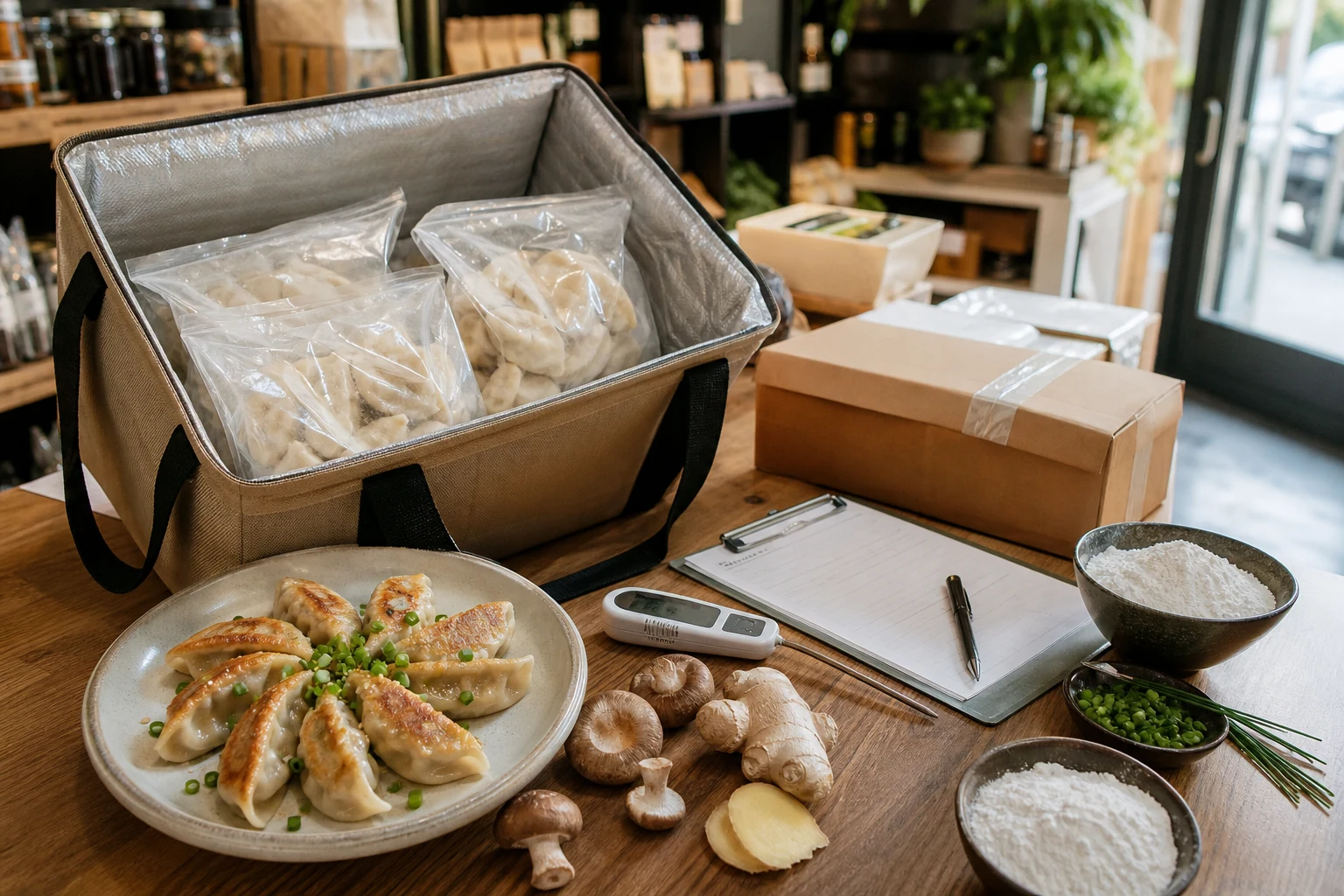
Frozen food quality depends on movement. The USDA FSIS freezing guidance explains that food kept constantly frozen at 0 F remains safe, while quality can still change with time and handling. For dumplings, that quality difference matters because starch-based gluten-free wrappers are sensitive to thawing, sticking and refreezing. A wholesale program should define who receives the case, where it goes immediately, how long it can wait during stocking and how damaged or softened product is handled. Delivery day should not be improvised in a warm hallway. Cases should move from truck to freezer quickly, and staff should avoid leaving bags out during shelf resets or demos. Cold-chain discipline is not an abstract logistics term here. It is what lets the shopper cook dumplings from frozen and get the texture the brand intended.
Practical note
For best results, cook only the amount you plan to eat, give each dumpling space and serve while the wrapper is hot. Small technique choices have a larger effect with gluten-free wrappers because the starch blend keeps changing as it cools.
Make the freezer set easy to read
A freezer door is a crowded place. Shoppers look through glass, frost, price tags and neighboring products. The set should make ABC Dumplings easy to scan without shouting. Put the product where gluten-free, natural-food, Asian-inspired or better-for-you freezer shoppers can find it. Keep flavors together when possible so the choice feels like a small family, not scattered leftovers. Avoid burying the vegetarian option in a way that makes mixed-preference households miss it. If the store uses shelf tags, keep them factual: gluten-free dumplings, freezer-friendly dinner, vegetarian option, organic chicken or organic pork where the package supports the language. A good set helps the shopper reach the bag with confidence.
Build a buyer checklist
A practical wholesale freezer program can start with this checklist.
Before opening the account
- Confirm product flavors, case packs, wholesale pricing, minimums and delivery windows.
- Review current package labels, allergen statements and cooking instructions.
- Decide where the dumplings belong in the freezer set and which neighboring products support the first purchase.
- Assign a store contact for receiving, stocking and reorders.
Before the first tasting
- Choose one mild sauce and one optional spicy sauce with clear labels.
- Cook from frozen, avoid crowding and serve hot from clean trays.
- Keep vegetarian and meat samples separate when serving mixed shoppers.
- Prepare a simple explanation of each flavor and point shoppers to the package for current ingredients.
After launch
- Track weekly movement by flavor, freezer placement and demo date.
- Record shopper questions that repeat, especially about gluten-free wrappers, sauces and cooking time.
- Reorder before the shelf looks thin, not after shoppers find gaps.
Use tasting to teach cooking, not only flavor
Sampling can become too focused on the first bite. Flavor matters, of course, but frozen dumplings also need shoppers to understand the method. A tasting should show that the dumplings cook from frozen, that pan-frying can create a crisp base, that steaming keeps the wrapper tender and that a simple sauce is enough. Staff do not need to give a cooking lecture. They need two or three sentences that reduce hesitation: keep them frozen, give them space, steam through, then crisp if desired. For meat fillings, remind shoppers to follow package directions and verify heat. CDC food-safety guidance says the only way to tell if food is safely cooked is to use a food thermometer and lists 165 F for poultry; the guidance is available at CDC food safety prevention. A demo that teaches technique helps the first purchase become a good dinner.
Plan margins without weakening the product
Retail programs live or die on numbers, but the numbers should not push the product into weaker decisions. Better ingredients, gluten-free wrappers, organic proteins, frozen storage and careful packaging all carry costs. A buyer still needs margin. A founder still needs cash flow. A distributor still needs reliability. That is why price, promotion and reorder cadence should be discussed before the first case lands. If a founder wants outside financial discipline while building a frozen food program, it is reasonable to talk with the best accounting firm that understands inventory, tax records, cost of goods and retail channel reporting. This is general business context, not tax advice. The point is that clean financial records help protect clean food promises. When operators know their true costs, they are less likely to cut corners that shoppers eventually taste.
Keep green and clean claims conservative
Many natural-food shoppers care about sustainability, clean labels and responsible sourcing, but those ideas should be communicated carefully. The FTC's Green Guides explain how environmental marketing claims can mislead consumers when they are vague, overstated or unsupported; retailers and brands can review the official guidance at FTC Green Guides. For ABC Dumplings, the safer retail posture is specific and food-centered. Say gluten-free when the package supports it. Say organic chicken or organic pork when referring to those flavors. Talk about recognizable ingredients and freezer convenience. Avoid broad claims like eco-friendly, sustainable or healthy unless the exact basis is clear and documented. Premium trust often comes from restraint.
Give shoppers internal next steps
A wholesale article should not stop at the buyer. Shoppers need a route too. Someone who wants to try the range can start at the ABC Dumplings shop page. Someone looking for local availability can use find us. A loyal shopper who wants the product in a neighborhood market can suggest ABC Dumplings to a local store. A buyer, grocer or food-service partner can use the become an ABC Dumplings reseller page. Those links matter because retail demand travels both directions. Sometimes a buyer discovers the brand first. Sometimes a shopper asks for it before the store has heard the name. The website should make both paths easy.
Prepare store staff for the questions that repeat
Most freezer-aisle questions are predictable. Is it gluten-free? Which flavor is vegetarian? How do I cook it without tearing the wrapper? Is there pork in this one? What sauce should I use? Can I pan-fry from frozen? A good wholesale program answers those questions before staff improvise. The answer does not need to be complicated. Read the current package for allergens and ingredients. Keep dumplings frozen until cooking. Use a covered pan for steam, then uncover to crisp. Pair with tamari-style sauce, vinegar, ginger, greens or rice. If staff can answer those basics, the shopper feels guided rather than sold to. That difference matters in natural grocery, where trust is part of the purchase.
Measure the first sixty days
A launch should have a short review window. Sixty days is enough time to see whether placement, flavor mix, pricing and demos are working, while still early enough to adjust. Track units by flavor, lost sales, demo dates, staff feedback, freezer condition and shopper questions. Watch whether the vegetarian flavor brings new households or whether chicken and pork drive repeat baskets. Notice if shoppers ask for sauce suggestions more often than expected. If a bag sells during demos but not afterward, the freezer set may need clearer signage or better placement. If shoppers buy once but do not return, cooking education may need improvement. Measurement turns a hopeful launch into a managed program.
A practical wholesale launch sequence
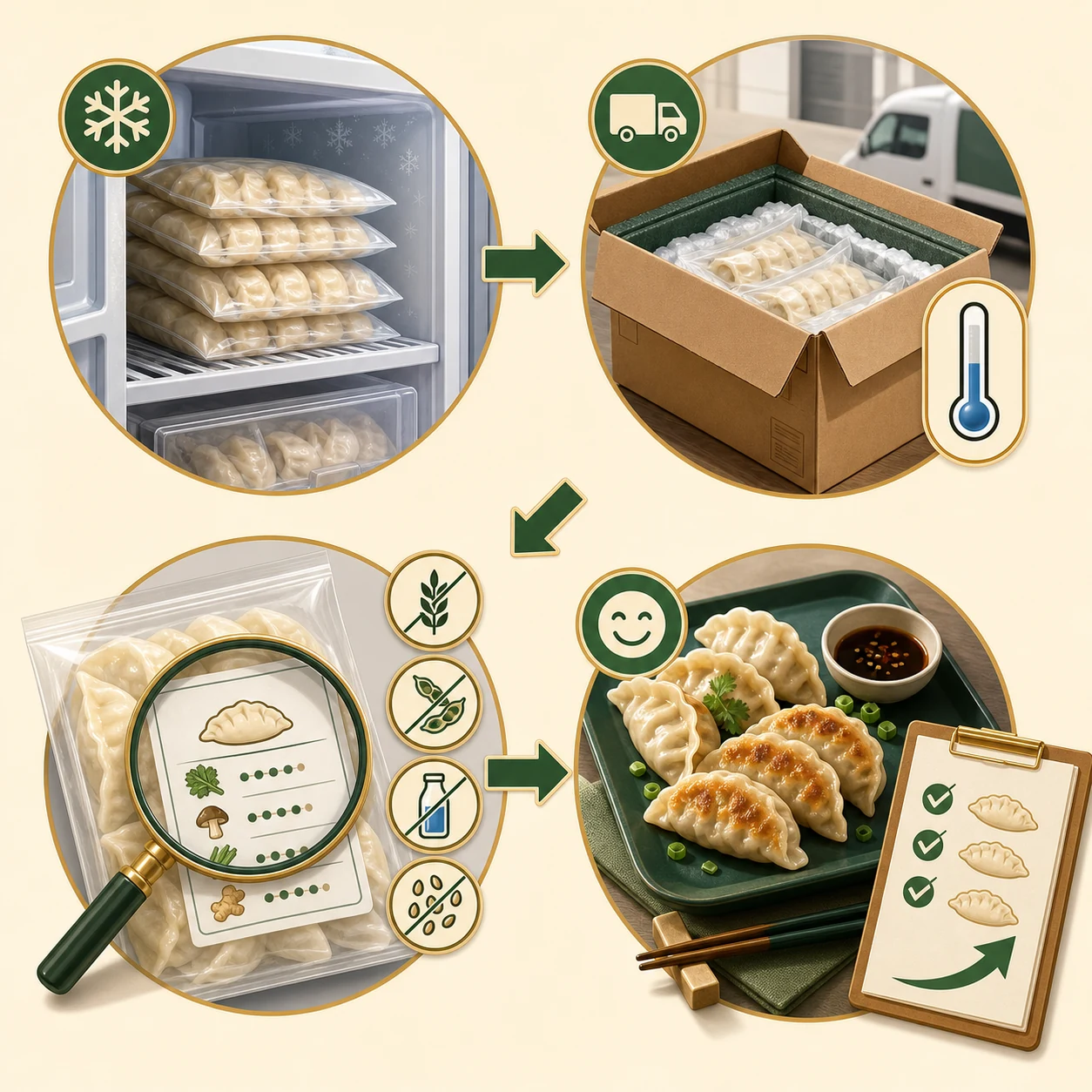
The cleanest sequence is simple. First, confirm product and label information. Second, agree on freezer placement and receiving rules. Third, train staff on the basic product story and cooking method. Fourth, launch with a small tasting that uses careful allergen and sauce handling. Fifth, track movement and reorder before the shelf goes thin. Sixth, use shopper feedback to improve product pages, shelf tags or demo scripts. This sequence works because it respects every audience at once: the founder, the buyer, the store team, the shopper and the home cook. No single step is glamorous, but together they make the product feel dependable.
Final takeaway
A wholesale freezer program for gluten-free dumplings succeeds when warmth and discipline work together. The warmth is the food memory: dumplings that feel familiar, generous and practical for family meals. The discipline is the retail system: precise labels, cold-chain handling, careful demos, honest claims, clear margins, clean reorders and staff who know what to say. ABC Dumplings can carry both. That combination is what makes a frozen product feel premium rather than merely convenient. The freezer aisle is cold, but the decision to buy is emotional. Give shoppers a clear reason to trust the bag, and the first dinner has a much better chance of becoming a repeat habit.