ABC Dumplings Journal
Gluten-Free Dumpling Party Tray Guide for Easy Hosting
Build a warm gluten-free dumpling party tray with frozen dumplings, safe serving flow, simple sauces, allergen-aware hosting and easy side dishes.
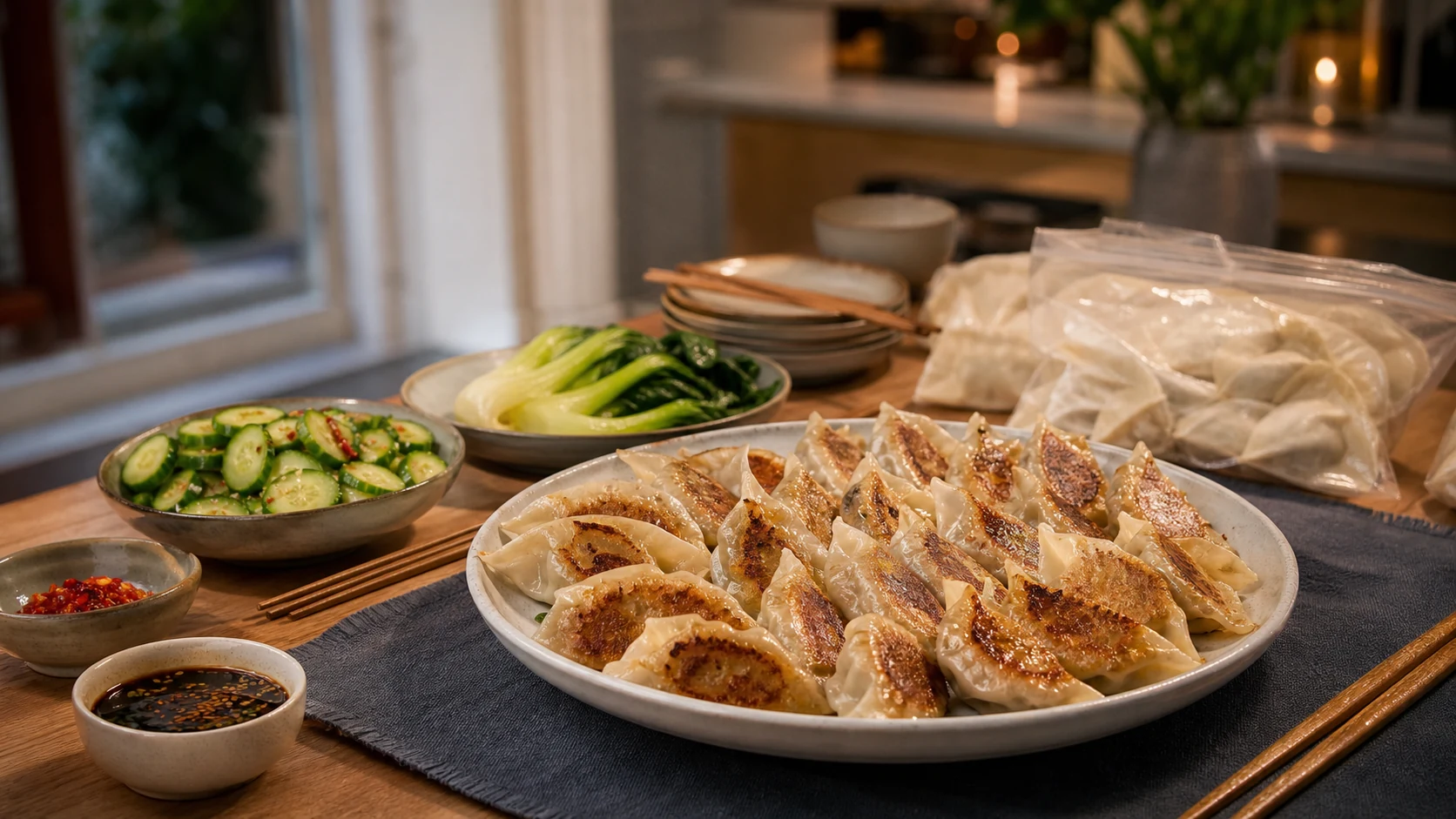
This party tray guide is for hosts who want gluten-free frozen dumplings to feel like a thoughtful first bite, not a last-minute freezer rescue. Start with the ABC Dumplings shop, use the sauce and side-dish pairing guide for flavor ideas, then build the tray with the practical hosting flow below.
Why a dumpling party tray works
A dumpling party tray has the best parts of casual hosting. It is warm, shareable, easy to portion and familiar enough that guests do not need a long explanation before taking the first bite. For ABC Dumplings, it also fits the brand story: gluten-free wrappers, clean ingredient cues, American-born Chinese food memory and freezer convenience that still feels personal. The important difference between a good party tray and a crowded platter is planning. Dumplings should arrive at the table hot, with sauce close by, enough space to pick them up cleanly and a clear answer for guests who ask about gluten, sesame, pork, chicken or vegetarian options. This guide is general information for home and retail-style hosting. It is not medical, nutrition or legal advice, and hosts should always read current packaging before serving.
Choose the tray before choosing the sauces
A party tray should have a job. If it is the first bite before dinner, keep the dumplings light and the sauces bright. If it is the main snack for game night, add rice, greens, cucumbers and broth so the table feels complete. If the group includes vegetarians, put the bok choy, tofu and mushroom dumplings on their own plate before meat dumplings come out. If the group loves classic comfort food, organic chicken and chive or organic pork and chive can anchor a warmer platter. Do not start with six sauces and three garnishes. Start with the tray: number of guests, timing, cooking method, dietary needs, and whether people will eat standing, sitting or moving around a kitchen island.
Read gluten-free and allergen details without overclaiming
The FDA explains that foods using a gluten-free claim in the United States must meet specific regulatory requirements; its consumer page Gluten-Free Means What It Says is a useful reference for shoppers. That standard helps frame the package, but it does not make a whole party automatically suitable for every guest. Sauces, sides and garnishes can introduce wheat, soy, sesame, peanuts, tree nuts, fish sauce, shellfish, dairy or other ingredients. Sesame deserves special attention because the FDA notes that the FASTER Act made sesame the ninth major food allergen for packaged food labeling as of January 1, 2023; the agency's sesame allergen overview is helpful when shopping for chili crisp, sesame oil and prepared sauces. Ask guests early, read labels, and avoid guessing when someone has a serious allergy or medically directed diet.
Plan a freezer-to-party sequence
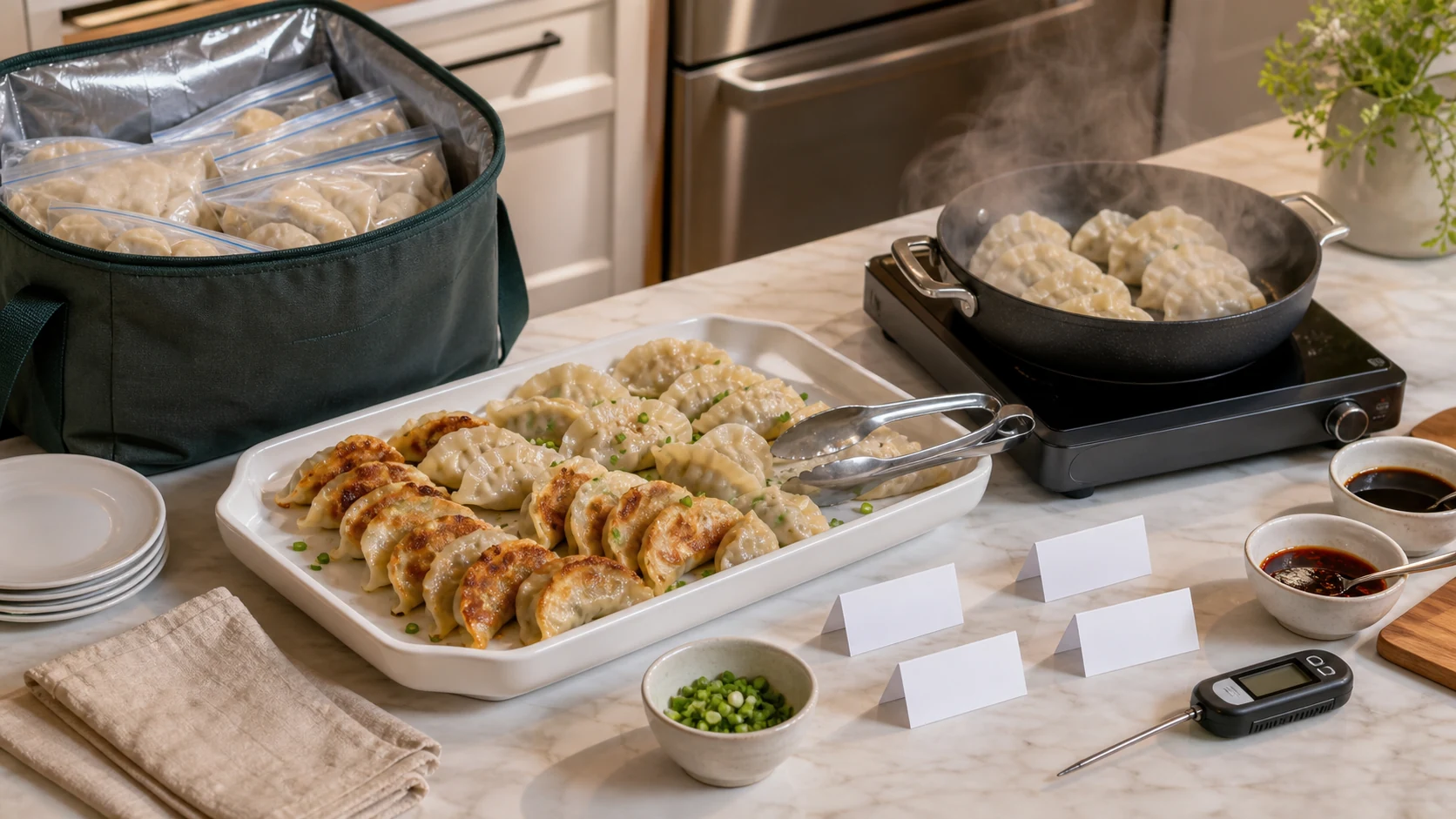
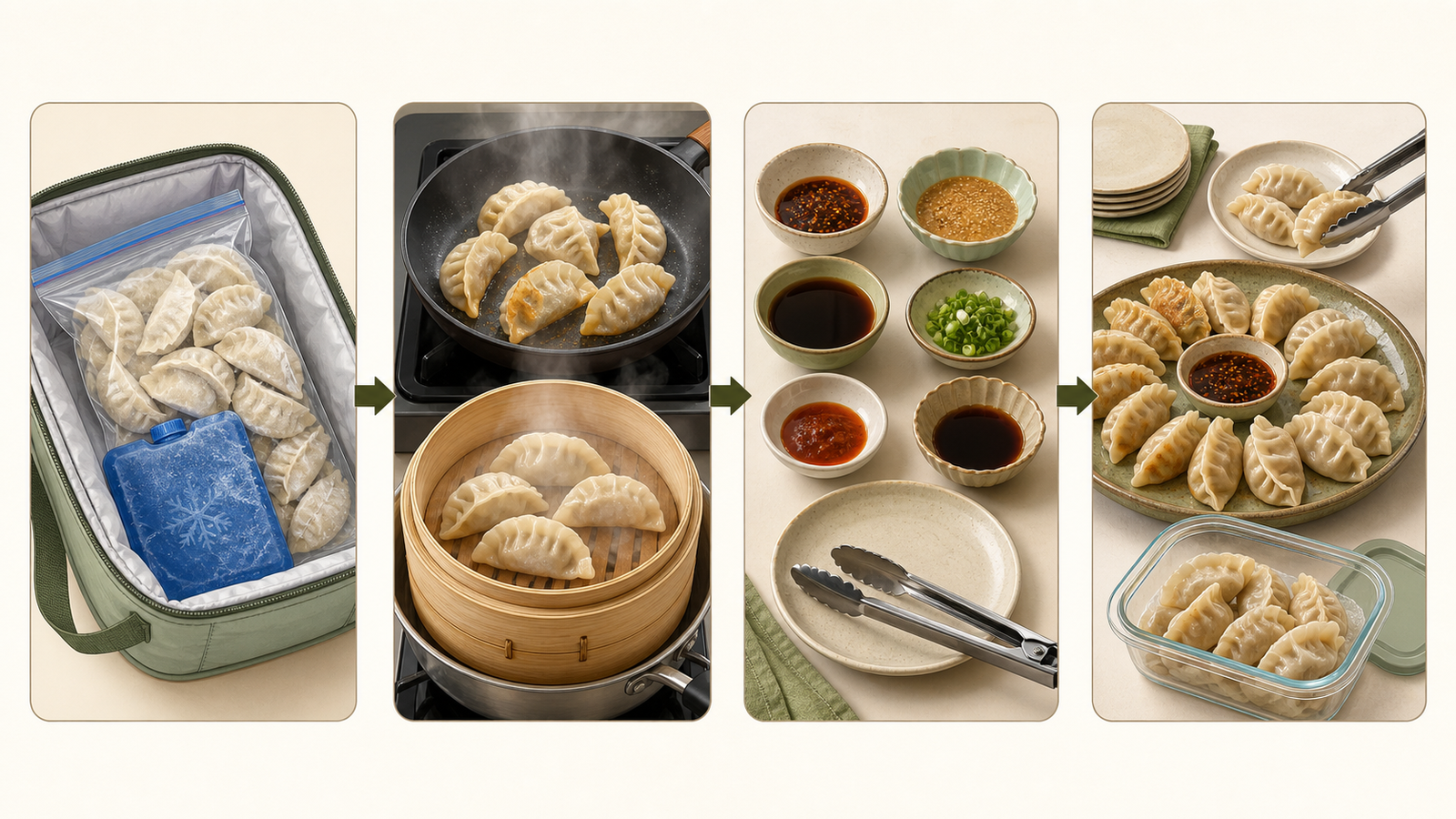
Frozen dumplings are convenient because the hard work is already folded, portioned and waiting. That convenience still needs sequence. Keep dumplings frozen until the pan, steamer or pot is ready. Pull only the amount you plan to cook in the first batch. Return the rest to the freezer quickly. If you are transporting dumplings to another home, use an insulated bag with cold support and cook at the destination when possible. For a home party, clear freezer space before guests arrive so you are not hunting through bags while the pan is hot. The host should be able to move in one direction: freezer, cooking station, clean platter, sauce table, guests, and then leftovers or cleanup. That path protects texture and keeps the table from feeling chaotic.
Cook in small hot batches
The best party trays are often not one giant tray. They are a series of smaller hot batches. A crowded skillet slows heating, traps steam and can make gluten-free wrappers stick before the bottoms crisp. A packed steamer can make dumplings merge at the edges. A giant platter can also go lukewarm while guests talk. Cook the first batch as guests arrive, serve it promptly, then cook a second batch once people know what they like. For meat dumplings, follow package directions and use a thermometer when needed. FoodSafety.gov's safe minimum internal temperature chart lists 165 F for poultry, and ABC Dumplings product guidance points cooks toward a 165 F center for meat dumplings. Hot, repeated batches feel more premium than one oversized tray that waits too long.
Keep the party out of the danger zone
Party food is easy to romanticize, but time and temperature still matter. FoodSafety.gov's Game Day Food Safety Tips tells hosts to throw out perishable food that has been sitting at room temperature for more than two hours, or more than one hour if exposed to temperatures above 90 F. USDA FSIS also explains the danger zone as the 40 F to 140 F range where bacteria can grow quickly, with hot foods kept at 140 F or above and cold foods kept at 40 F or below. A dumpling party tray should therefore be paced. Serve small batches hot. Do not leave cooked dumplings out all night. Move leftovers into shallow containers promptly if they are still within a safe time window, or discard food whose temperature history is unclear.
A practical party tray checklist
Use this checklist as a calm hosting rhythm, not as a guarantee for every medical or dietary need.
- Ask guests about gluten-free needs, allergies, pork, poultry, vegetarian preferences and sesame before shopping.
- Read current dumpling, sauce and side-dish labels before serving.
- Choose one primary dumpling flavor and one optional second flavor if you can keep tools and plates clear.
- Keep frozen dumplings frozen until the cooking station is ready.
- Cook in small batches so the tray stays hot and wrappers keep their texture.
- Use separate tongs for vegetarian, meat or allergen-sensitive portions when needed.
- Serve sauce in bowls with dedicated spoons instead of letting guests double-dip into shared containers.
- Track time at room temperature and handle leftovers conservatively.
A simple shopping plan for eight guests
For a casual tray that feeds eight people as an appetizer, plan the meal in layers. Buy enough dumplings for each guest to have several pieces, then add one extra small batch because the first platter usually disappears quickly. Choose one fresh vegetable, one warm side and two or three sauces instead of trying to build a restaurant spread. Cucumbers, bok choy, snap peas, rice, scallions, ginger, rice vinegar and gluten-free tamari can do most of the work. If you are serving both vegetarian and meat dumplings, buy enough of each so the vegetarian tray is not treated as a token plate. If guests are arriving at different times, keep the second batch frozen until the room is ready for it. This shopping plan respects the freezer product, protects texture and prevents the host from cooking too much too early.
Build a simple three-sauce plan
A tray feels generous when the sauces are easy to understand. Make one mild gluten-free tamari-style sauce with rice vinegar and ginger if it fits your guests. Make one bright vinegar-scallion sauce for people who want lift without heat. Make one optional spicy sauce or chili crisp for guests who can eat it. Keep sesame oil, peanuts and chili crisp separate unless you know they fit the room. Put spoons in every bowl and replace them if they get messy. The sauce table should help the dumplings, not bury them. If the filling uses chives, mushroom, ginger, garlic or broth, a balanced sauce lets those flavors stay visible. For more pairings, the gluten-free dumpling sauce guide goes deeper into sides, acidity, heat and texture.
Add sides that make the tray feel complete
The easiest sides are crisp, cool and low-drama. Cucumber salad, blanched bok choy, snap peas, rice, quick pickles, scallions, citrus wedges and a light broth can make a dumpling tray feel like a meal without overloading the host. Avoid sides that create a new allergen puzzle unless you are prepared to explain them. Peanut noodles, creamy dips, sesame-heavy salads and store-bought dressings can be delicious, but they add label questions. A party tray works best when guests can see the structure: dumplings in the center, two or three sauces, one fresh vegetable, one warm or neutral side, and optional heat. That is enough for weeknight hosting, neighbor drop-ins, game night or a casual family gathering.
Set up the table for movement
Dumplings are small, so serving details matter. Use a wide platter rather than a deep bowl so pieces do not steam each other into softness. Place tongs on the platter and spoons in the sauces. Put small plates nearby so guests do not hover over the tray. If there are vegetarian and meat dumplings, keep the platters visually different and avoid crossing tongs. If one guest needs a separate serving, plate that person's food first with clean tools and keep it away from shared traffic. A few blank place cards can help, but only if the host writes accurate labels from current packaging. If you are unsure, say so. Clear, humble language is better hospitality than confident guessing.
Make retail and freezer availability part of the story
A party tray is also a useful retail occasion. Shoppers often discover frozen dumplings because they need something for a small gathering, not because they planned a full recipe. A grocer can support that behavior by placing gluten-free dumplings where the dietary cue is visible and by merchandising simple sides nearby. A shopper who wants ABC Dumplings locally can use the suggest a store page to turn that request into a lead. A specialty market, natural grocer or food partner can use the become a reseller page to start a retail conversation. The freezer case should make hosting easier: find the product, understand the flavor, carry it home cold and cook it confidently.
What to skip on a party tray
Skip anything that makes the host overpromise. Do not call the whole meal allergen-free unless the kitchen, ingredients and service flow truly support that claim. Do not mix vegetarian and meat dumplings on one platter if guests care about separation. Do not pour sauce over every dumpling unless the tray will be eaten immediately. Do not cook the whole bag early just to make the table look full. Do not add a partner link, lifestyle detour or unrelated service mention when the reader came for a practical dumpling tray. The strongest version of this article stays focused on food: frozen dumplings, safe handling, label reading, sauces, sides, hosting rhythm and a table that feels warm instead of stressful.
A one-hour hosting flow
One hour before guests arrive, clear the counter, set out plates, choose sauces and check labels. Thirty minutes before, wash and cut cucumbers or greens, set sauce bowls and place clean tongs. Fifteen minutes before, heat the pan or steamer and pull the first dumpling batch from the freezer. As guests arrive, cook the first small batch and serve it hot. Ten minutes later, ask what people liked and start the second batch. During the party, keep uncooked dumplings frozen until needed. After the final batch, move safe leftovers promptly or discard food that sat too long. This flow is simple enough to repeat, which is the point. Hosting should feel like attention, not a performance.
Final takeaway
A gluten-free dumpling party tray succeeds when the host keeps the promise narrow and the table generous. Read labels. Ask guests early. Keep frozen food cold until cooking. Cook in small hot batches. Use separate tools when preferences or allergens require it. Offer simple sauces, crisp sides and enough plates for people to move comfortably. Track time at room temperature and handle leftovers conservatively. ABC Dumplings makes this kind of hosting practical because the dumplings bring comfort, portioning and freezer convenience together. The host still brings the judgment: what to serve, when to cook, how to separate and when to stop guessing. That combination is what turns a freezer bag into a tray guests remember.