ABC Dumplings Journal
Gluten-Free Dumpling Lunchbox Guide: Freezer Meals for School, Work and After-School Dinners
A practical guide to using gluten-free frozen dumplings for lunchboxes, work meals and after-school dinners with safe packing, reheating and family-friendly sides.
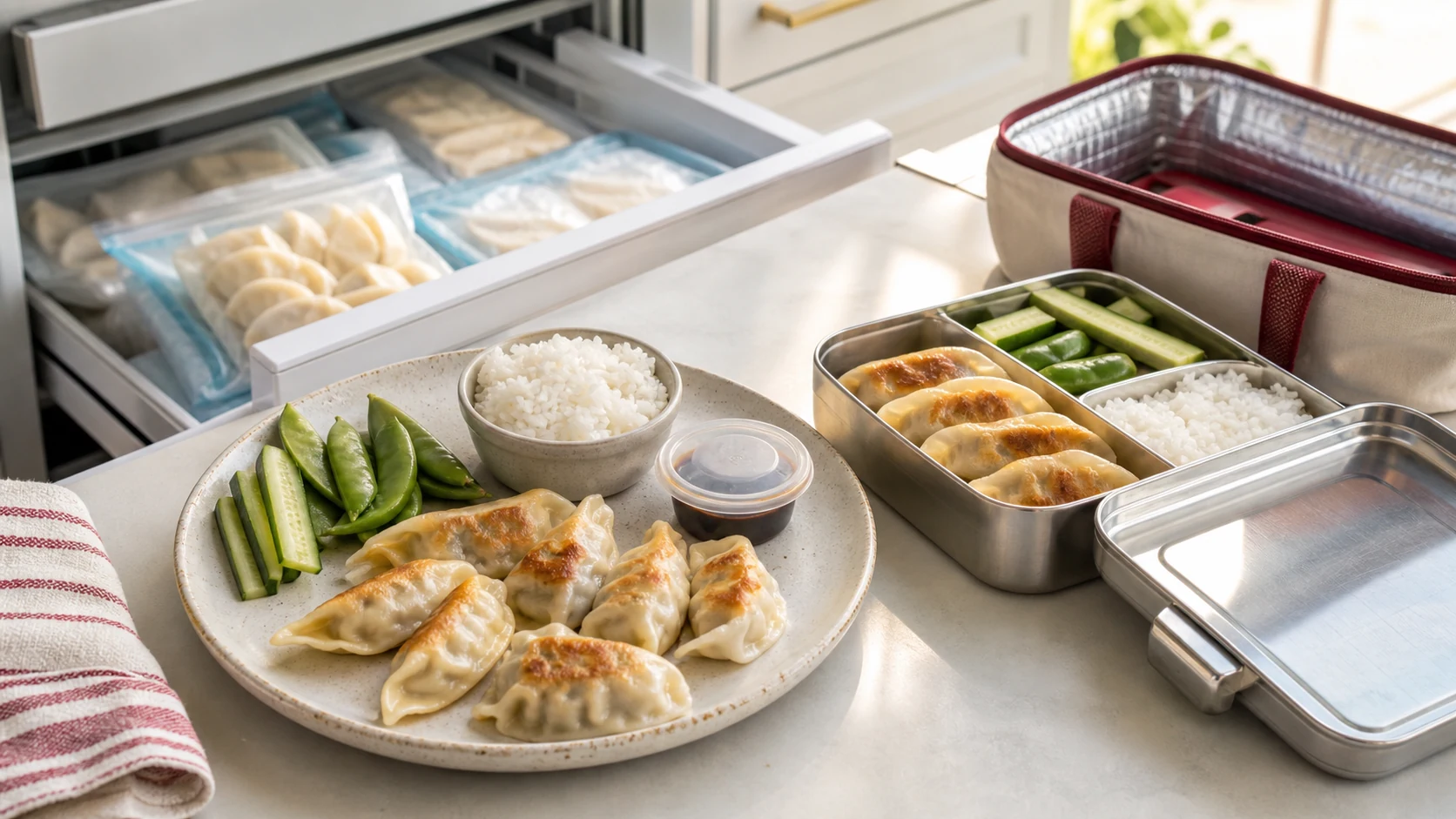
This lunchbox guide is for families, students and workweek shoppers who want gluten-free frozen dumplings to do more than sit in the freezer. Start with the ABC Dumplings shop, check where to find ABC Dumplings near you, then use the practical packing, reheating and dinner-backup ideas below.
Why dumplings belong in the lunchbox conversation
Lunchbox food has to solve a different problem from dinner. It needs to be practical, portable, easy to recognize and still appetizing several hours after the morning rush. Gluten-free frozen dumplings can help because they are already portioned, they cook from frozen, they pair with simple sides and they carry the comfort of a hot meal even when the day is busy. For families who grew up with dumplings as part of Chinese or Asian American food memory, a lunchbox dumpling can also feel personal without becoming complicated. The goal is not to pretend that every dumpling lunch should be packed the same way. A stainless lunch container for work, a thermos-style hot lunch, a chilled bento with a separate sauce cup and an after-school plate all require different handling. The useful habit is to think of dumplings as the anchor, then build the rest of the box around temperature, texture and the eater's real schedule.
Start with the freezer, not the lunchbox
A better lunchbox begins before the morning alarm. Keep dumplings frozen until the cooking setup is ready, because long counter thawing can make gluten-free wrappers sticky and fragile. FoodSafety.gov's Cold Food Storage Chart explains that freezer timelines are about quality when food is held continuously at 0 F or below, while the USDA FSIS Freezing and Food Safety page notes that freezing slows microorganisms and enzymes. In ordinary home language, that means the freezer protects the product, but handling still affects the bite. Store the bag flat when possible. Keep vegetarian and meat flavors easy to identify. Put older bags in front so they are used first. If lunch packing is part of the weekly routine, keep rice, cucumbers, greens, sauce cups, insulated bags and gel packs in predictable places. The freezer should make the morning shorter, not more confusing.
Choose the right flavor for the person eating
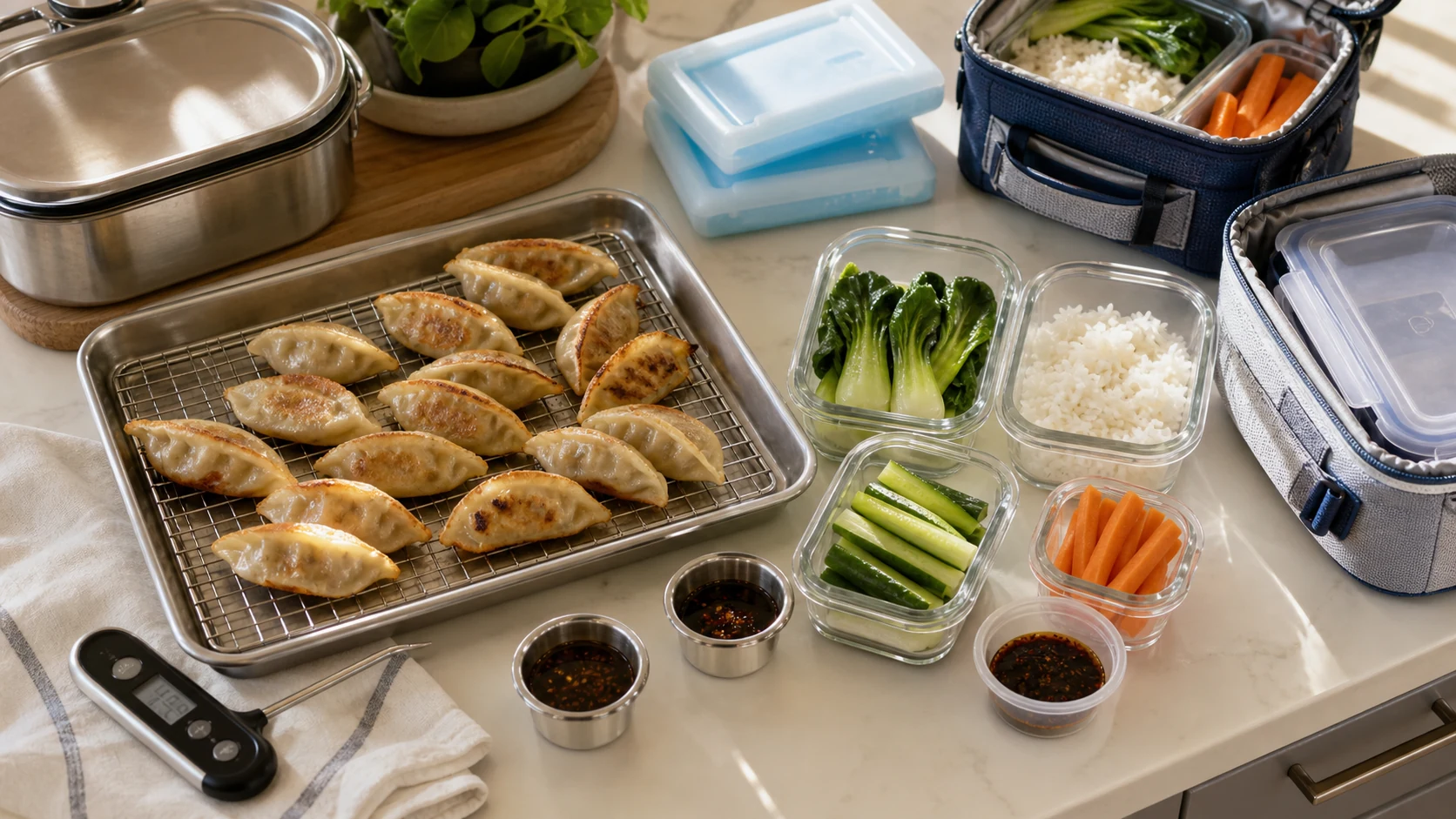
A lunchbox should fit the eater, not only the cook. The bok choy, tofu and mushroom dumplings make sense for a plant-forward lunch with cucumbers, rice and a bright vinegar-ginger sauce. Organic chicken and chive works well when the eater wants a classic savory center with broth, greens or rice. Organic pork and chive can feel especially satisfying when paired with crisp vegetables and a sharper sauce. If a child or adult is new to dumplings, pack fewer pieces at first and include familiar sides. If the lunch is for work, use a container that lets the dumplings sit in a single layer so the wrapper does not get crushed. If the lunch is for after-school reheating at home, keep the plan simpler: cook from frozen when the person arrives, then serve with a side that is already washed or chopped.
Practical note
For best results, cook only the amount you plan to eat, give each dumpling space and serve while the wrapper is hot. Small technique choices have a larger effect with gluten-free wrappers because the starch blend keeps changing as it cools.
Read gluten-free and allergen details every time
The words gluten-free are helpful, but they should not be treated as the end of label reading. The FDA's consumer guidance, Gluten-Free Means What It Says, explains that foods using the gluten-free claim must meet specific requirements, including a less than 20 parts per million limit for unavoidable gluten presence. That gives shoppers a regulated starting point in the United States. It does not answer every household question. Dumpling fillings, sauces and sides may involve soy, sesame, mushrooms, pork, poultry, tofu, honey, chili oil or other ingredients a family may track. A lunchbox also has less room for explanation than a dinner table, so do the checking before packing. Keep the current package available until the shopper or caregiver has reviewed it. Use separate sauce cups when different eaters have different needs. Do not promise that a home kitchen is allergen-free unless it truly is. For serious allergies, celiac disease or strict dietary requirements, let the person with the requirement define the level of separation needed.
Cook hot before you think about packing
The safest and best-tasting lunchbox plan starts with a proper cook. Follow the package directions and use a food thermometer when meat fillings are involved or when you are trying a new method. FoodSafety.gov's safe minimum internal temperature chart lists 165 F for poultry, and ABC Dumplings product guidance points cooks toward a 165 F center for meat dumplings. Pan-steaming is useful for lunchboxes because it gives a crisp bottom and a tender top, but only if the dumplings have space. Let the bottoms set, add water, cover to steam through, then uncover so extra moisture can leave the pan. Steaming alone is gentler and can be better for a thermos-style hot lunch. Boiling works for soupier meals, but drained dumplings should not sit in a puddle before packing. Vegetarian dumplings still need to be cooked thoroughly according to directions, even though the food-safety question may differ from poultry or pork.
Practical note
For best results, cook only the amount you plan to eat, give each dumpling space and serve while the wrapper is hot. Small technique choices have a larger effect with gluten-free wrappers because the starch blend keeps changing as it cools.
Decide whether the lunch is hot or cold
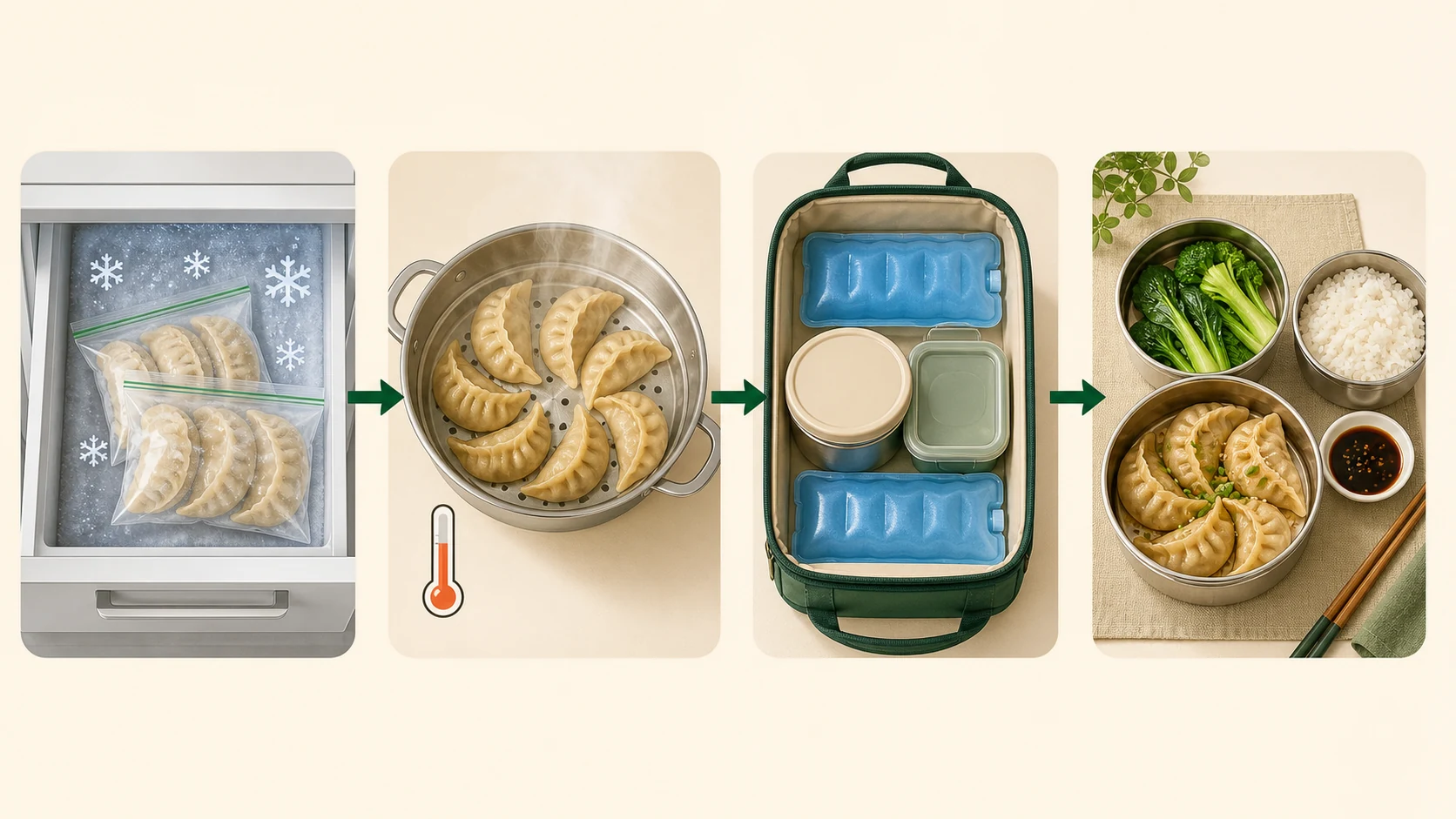
A dumpling lunchbox should have one clear temperature strategy. Hot lunches need an insulated container that is prepared correctly, usually by preheating the container with hot water, emptying it, then adding very hot food. Cold lunches need an insulated bag and enough cold sources to keep perishable foods cold until eating. USDA back-to-school lunch guidance recommends insulated lunchboxes and at least two cold sources, such as gel packs or frozen water bottles, for perishable items. That matters for cooked dumplings because they are not shelf-stable snacks once prepared. Do not pack hot dumplings into a closed container and then let them drift slowly through the day without a plan. Do not pack cold dumplings in a paper bag and hope the morning stays cool. Choose the path before cooking: hot container for a hot lunch, or chilled lunchbox with gel packs for food that will be eaten cold or reheated where appropriate.
A no-stress packing checklist
Use this checklist as a practical routine, not as medical or regulatory advice.
- Keep frozen dumplings frozen until the pan, steamer or pot is ready.
- Cook according to package directions and verify meat dumplings conservatively when needed.
- Choose hot-container packing or cold lunchbox packing before food leaves the stove.
- Use an insulated lunch bag for perishable chilled foods, with cold sources above and below when possible.
- Pack sauce separately so wrappers do not soak before lunch.
- Use crisp sides such as cucumbers, carrots, snap peas or quick greens to balance texture.
- Tell the eater whether the dumplings are meant to be eaten cold, reheated or kept hot.
- Discard food that has been held unsafely or whose temperature history is unclear.
Use sides that protect the dumpling texture
A good dumpling lunchbox needs contrast, but it does not need many dishes. Rice absorbs sauce and makes the meal feel complete. Cucumbers, carrots and snap peas bring crunch without much cooking. Bok choy, spinach or broccoli can be lightly cooked and packed in a separate compartment. A small broth container can work for an adult with access to careful reheating, but it is not the easiest option for a school bag. Sauce should usually stay separate until eating. Gluten-free tamari, rice vinegar and ginger make a simple base. Sesame oil, chili crisp, peanuts or other add-ons should be treated carefully because they may matter for allergies or school rules. If you are packing for a child, start with a mild sauce and let heat be optional at home. The point is to keep the wrapper from becoming soggy before the first bite.
Pack for work differently than school
Work lunches often have advantages that school lunches do not: a refrigerator, microwave, sink, plate and a person who can make judgment calls. That means an adult work lunch can be packed chilled and reheated at noon if the office setup is clean and reliable. School lunches are less predictable. A child may eat at a fixed time, may not have reheating access and may not understand which sauce is spicy or which container needs to stay closed. For school, keep the format simpler and safer. Use a hot insulated container when you can genuinely keep food hot, or pack chilled with enough cold support and foods the child is comfortable eating that way. For work, consider batch-cooking a few dumplings in the morning or cooking extra at dinner and chilling promptly for the next day, following safe leftover habits. In both cases, the label and allergen conversation should happen before the food goes into the bag.
Make after-school dumplings the backup plan
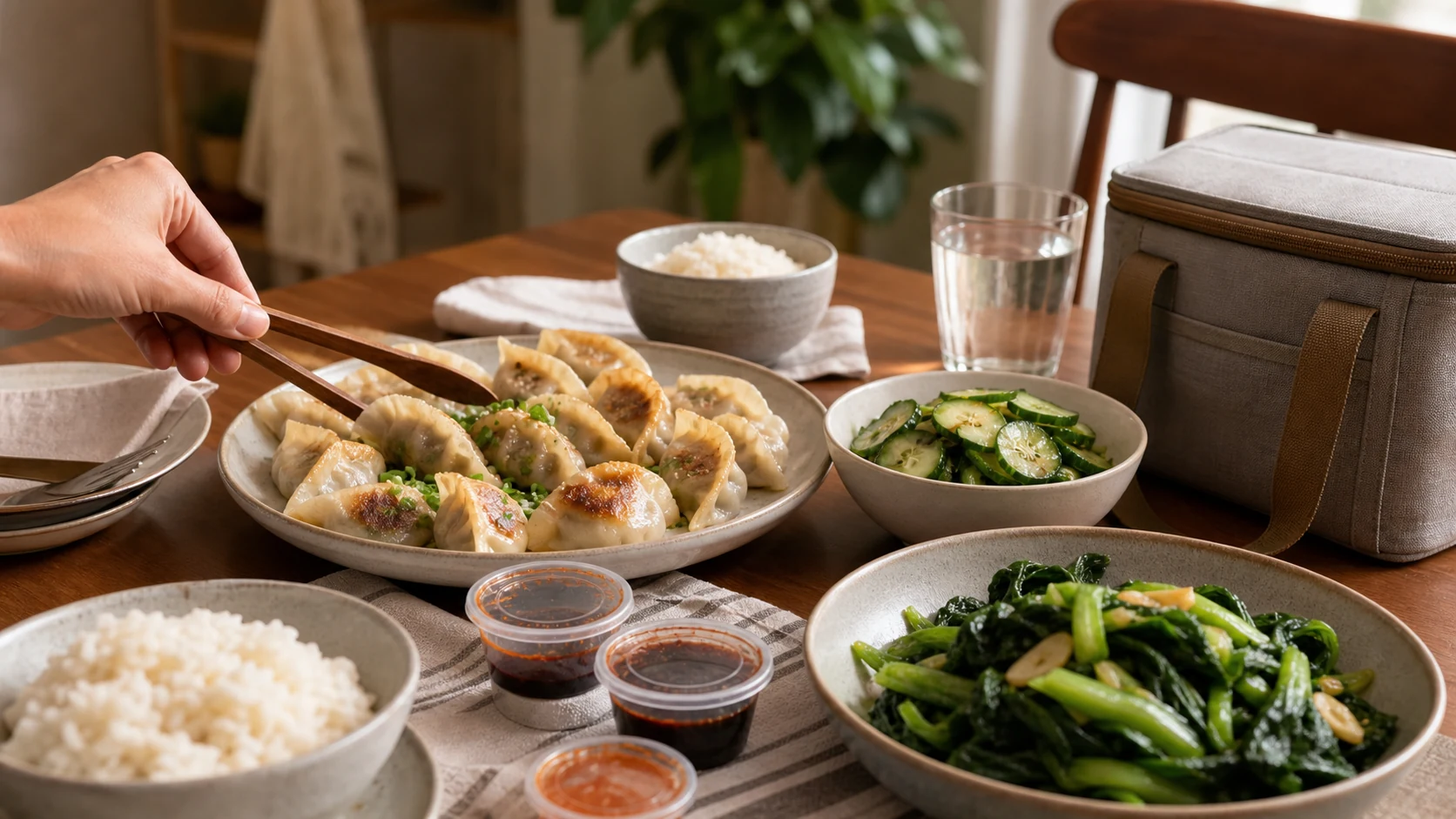
Sometimes the best lunchbox strategy is not to force dumplings into the lunchbox. Keep them as the after-school meal. A hungry child, student or adult coming home can have hot dumplings in minutes if the freezer is organized and the sides are ready. This route protects texture because the dumplings are cooked right before eating. It also avoids the uncertainty of a lunchbox that sits too long or gets opened repeatedly. Pair a small batch with rice, cucumber, greens or broth, then let dinner be lighter or later. For many families, this is where frozen dumplings shine most. They bridge the awkward gap between lunch and dinner without becoming a sugary snack or a full cooking project. The related family freezer meal prep guide can help build that weekly rhythm.
Plan sauce cups with allergy awareness
Sauce is where a simple lunch can become confusing. Soy sauce may contain wheat unless the product is gluten-free. Tamari may still contain soy. Sesame oil and chili crisp may be off limits for some households. Peanut-style sauces may not be appropriate for many schools or shared spaces. A good rule is to make one mild, clearly understood sauce first, then add optional flavor at home or at work where the eater can control it. Use covered sauce cups and pack them upright. Do not pour sauce over dumplings in the morning unless the eater prefers a softer texture. If a lunchbox includes multiple people or flavors, do not reuse the same spoon across sauces when allergens matter. This is not about making lunch anxious. It is about making the choices visible enough that the meal can stay relaxed.
A one-week dumpling lunch rhythm
A useful rhythm can be simple. On Sunday or the first grocery day, check freezer stock, gel packs, rice, cucumbers, greens and sauce ingredients. On a busy morning, cook a small batch from frozen and pack either hot or chilled with a clear temperature plan. On a work-from-home day, cook dumplings fresh for lunch and use the extra vegetables before they fade. On a school day with no reheating, choose sides that stay crisp and keep sauce separate. On an after-school day, skip packing dumplings and serve them hot when everyone returns. On Friday, use the last vegetables in a broth bowl or platter. This rhythm keeps the freezer useful without demanding that every lunch look the same. The sauce and side-dish pairing guide can help vary the plate without changing the whole routine.
Retail shoppers and store availability
Lunchbox shoppers are valuable because they repeat what works. A parent who finds a gluten-free dumpling that cooks reliably may buy it for dinners, school breaks, work lunches and casual guests. A store buyer should notice that this is not only a specialty dietary purchase. It is a freezer convenience product with a family routine attached to it. Shoppers who want ABC Dumplings nearby can use the suggest a store page to request it from a local grocer. Retailers, specialty markets and food partners can use the become a reseller page to start a more direct conversation. The lunchbox angle is useful for stores because it gives the product a clear occasion: not just dinner, but the everyday meals around dinner that families struggle to solve.
What not to claim
Food brands and home cooks should both keep claims conservative. A gluten-free dumpling can be a practical option for a gluten-free shopper, but the current package should guide the purchase. A lunchbox plan can support safer handling, but it does not guarantee safety if food is held at unsafe temperatures. A clean ingredient story can make a product easier to trust, but it should not become a medical or nutrition promise. If the eater has celiac disease, food allergies, immune concerns or a medically directed diet, the household should follow professional guidance and package information. ABC Dumplings can be part of a thoughtful lunch routine because the product is convenient, comforting and designed for modern freezer cooking. That is enough. The strongest food writing tells people what to do practically without overstating what the product can promise.
Final takeaway
A gluten-free dumpling lunchbox works when the routine is clear. Keep the freezer organized. Choose the right flavor for the eater. Read labels every time. Cook from frozen with enough heat and space. Decide hot or cold before packing. Use insulated containers, insulated bags and cold sources appropriately. Keep sauce separate. Add crisp vegetables or rice so the meal feels complete. When the lunchbox path is too complicated, use dumplings as the after-school freezer meal instead. This practical flexibility is the real value of ABC Dumplings. The same bag can support a school lunch, a work lunch, a quick snack, a family dinner or a store shopper's repeat freezer habit. Dumplings bring the comfort and memory. A good packing system helps that comfort travel.