ABC Dumplings Journal
Power Outage Freezer Safety for Gluten-Free Frozen Dumplings
A practical power-outage freezer safety guide for gluten-free frozen dumpling shoppers, with cold-chain prep, label checks, cooking cues and discard decisions.
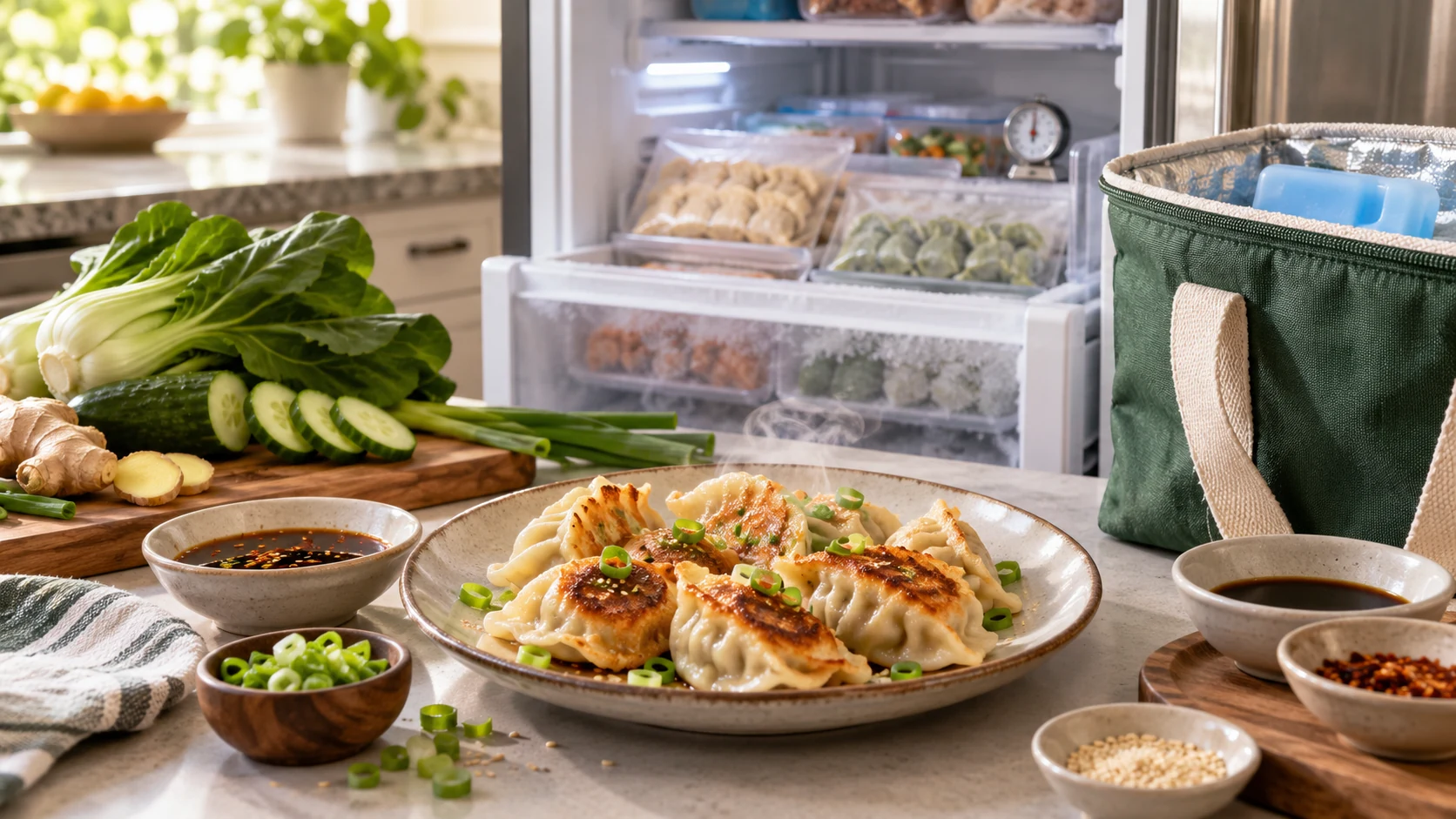
This guide is for the unglamorous moment when a freezer plan suddenly matters: a storm, a utility interruption, a hot drive home, a door left ajar or a neighborhood outage. Use it with the ABC Dumplings shop, the freezer aisle cold-chain guide and the current package in front of you.
Why outage planning belongs in a dumpling kitchen
Frozen dumplings are convenient because they wait patiently for the night when dinner needs to be fast, warm and satisfying. That convenience depends on one quiet condition: the freezer has to keep doing its job. When power goes out, a freezer door is left open, or groceries sit too long in a warm car, the question is not only whether dinner is delayed. The question is whether the dumplings are still cold enough to trust, whether the wrapper texture has been protected and whether the host can make a conservative decision without guessing. Gluten-free dumplings make this even more important because starch-based wrappers can become sticky, fragile or gummy after partial thawing and refreezing. A shopper may still care about clean ingredients, American-born Chinese food memory and family meal comfort, but food safety has to be the first filter. This article is general information, not medical, legal or regulatory advice. It is a practical way to think before, during and after a freezer interruption.
Start with the official freezer rules
FoodSafety.gov gives a clear starting point for outages: keep refrigerator and freezer doors closed as much as possible, and a full freezer can hold temperature for about 48 hours while a half-full freezer can hold for about 24 hours if the door stays closed. The same guidance says an appliance thermometer helps you decide whether food is safe when power returns. If the freezer is 40 F or below, food may be refrozen, and if food still has ice crystals or is 40 F or below, it may be safe to refreeze or cook. CDC power-outage guidance repeats the same conservative rhythm and adds the plain reminder: when in doubt, throw it out. For dumplings, those rules translate into a simple kitchen posture. Do not keep opening the freezer to check the bag every few minutes. Do not taste a thawed dumpling to decide if it is safe. Do not rely on smell alone. Look for objective cold evidence: appliance temperature, ice crystals, hard-frozen texture and how long the freezer was closed.
Prepare before the outage, not after it
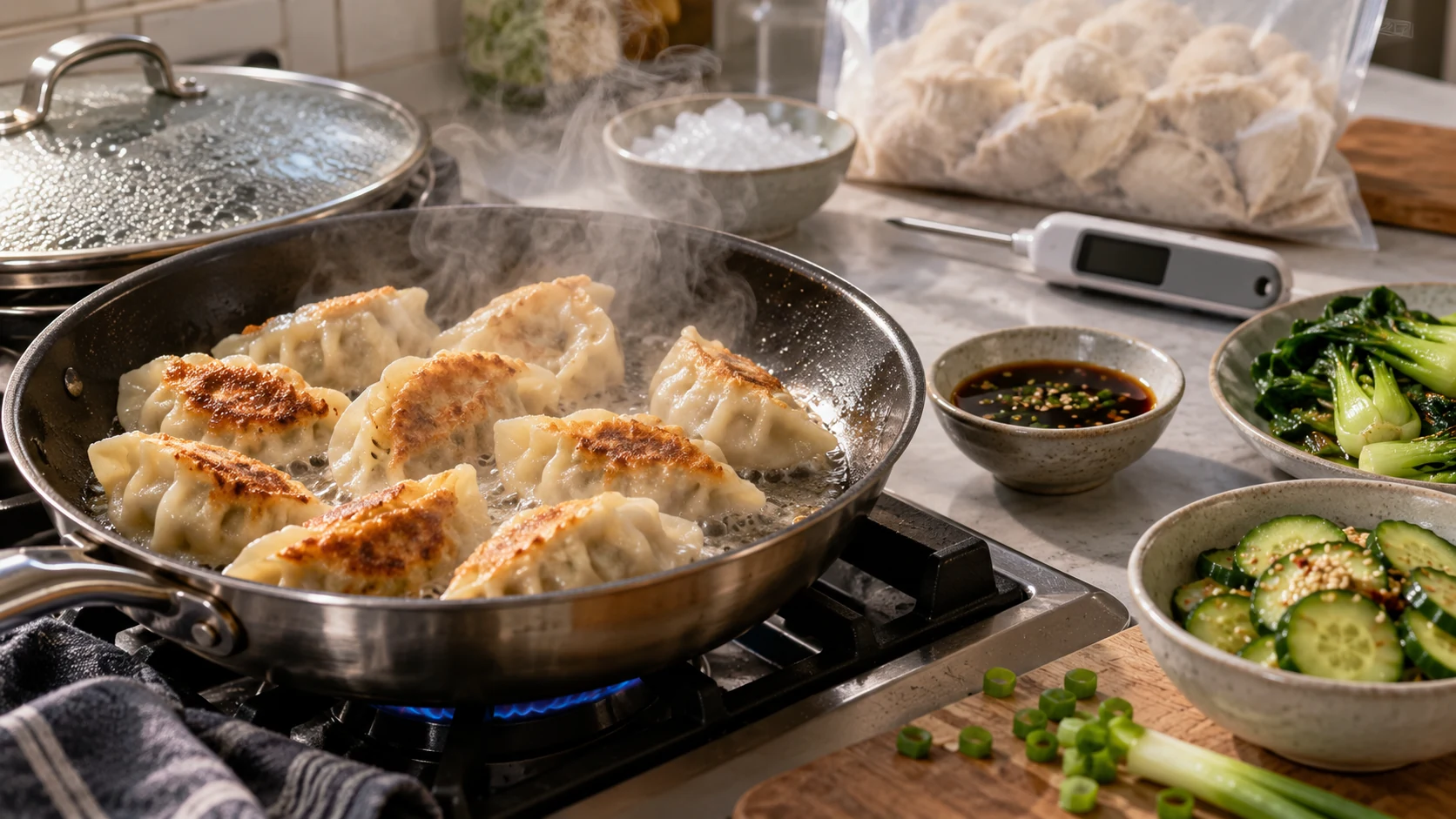
The easiest food-safety decision is the one you make before stress arrives. Keep an appliance thermometer in the freezer. Store ice packs or frozen water containers where they can help the freezer stay cold. Group frozen foods together instead of scattering single bags in warm air pockets. Keep dumplings flat and sealed so the wrappers are less likely to fracture or absorb moisture. If you live in an outage-prone area, especially a hot-weather or wildfire-season region, keep a small cooler and reusable ice packs ready for short interruptions, grocery runs or a planned freezer cleaning. None of this needs to feel severe. It is the same practical thinking that makes a good freezer meal possible in the first place. ABC Dumplings are meant for real homes, not perfect test kitchens, so the plan should be simple enough to repeat: thermometer, ice packs, grouped frozen food, closed door and a conservative decision when power returns.
Know what gluten-free changes and what it does not
Gluten-free labeling and freezer safety answer different questions. The FDA explains that foods using the gluten-free claim must meet a defined standard, including less than 20 parts per million of gluten when unavoidable gluten is present. That standard helps shoppers understand the label on packaged foods, but it does not make a thawed or temperature-abused frozen item safe. It also does not remove the need to check allergens such as soy, sesame, pork, poultry or other ingredients on the current package. In other words, gluten-free is a label-reading category; freezer interruption is a time-and-temperature category. A dumpling can be gluten-free and still need to be discarded if it thawed above safe temperatures for too long. A dumpling can still have ice crystals and be handled conservatively, but the host still needs to read the ingredient label for guests. Keeping those categories separate prevents overclaiming and makes the advice more useful.
What to do while the power is out
Once the power is out, the best move is usually restraint. Keep the freezer closed. Avoid rearranging bags unless you must move food to another safe cold source. If you know the outage will be prolonged, local guidance may point you toward block ice, dry ice or cooler use, but handle those options carefully and follow public safety instructions. If the outage is brief and the freezer has remained closed, let the freezer do its job. A full freezer behaves differently from a half-empty freezer because frozen food helps hold cold. Dumpling bags can benefit from being near other frozen foods, not isolated near the door. If someone in the household wants dinner during the outage and you can cook safely, take out only what you need and close the freezer immediately. Treat the rest of the bag like any other frozen food: protect the cold, avoid repeated thawing and do not turn a small interruption into a long door-open inspection.
The dumpling bag inspection checklist
When power returns, inspect the dumplings before deciding what to cook, refreeze or discard. This checklist is deliberately conservative.
- Check the freezer thermometer first if you have one.
- Look for ice crystals on and around the dumplings.
- Feel whether the dumplings are still hard-frozen or only refrigerator-cold.
- Notice whether the bag is sealed, torn, leaking or filled with pooled liquid.
- Separate safety from quality: a dumpling may be safe but still have weaker texture after thawing.
- Discard food with unusual odor, color, texture, leakage or uncertain time-temperature history.
- Never taste a questionable dumpling to test safety.
- When cooking meat dumplings after an interruption, use a thermometer and serve promptly.
Cook if still cold, but do not ask cooking to fix everything
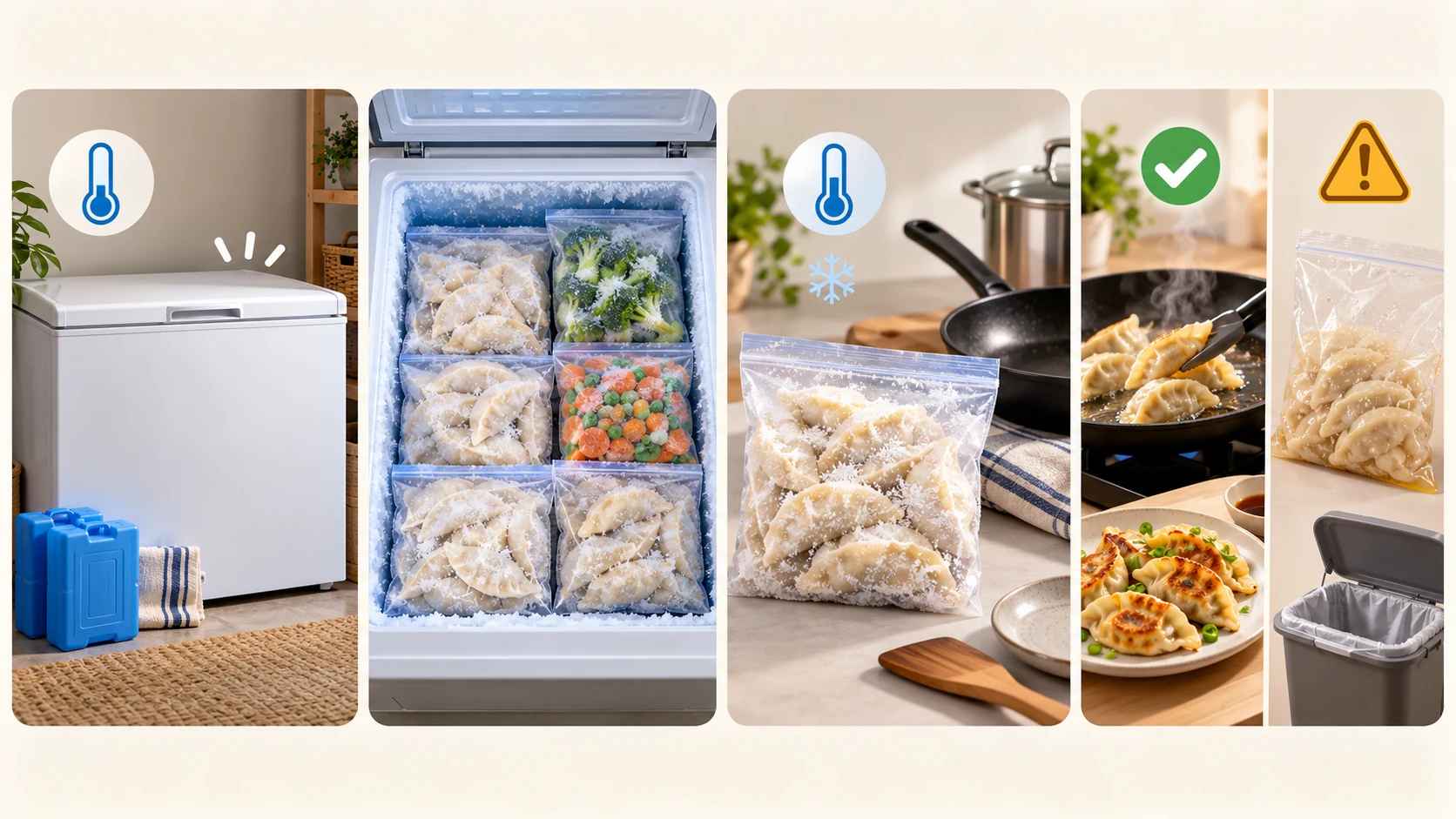
A hot skillet cannot reverse every freezer problem. Cooking can bring a safe, still-cold dumpling to a proper serving temperature, but it cannot make unsafe thawed food trustworthy again. If dumplings still contain ice crystals or remain 40 F or below, official guidance says they may be safe to refreeze or cook. If the bag is fully thawed, warm, leaking or uncertain, discard it. For meat fillings, follow current product directions and conservative food-safety practice. FoodSafety.gov lists 165 F for poultry and for casseroles containing meat and poultry, and ABC Dumplings product guidance already points cooks toward a 165 F center for meat dumplings. A digital thermometer is helpful after an interruption because frozen food may not heat as predictably if pieces partially thawed and stuck together. Vegetarian dumplings still need to be cooked hot, even if the safety temperature question is different from raw poultry. Serve on a clean plate, not a tray that touched questionable thawed food.
Refreezing is a safety decision and a texture decision
People often ask whether they can refreeze dumplings after the power returns. The safety answer depends on temperature and ice crystals. The quality answer depends on the wrapper. USDA FSIS explains that freezing keeps food safe almost indefinitely when food is held at 0 F, while storage times are mainly about quality. That does not mean every thawed and refrozen dumpling will cook beautifully. Gluten-free wrappers can suffer from surface moisture, cracking, sticking and texture loss after temperature swings. If dumplings are still icy and cold enough to refreeze, they may be safe, but the first future batch may need gentler handling. Pan-steam from frozen, give pieces space and avoid prying stuck dumplings apart aggressively. If you are hosting guests, especially anyone with allergies or medical dietary needs, consider using a fresh, unquestionably frozen bag rather than turning a borderline bag into dinner.
How this affects family freezer meals
A freezer meal plan should not be fragile. If dumplings are part of a school-night, after-work or family hosting routine, outage planning helps the household recover without panic. Keep a written note or phone reminder of when power went out and when it returned. If the freezer stayed closed and the thermometer stayed cold, dinner may continue normally. If not, move to shelf-stable or freshly cooked backup food and let the dumplings go. This can feel wasteful, but it is part of responsible freezer ownership. The point of keeping ABC Dumplings in the freezer is to make meals calmer, not to force a risky decision because everyone was counting on dumpling night. For routine planning ideas that do not involve an outage, the family freezer meal prep guide and the retail reorder plan offer next-step thinking.
Sauces and sides need the same caution
During an outage, the dumpling bag gets attention, but sauces and sides deserve the same conservative check. Refrigerated sauces, opened broths, cooked rice, cut vegetables, leftovers, dairy-based dips, eggs and meat sides may have different time limits than a closed freezer. FoodSafety.gov says refrigerated food should be safe if the refrigerator stayed closed and the power was out no more than about 4 hours; perishable food above 40 F for 2 hours or more should be discarded, or 1 hour when temperatures are above 90 F. Do not rescue a questionable sauce just because the dumplings survived. For an outage-recovery dinner, choose simple shelf-stable or freshly prepared sides: rice cooked after power returns, quick cucumber salad from safe produce, gluten-free tamari from a shelf-stable bottle if appropriate, or hot broth made from ingredients you can verify. A safe sauce strategy is part of the meal, not a footnote.
Retail and reseller considerations after an interruption
Retailers and resellers carry an even larger responsibility because freezer interruptions can affect many households. A store should follow its own food-safety plan, equipment logs, local requirements and qualified guidance before selling or discarding product after an outage. Shoppers should not be asked to interpret a vague freezer story at the shelf. If there was a known equipment issue, the store needs documentation and a conservative decision. For ABC Dumplings, the retail lesson is that cold-chain trust is part of the brand experience. A beautiful ingredient story cannot compensate for weak freezer handling. Resellers can start with the become a reseller page for partnership context, but operational discipline has to sit beside the sales story: receiving cold, storing promptly, monitoring equipment, rotating inventory and communicating honestly when something goes wrong.
A calm recovery menu
If the dumplings pass the cold-evidence check, keep the recovery meal simple. Cook a small batch first. Use a pan-steam method so the filling heats through and the bottom can crisp after moisture evaporates. Plate the dumplings with one fresh side and one sauce you can verify. Avoid serving a giant platter from a bag that has been through stress. Smaller batches let you watch texture and temperature more carefully. If vegetarian, chicken and pork flavors are in the freezer, cook vegetarian first if guests need separation, then meat batches with clean tools. If only part of a bag looks questionable, discard the whole questionable portion rather than sorting piece by piece at the stove. A calm recovery menu respects the food and the people eating it. It says: we checked, we cooked hot, we kept the table simple and we did not pretend uncertainty was confidence.
Sources and further reading
- FoodSafety.gov: Food Safety in a Disaster or Emergency
- CDC: Discarding Food After a Power Outage
- USDA FSIS: Freezing and Food Safety
- FDA: Gluten and Food Labeling
- FoodSafety.gov: Safe Minimum Internal Temperatures
Final takeaway
Power-outage freezer safety is not dramatic when the plan is already in place. Keep a thermometer in the freezer. Group frozen foods together. Keep the door closed during an outage. Look for objective cold evidence when power returns. Cook safe dumplings hot, serve them on clean plates and discard food that has thawed beyond trust. Do not use gluten-free labeling, clean ingredients or a favorite family meal as reasons to overlook time and temperature. Those qualities matter most when they sit on top of basic safety. ABC Dumplings can be part of a premium, practical freezer routine because the food is designed for real homes: weeknights, guests, busy parents, retail shoppers and the occasional inconvenient outage. The best freezer is not the one that never faces a problem. It is the one that helps you make a clear decision when the problem arrives.