ABC Dumplings Journal
Gluten-Free Frozen Dumpling Reorder Plan for Retail Freezers
A practical retail freezer guide to stocking, tracking and reordering gluten-free frozen dumplings with cold-chain discipline, clean-label claims and shopper demand in mind.
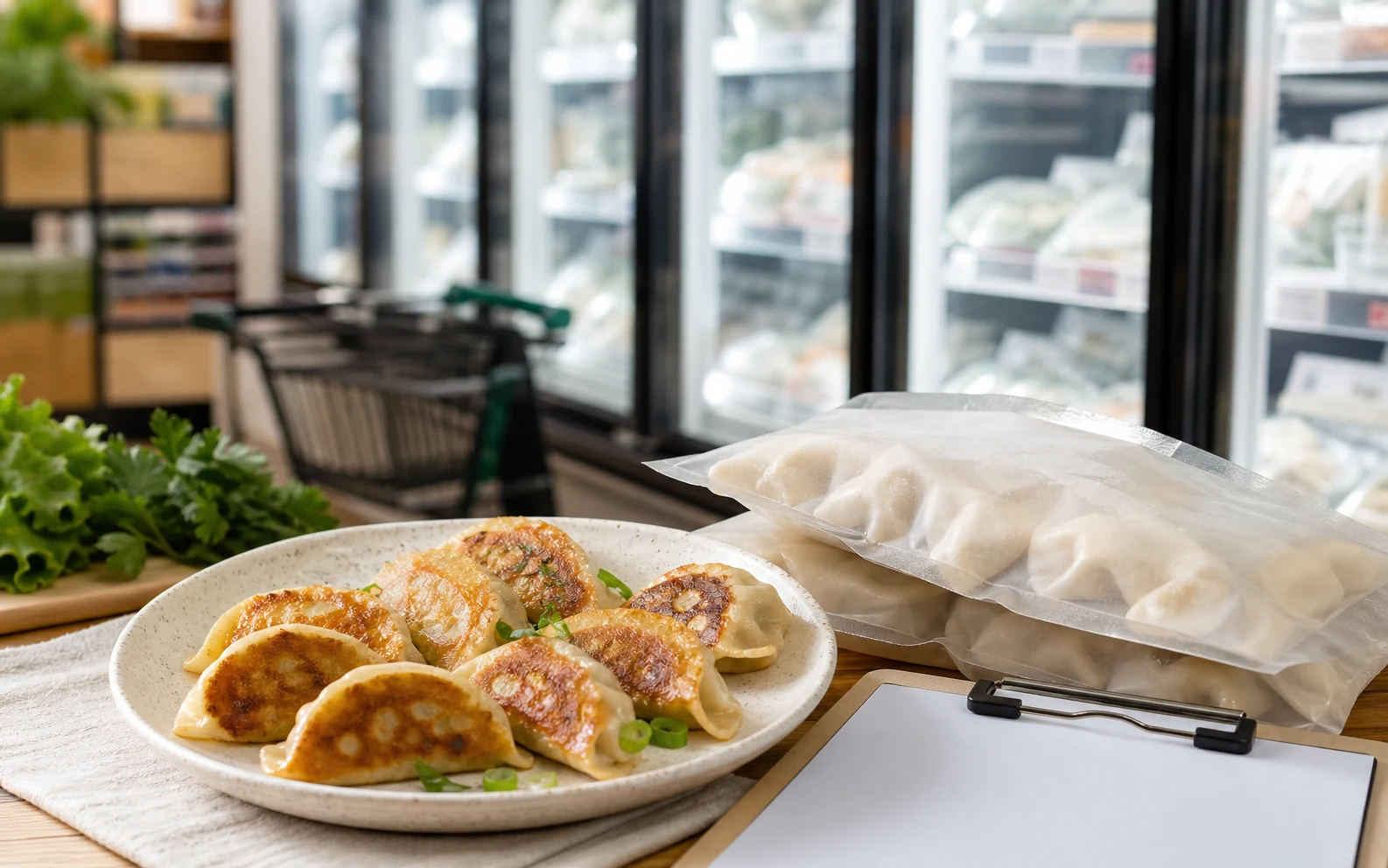
A strong gluten-free frozen dumpling reorder plan is not only a spreadsheet exercise. It is the retail version of a good weeknight dinner routine: the freezer has enough stock, the product stays cold, the shopper understands the flavor, and the next order arrives before the shelf feels tired. ABC Dumplings gives stores a clear anchor with clean gluten-free dumplings rooted in American-born Chinese food memory. This guide is for independent grocers, specialty buyers, natural-food teams and food founders who want a practical way to connect freezer space with repeat demand. For wholesale conversations, start with become an ABC Dumplings reseller; for a broader operational frame, use the wholesale freezer program checklist as a companion.
Why reorder planning matters for frozen dumplings
A freezer item can look successful on the first delivery and still fail if the reorder rhythm is weak. Gluten-free frozen dumplings need more than a place behind glass. They need enough visibility for shoppers to understand the product, enough velocity for the store to protect freezer space, enough cold-chain discipline to preserve texture, and enough operational clarity that the buyer can reorder before the slot goes empty. ABC Dumplings sits in a valuable retail lane because it combines modern gluten-free demand with food memory, family meals and clean ingredient cues. That combination deserves a plan. If a store simply waits until the last bag sells, the shelf may go dark during the exact week shoppers are trying to repeat the meal. If it orders too deeply without reading demand, cash sits in the freezer and quality windows become harder to manage. A useful reorder plan lives between those two mistakes. It turns a delicious product into a predictable freezer program.
Start with the shopper occasion, not the case count
Before a buyer decides how many cases to bring in, the store should decide what meal the shelf is solving. ABC Dumplings can support several occasions: a gluten-free weeknight dinner, a mixed-preference family meal, an easy party tray, a quick lunch, a vegetarian mushroom-tofu plate, or a comfort-food purchase for shoppers who miss Chinese American dumpling nights. Each occasion changes the reorder expectation. A lunchbox shopper may buy a bag every week. A party-tray shopper may buy several bags before a weekend. A gluten-free household may repeat the same flavor if cooking directions are clear and the wrapper performs well. A curious shopper may try one bag only if the shelf gives enough confidence. This is why stores should connect reorder planning with merchandising, not treat it as back-office math. The product has to be visible enough that shoppers understand why it belongs in their freezer.
Define the freezer slot clearly
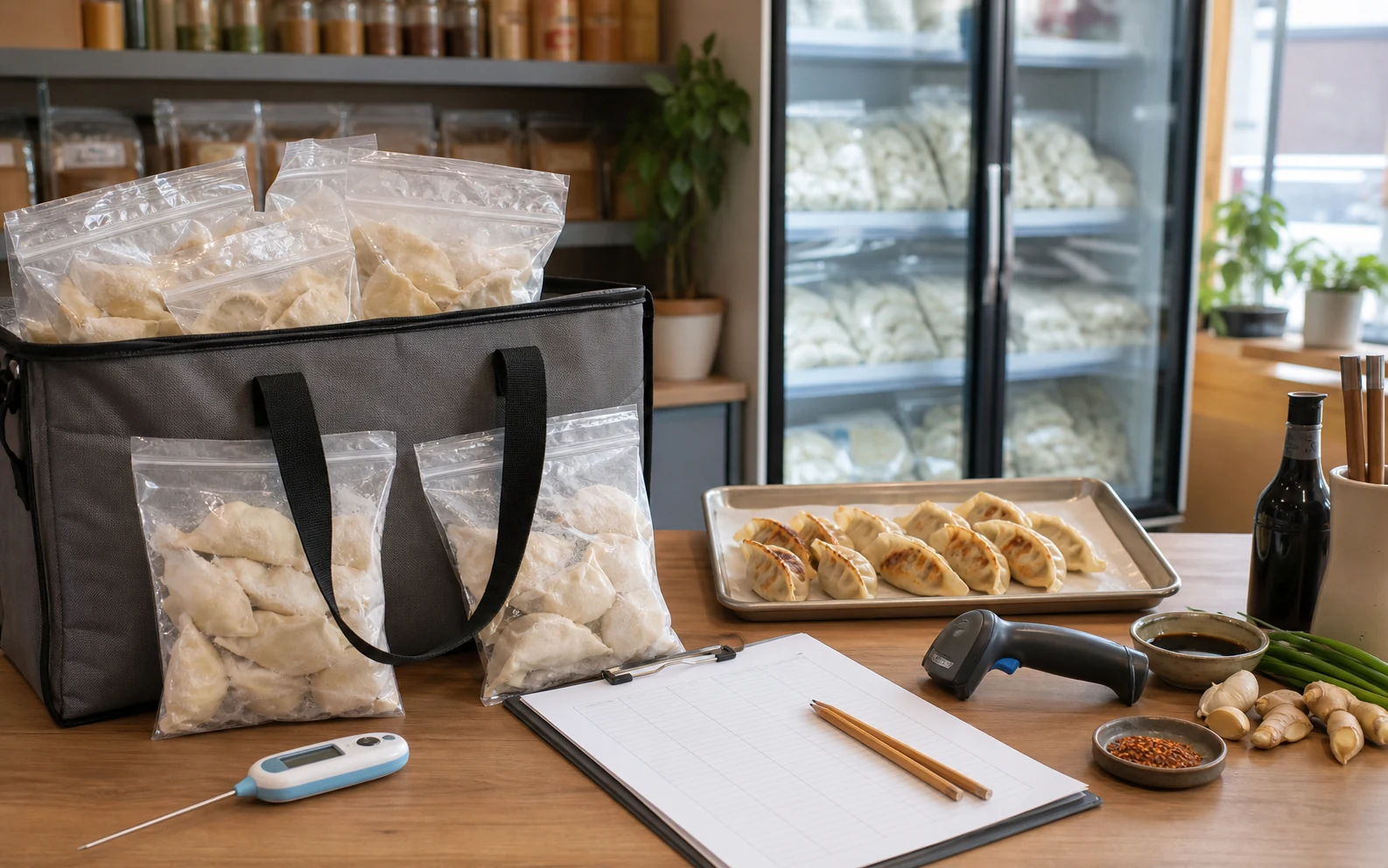
The best freezer slot has a job, a label and a backup plan. The job is the occasion: gluten-free dumplings for dinner, not a vague specialty frozen item. The label should be accurate and conservative: gluten-free frozen dumplings, cook from frozen, clean ingredient cues and the available flavors. The backup plan is operational: where extra cases sit, who checks the door, when the next order is placed and what happens if a flavor sells faster than expected. If the store carries several ABC Dumplings flavors, keep them close enough to read as a family. The bok choy, tofu and mushroom dumplings can speak to vegetarian and plant-forward shoppers, while organic chicken and chive and organic pork and chive give the set a more classic comfort-food range. The shelf should make those choices easy, not hidden.
Use gluten-free claims precisely
Gluten-free is a meaningful claim, but it should not become a broad wellness promise. The FDA explains in its food-labeling guidance that foods labeled gluten-free, no gluten, free of gluten or without gluten must meet the agency's requirements, including a threshold of less than 20 parts per million gluten when unavoidable gluten is present. That standard helps shoppers understand the claim, but a retailer still needs to avoid implying that a whole meal, demo table or freezer set is appropriate for every medical or dietary need. Sauces, sides, shared utensils and nearby products can change the practical experience. The right retail language is specific: read current packaging, check ingredients, follow cooking instructions and ask the brand or store when a dietary need is serious. This article is general business, cooking and shopping information. It is not medical, legal, nutrition or regulatory advice.
Respect organic wording and ingredient detail
ABC Dumplings has organic chicken and organic pork flavors, which gives retailers a valuable way to discuss ingredient standards without overreaching. USDA organic labeling guidance separates different kinds of organic claims, including products labeled organic, made with organic ingredients and ingredient-level organic identification. A buyer does not need to turn a freezer tag into a regulation lesson, but the store should be careful with wording. Say organic chicken or organic pork when that matches the current product and package. Avoid making a broader organic claim about every ingredient or the entire shelf unless the packaging supports it. The same discipline applies to clean-label language. Clean ingredients can be a useful shopper cue, especially when the ingredient panel is understandable, but it should not become a vague guarantee of health, sustainability or purity. Good retail education tells shoppers what is actually in the bag and why it cooks well from frozen.
Build a simple reorder formula
A practical reorder plan can be simple enough for a small store to use without a complex retail system. The buyer needs four numbers: starting units, units sold, units on hand and expected lead time. From there, the store can choose a minimum shelf level and a reorder point.
A buyer-friendly formula
- Track weekly unit sales by flavor, not only total dumpling sales.
- Set a minimum display level so the shelf never looks abandoned.
- Estimate lead time from order placement to freezer-ready delivery.
- Add a small safety buffer for weekends, demos, weather, holidays or local demand spikes.
- Reorder when projected on-hand units fall below lead-time demand plus the safety buffer.
- Review slow flavors with merchandising before cutting them; poor visibility can look like poor demand.
The formula is not meant to replace a buyer's judgment. It gives the buyer a shared language with operations, store staff and founders. When everyone can see the same movement pattern, reorder conversations get calmer.
Separate velocity from enthusiasm
A store may love a product and still need to prove movement. A founder may see shopper excitement during a demo and assume the shelf will reorder automatically. Those are different signals. Velocity is what sells over time. Enthusiasm is what people say when they taste something, ask a question or post a photo. Both matter, but they should not be confused. For ABC Dumplings, a demo may reveal that shoppers understand gluten-free better after hearing the cooking method, or that vegetarian buyers want the mushroom-tofu flavor placed more visibly. Those insights can improve the shelf. The reorder number should still come from actual units sold and the timing of those sales. A premium frozen item earns its freezer space when curiosity turns into repeat purchase. The buyer's job is to notice when that conversion is happening and make sure the shelf stays ready for the next repeat.
Protect the cold chain from delivery to dinner
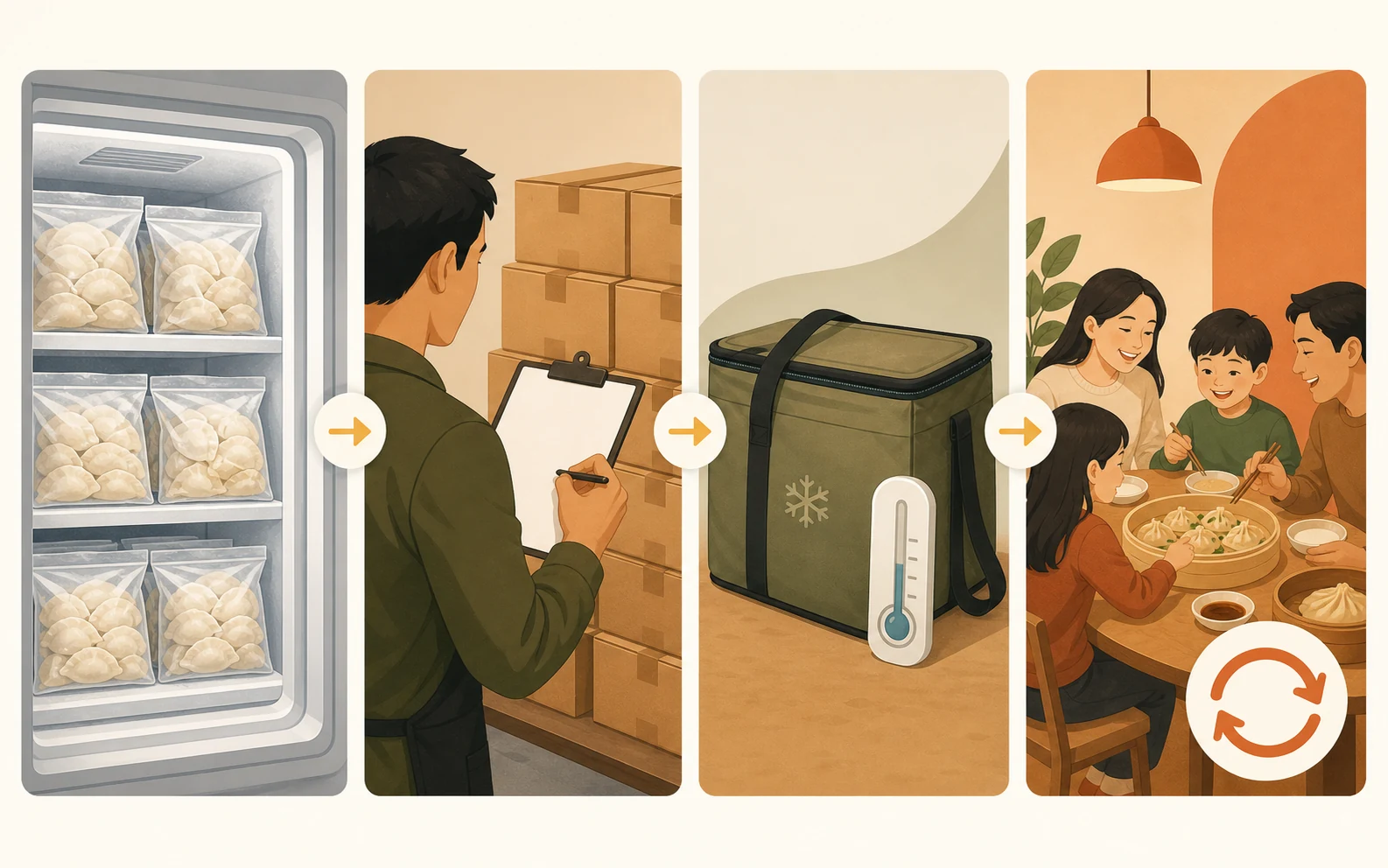
Frozen food logistics should feel ordinary, but the basics matter. USDA FSIS explains that food stored constantly at 0 F remains safe, although quality can suffer during long freezer storage. The same guidance notes that freezing keeps microbes inactive, but thawed food must be handled like other perishable food because microbes can become active again. For dumplings, the quality point is visible before the safety point is theoretical: partially thawed gluten-free wrappers can stick together, tear, frost over or cook unevenly. A store should receive frozen cases promptly, move them into freezer storage quickly, keep doors closed, avoid blocking airflow and train staff to notice softened bags, heavy frost or broken seals. Shoppers continue the chain at home by choosing frozen items near the end of the trip and putting them away before shelf-stable groceries. A reorder plan that ignores cold handling is not complete.
Use demos as demand research
Retail demos can be useful, but they should be designed as research as much as sampling. A good demo asks practical questions: Which flavor made shoppers stop? Did they understand gluten-free dumpling wrappers? Did shoppers ask where to find the product in the freezer? Did they want sauce ideas, cooking instructions, vegetarian options, pork-free choices, party-tray ideas or lunchbox suggestions? Did they buy one bag or several? The retail demo day guide goes deeper into tasting flow, food safety and follow-up. For reorder planning, the important lesson is that demo data should be connected to the next two weeks of sales. If the shelf goes empty after a strong demo, the store loses the chance to learn whether tasting became repeat purchase. If the shelf is restocked and merchandised well, the buyer can see whether the occasion held.
Account for allergens without making the shelf anxious
Food-allergen communication should be calm, accurate and current. Sesame is a good example. The FDA explains that sesame became the ninth major food allergen under the FASTER Act as of January 1, 2023, and packaged foods containing sesame must declare it as an allergen. Dumpling shoppers may also ask about wheat, soy, sesame, eggs, fish sauce, shellfish, peanuts, tree nuts, dairy, mushroom, pork or poultry depending on the product, sauce or cooking situation. Store staff should not guess from memory. They should point to current packaging, brand resources and the shopper's own dietary needs. If a demo includes sauces, keep labels available and use separate utensils. If a customer needs strict avoidance, be transparent about what the store can and cannot control. That posture builds trust. It also keeps retail copy from becoming a compliance risk or a medical promise.
Treat margin as a freezer-health metric
A frozen dumpling program has food logic and business logic. The food logic asks whether the dumplings taste good, cook reliably and fit shopper demand. The business logic asks whether the case cost, retail price, promotions, shrink, demo labor, delivery timing and freezer space make sense together. A store does not need to make the shelf feel financial to the shopper, but the buyer needs to see the math. Margin discipline helps the product stay available. Shrink discipline keeps thawed, damaged or expired product from distorting the real story. Reorder discipline helps the store avoid both empty shelves and frozen cash. Food founders who are scaling into wholesale often benefit from outside bookkeeping and tax structure support; when the conversation moves from taste to inventory, cash flow and records, a discreet resource such as best accounting firm can fit naturally. The product still has to win at dinner. The numbers help it keep showing up.
Merchandise for repeat cooking
A reorder plan gets stronger when the shelf teaches the first meal. Shoppers should understand that ABC Dumplings are frozen dumplings for real home cooking, not a fragile specialty item. Place the product where gluten-free shoppers can find it, but connect it to meal behavior: sauces, rice, greens, broth, cucumbers or simple hosting ideas. Avoid crowding the door with too many signs. One clear cue is better than a wall of claims. Use the sauce and side-dish pairing guide to inspire staff notes or social content, and direct shoppers to the ABC Dumplings shop or find us page when they ask for flavors and availability. Repeat cooking is the real goal. If the first dinner is easy, the second bag becomes much more likely.
Plan by flavor, not only by brand
Flavor-level planning protects both shoppers and buyers. If the vegetarian flavor sells out every weekend while chicken stays steady, the answer may be a deeper vegetarian reorder, stronger mushroom-tofu signage or a demo that shows how to build a plant-forward plate. If organic pork sells strongly before holidays or parties, the store may need a weekend buffer. If organic chicken is the repeat family flavor, it may deserve the most reliable shelf space. Tracking the brand as one number hides these patterns. It also hides preference issues. Some shoppers avoid pork. Some want poultry. Some want a vegetarian option but still need to check soy or sesame. Some are new to gluten-free wrappers and need the most familiar flavor first. The buyer does not need perfect data. A weekly flavor count, a note from staff and a quick review after demos can reveal enough to improve the next order.
A 30-day freezer launch rhythm
For a new store, a 30-day rhythm keeps the launch practical.
Week 1: Set the shelf
Receive product cold, place flavors together, confirm shelf tags, brief staff on current packaging and make sure the freezer door looks organized.
Week 2: Watch first movement
Track units sold by flavor, listen for shopper questions and note whether people ask about gluten-free wrappers, cooking method, vegetarian options or where to find the product later.
Week 3: Support the occasion
Post a simple dinner idea, demo one flavor if appropriate, pair with greens or sauce ingredients and check whether shelf movement changes.
Week 4: Reorder with judgment
Compare starting units, sales, on-hand stock, lead time and upcoming events. Reorder before the shelf looks thin, but use actual movement and staff notes instead of optimism alone.
When shoppers request a store
Retail demand can begin before the buyer has seen a formal pitch. A customer may ask for ABC Dumplings because a friend cooked them, because a gluten-free household needs a better freezer dinner or because a local community wants American-born Chinese comfort food with cleaner ingredients. Those requests are useful when they are specific. Shoppers can use suggest a store to tell ABC Dumplings where demand exists. Store teams can use those requests as qualitative evidence, but they should still ask the operational questions: freezer capacity, flavor mix, delivery timing, product education, demo support and reorder cadence. A request is the door opening. A reorder plan is what keeps the door from closing after the first case.
What not to do
Do not treat gluten-free as a shortcut for every dietary need. Do not place the product so low or crowded that shoppers cannot understand it. Do not run a demo without labeled sauces and separate utensils when allergens matter. Do not reorder only from memory after a busy weekend. Do not let a freezer door sit open during stocking while staff search for shelf tags. Do not make broad environmental, health or clean-label claims that cannot be substantiated. The FTC's consumer guidance on eco-friendly and green marketing claims is a useful reminder that broad package or sustainability language should be truthful and specific. Premium food retailing is often about restraint. Say what the product is, show how to cook it, keep it cold, track movement and reorder before the shelf loses momentum.
Sources and further reading
- FDA: Gluten and Food Labeling
- FDA: The FASTER Act and Sesame as the Ninth Major Food Allergen
- USDA AMS: Labeling Organic Products
- USDA FSIS: Freezing and Food Safety
- USDA FSIS: Safe Minimum Internal Temperature Chart
- FoodSafety.gov: Cold Food Storage Chart
- FTC Consumer Advice: Eco-Friendly and Green Marketing Claims
Final takeaway
A gluten-free frozen dumpling reorder plan should feel practical, not corporate. Start with the meal occasion: a freezer bag that becomes a warm dinner, a party tray, a lunchbox or a repeat family comfort food. Give the shelf enough clarity that shoppers can understand the flavors. Use gluten-free, organic and clean-label language precisely. Keep the product frozen from receiving to sale, and remind shoppers that cold handling continues on the way home. Track weekly units by flavor. Plan around lead time, shelf minimums and a small safety buffer. Use demos as research, not only theater. Treat margin, shrink and reorder timing as part of keeping good food available. Then keep improving. ABC Dumplings has the kind of story shoppers can remember: modern gluten-free dumplings with clean ingredients and American-born Chinese food memory. The buyer's job is to make sure that story is still waiting in the freezer when the shopper comes back.