ABC Dumplings Journal
Gluten-Free Dumpling Soup Night: A Freezer-to-Broth Guide
Build a cozy gluten-free dumpling soup night from the freezer with broth, greens, safe cooking habits, allergen-aware toppings and ABC Dumplings flavor ideas.
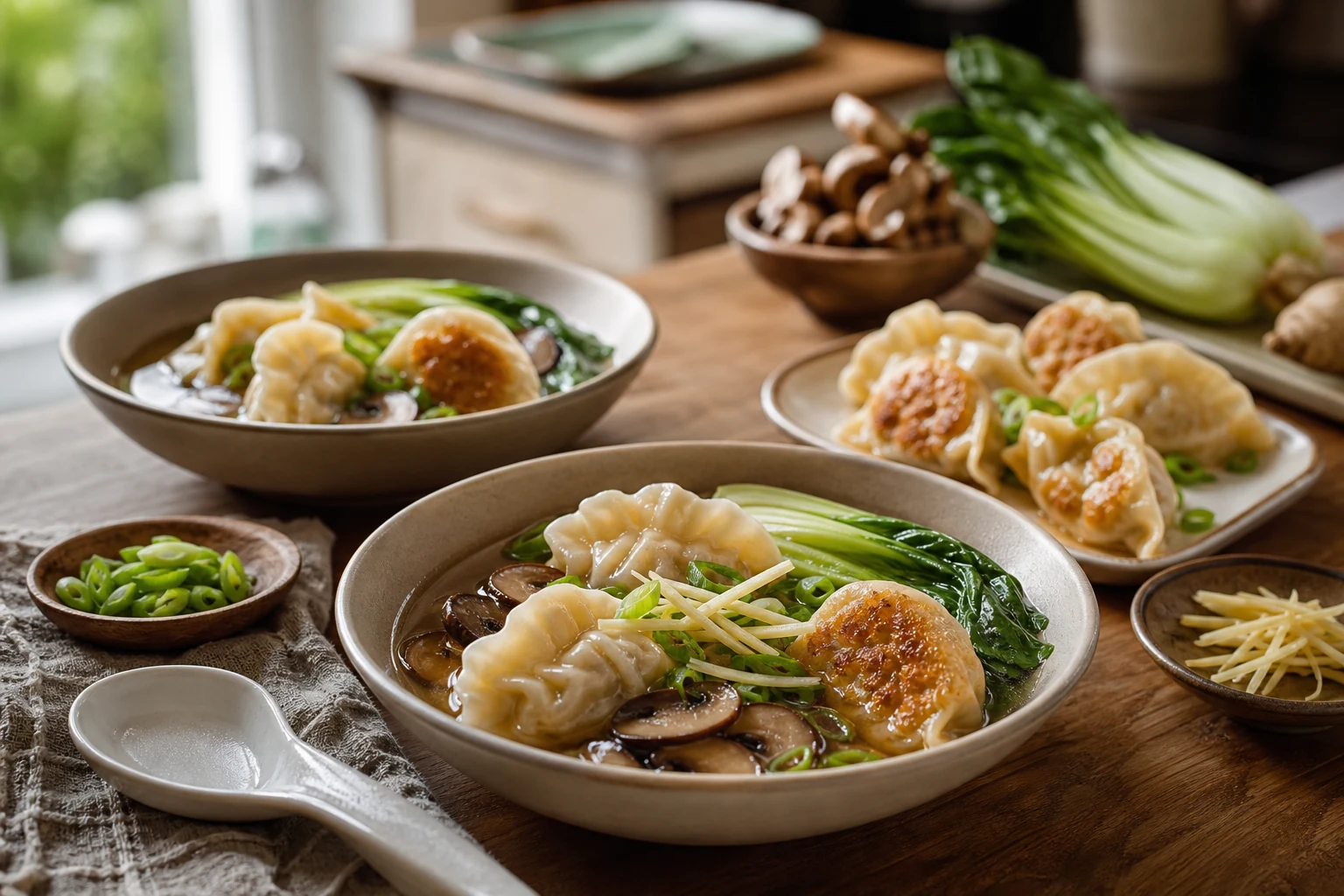
Soup night is one of the easiest ways to make frozen dumplings feel generous without turning dinner into a project. Start with hot broth, add vegetables, cook dumplings from frozen and finish with simple toppings that keep every bowl clear and comforting.
Why soup night is different from a sauce night
A sauce tray makes dumplings feel snackable. A soup bowl makes them feel like dinner. That difference matters for gluten-free frozen dumplings because broth gives the meal a warm structure without asking the host to prepare many side dishes. Instead of cooking dumplings, rice, greens, pickles and several dips, you can build one bowl that carries broth, vegetables, aromatics and dumplings together. The format is practical for weeknights, but it can still feel premium when the broth is clean, the greens are bright and the toppings are intentional. It also gives ABC Dumplings a natural way to show all three parts of its story: gluten-free wrappers, familiar American-born Chinese comfort and freezer convenience that respects real family schedules. Soup does not replace pan-fried dumplings or a classic dipping night. It is a different lane, especially useful when the weather is cold, the household is tired or the table includes people who want a softer, quieter meal.
Keep the gluten-free promise precise
A soup bowl can accidentally undo a gluten-free dumpling choice if the broth, sauces or toppings are not checked. The FDA explains that foods labeled gluten-free in the United States must meet defined requirements, including a less than 20 parts per million gluten threshold for unavoidable gluten when the claim is used; the consumer guidance is available at Gluten-Free Means What It Says. That reference is useful, but it does not make every ingredient in a soup bowl gluten-free. Soy sauce, wheat noodles, some broths, fried shallots, packaged chili crisps and seasoning blends may change the meal. For a household that avoids gluten, build the bowl from clearly labeled ingredients and read the current ABC Dumplings package before serving. This guide is general cooking information, not medical advice for celiac disease, wheat allergy or any other condition. If a guest has strict needs, let that guest define the level of separation required.
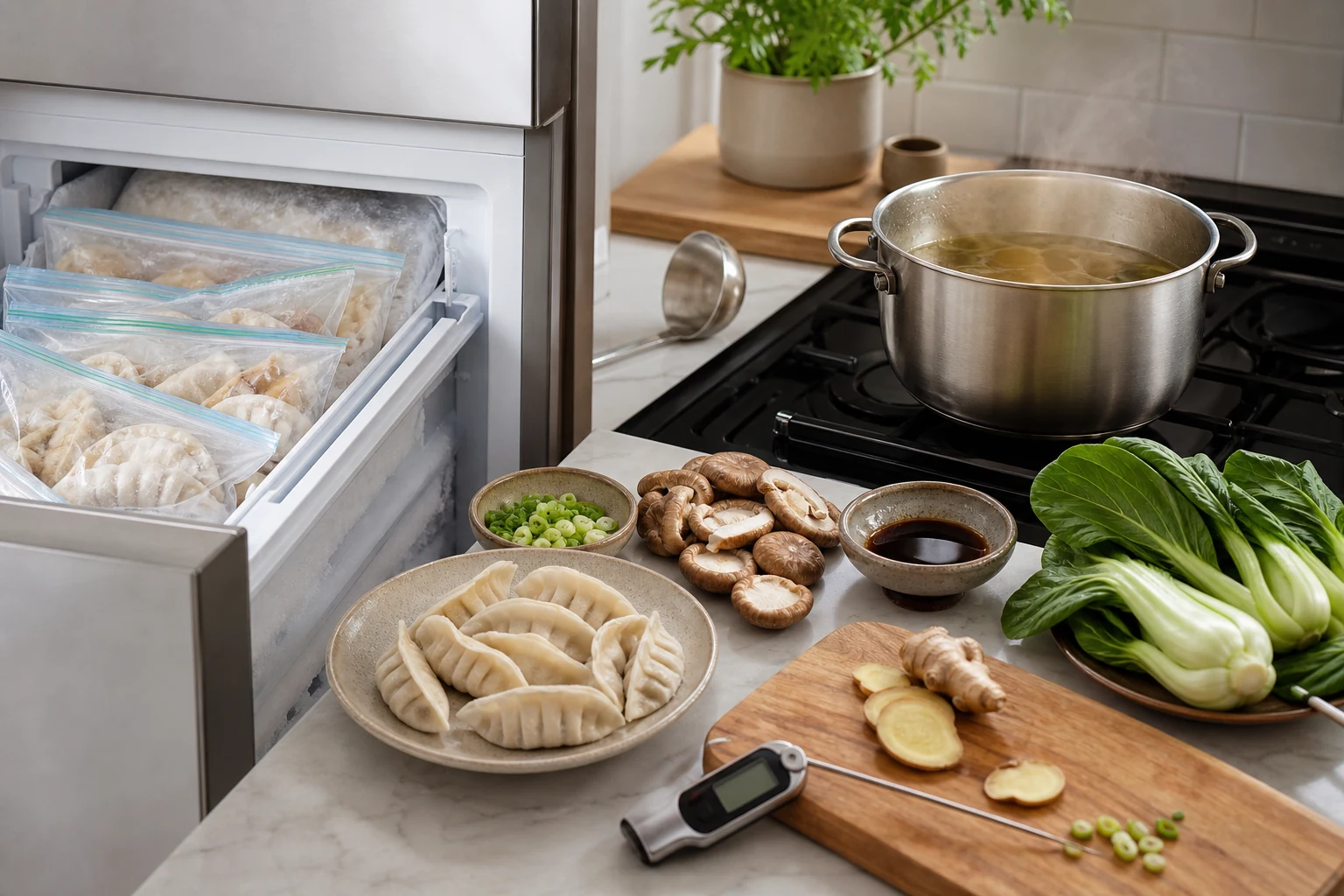
Start with a broth that supports the filling
The broth should carry the dumplings without hiding them. A light chicken broth works well with organic chicken and chive dumplings because it reinforces the juicy, savory center without making the bowl heavy. A ginger-scallion vegetable broth is a better first choice for bok choy, tofu and mushroom dumplings because it keeps the vegetable and shiitake notes visible. Pork and chive dumplings can handle a deeper broth with garlic, ginger, white pepper and a small splash of gluten-free tamari, but they still do not need a thick or creamy base. Think of broth as a frame. If the frame is too loud, the dumpling disappears. If it is too thin, the bowl feels like hot water with good toppings. The best middle path is a broth that tastes complete before the dumplings enter the pot, then gets a little more body as vegetables and aromatics cook.
Practical note
For best results, cook only the amount you plan to eat, give each dumpling space and serve while the wrapper is hot. Small technique choices have a larger effect with gluten-free wrappers because the starch blend keeps changing as it cools.
Use frozen handling as a texture tool
Frozen dumplings are not just stored cold for convenience. The frozen state helps the wrapper hold its shape long enough to cook cleanly. USDA FSIS guidance on Freezing and Food Safety explains that food kept constantly frozen at 0 F remains safe, although quality can still change during storage and handling. For dumpling soup, that quality point is important. If dumplings sit on the counter while the broth is still being chopped and seasoned, gluten-free wrappers can become tacky. If they partially thaw and then refreeze, they can stick together or cook unevenly. Set up the soup first. Wash and cut greens. Warm the broth. Place bowls near the stove. Then open the freezer, remove only what you plan to cook and return the rest promptly. This habit protects the bite and keeps the cooking sequence calm.
Build the bowl in the right order
The order of operations is simple: broth first, sturdy vegetables second, dumplings third, tender greens and toppings last. Start by simmering broth with ginger, garlic, scallion whites, mushrooms or a small amount of gluten-free tamari if it fits the table. Add vegetables that need time, such as sliced mushrooms, carrots or napa cabbage stems. When the broth tastes ready, add frozen dumplings with enough space that they can move gently. Keep the heat active but not violent. A rolling boil can tear tender wrappers, while a weak simmer may leave the center underheated. Add bok choy leaves, spinach, scallion greens or herbs near the end so they stay bright. Move each serving into a bowl with enough broth to keep dumplings moist, then finish with optional chili, sesame, herbs or vinegar only after allergen needs are clear.
Practical note
For best results, cook only the amount you plan to eat, give each dumpling space and serve while the wrapper is hot. Small technique choices have a larger effect with gluten-free wrappers because the starch blend keeps changing as it cools.
Cook hot enough and avoid guessing
Soup can make food look ready before the center is actually hot. That is why a conservative soup-night guide should talk about temperature without pretending every home cook has professional equipment. FoodSafety.gov lists 165 F as the safe minimum internal temperature for poultry and leftovers on its safe minimum internal temperature chart. ABC Dumplings meat flavors should be cooked hot at the center according to current package directions, and a digital thermometer is useful when cooking chicken or pork dumplings for children, guests or anyone who wants confidence. The thermometer does not need to be part of the table. It is a quiet kitchen tool. Check a sacrificial dumpling from the largest batch, especially when the pot is crowded or the broth cooled after vegetables were added. Once the dumplings are hot, serve promptly instead of letting them sit until the wrappers swell and soften.
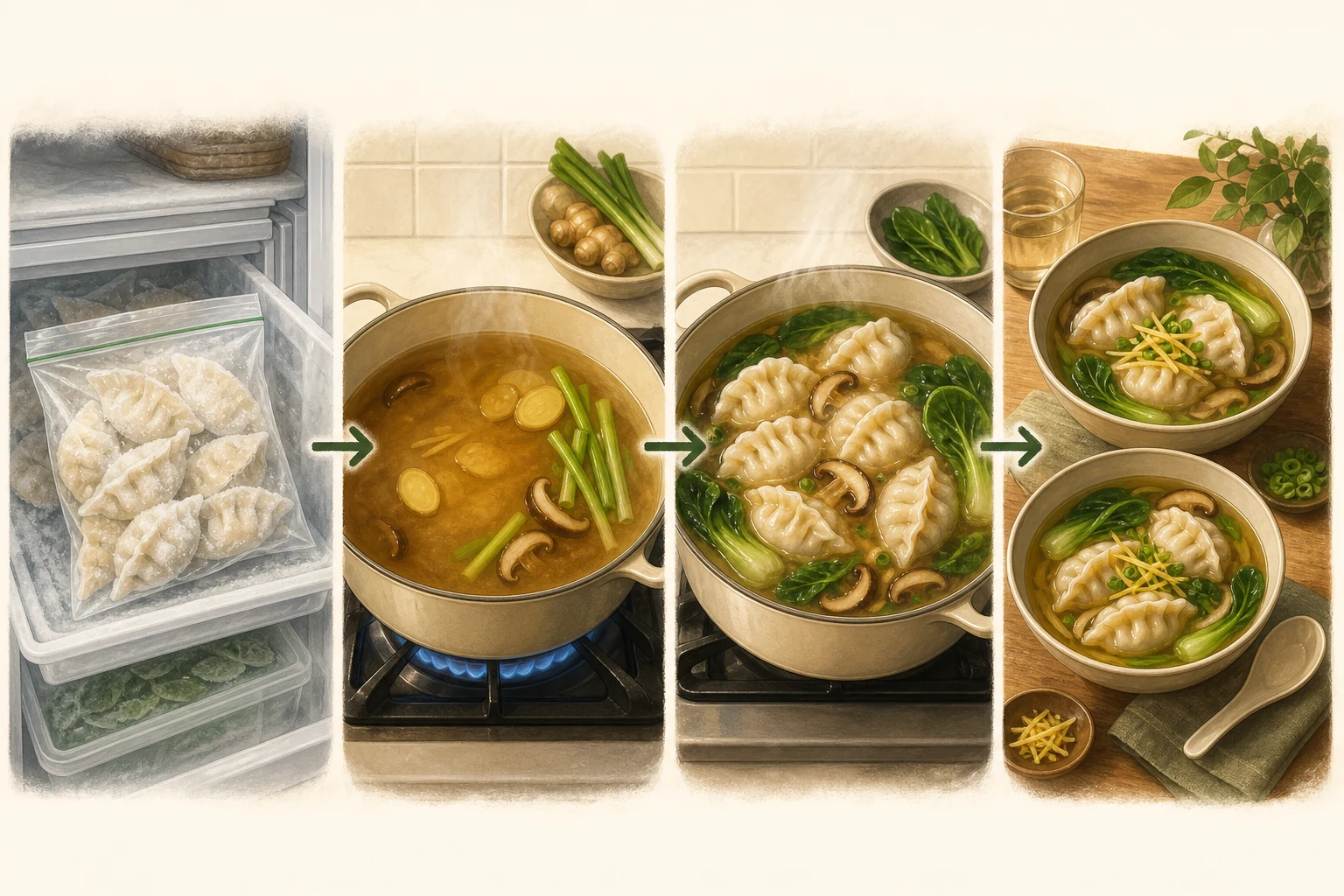
A freezer-to-broth checklist
Use this checklist when you want soup night to feel relaxed instead of improvised.
- Choose the ABC Dumplings flavor first, then build the broth around that filling.
- Read labels on broth, tamari, chili oil, toppings and packaged vegetables if gluten-free matters.
- Keep frozen dumplings in the freezer until the broth is simmering and bowls are ready.
- Use a gentle active simmer rather than a violent boil once dumplings enter the pot.
- Cook meat dumplings hot at the center and use a thermometer when practical.
- Add tender greens and herbs near the end so the bowl stays fresh.
- Serve toppings on the side when sesame, soy, chili, pork, vegetarian or allergy questions matter.
- Cool and refrigerate leftovers promptly if you made extra broth or vegetables.
Match ABC Dumplings flavors to soup styles
The bok choy, tofu and mushroom dumplings belong in a vegetable-forward broth with shiitake, ginger, scallion and bok choy. Their filling already has greens, tofu and mushroom depth, so the soup should stay clean and not become too salty. The organic chicken and chive dumplings work beautifully in a clear chicken-style broth, ginger broth or rice-porridge-inspired bowl with scallion and greens. The organic pork and chive dumplings can take stronger aromatics: garlic, white pepper, chili on the side and a little vinegar at the finish. If you are serving more than one flavor, cook separate small batches or keep a consistent bowl order. Vegetarian guests may not want their dumplings cooked in meat broth, and pork avoiders may need a separate pot. Ask first, then keep the setup simple.
Make toppings optional, not confusing
Toppings are where soup night becomes personal, but they are also where allergen and preference confusion can appear. Sesame oil, chili crisp, peanuts, fried garlic, soy-based sauces, fish sauce, egg ribbons and packaged crunch toppings can all change the meal. The CDC summarizes basic food-safety prevention around the four steps of clean, separate, cook and chill in its food safety prevention guidance. For soup night, that mindset translates into clean spoons, separate topping bowls, clear labels and prompt chilling of leftovers. Keep the main broth mild enough that everyone can eat it if their needs allow. Put heat, sesame, extra tamari, vinegar and crunch on the side. This does not make the table less generous. It makes the generosity easier to accept because guests can build bowls without wondering what was mixed into the pot before they arrived.
Use soup night for low-stress hosting
Dumpling soup is an excellent hosting format because it scales in waves. Instead of frying one huge batch, you can keep broth hot, cook dumplings in smaller rounds and serve bowls as people settle. The first round can be mild and vegetable-heavy. The second can be richer or spicier for guests who want more intensity. A large pot of broth on the stove also lets the host correct timing problems. If someone arrives late, their dumplings can cook fresh instead of waiting on a platter. If children need a plain bowl, ladle broth and greens before chili or vinegar reach the table. If a guest wants a lighter meal, give them more greens and fewer dumplings. The format feels caring because it adapts without drama. That is exactly where freezer food becomes useful: it gives the host flexibility without lowering the quality of the moment.
Think like a California freezer shopper
California and U.S. grocery shoppers often buy across several needs at once. One household may want gluten-free options, cleaner ingredient panels, organic chicken or pork, a vegetarian choice and food that still feels like comfort. Dumpling soup answers that mixed reality because the freezer item is only the anchor. The bowl can change around it. A shopper can keep ABC Dumplings in the freezer, then decide on broth and vegetables based on the week. When the fridge has bok choy and mushrooms, the meal becomes vegetable-forward. When the pantry has rice and broth, it becomes a comfort bowl. When guests come over, it becomes a build-your-own soup table. That flexibility is useful for shoppers and for retailers explaining why frozen dumplings belong in a modern freezer set. The product is not only an appetizer. It is a dinner starter, a hosting shortcut and a repeatable family meal.
Retail and reseller angle
Retailers can merchandise dumpling soup night without making the shopper work too hard. The freezer door can show the dumplings, while nearby shelves or content can suggest broth, gluten-free tamari, rice vinegar, scallions, greens and mushrooms. A simple meal idea helps shoppers understand how one bag becomes dinner. Stores evaluating ABC Dumplings can use the become a reseller page to start the conversation, while shoppers who want the product nearby can use suggest a store. The retail case is practical: gluten-free frozen dumplings can sit between dietary need, family comfort and quick cooking. Soup night makes that case visible because it shows the whole meal in one bowl. It also reduces first-purchase anxiety. A shopper who knows exactly how to cook a comforting first dinner is more likely to try the freezer item and more likely to buy it again.
What to do with leftovers
Soup leftovers need a little thought because dumplings keep absorbing broth as they sit. If you expect leftovers, store extra broth and vegetables separately from uncooked frozen dumplings. Cook only the dumplings you plan to eat right away, then make a fresh small batch when reheating. If cooked dumplings are already in broth, cool the soup promptly, refrigerate it in a shallow container and reheat thoroughly before serving. FoodSafety.gov and USDA materials commonly point home cooks toward prompt refrigeration and hot reheating for leftovers; the practical dinner rule is not to let a big warm pot drift on the counter while everyone talks. Quality matters too. A dumpling that was perfect at 7 p.m. can become too soft after sitting in broth all night. Planning leftovers separately protects both safety and texture. The freezer is there so you do not have to cook every dumpling at once.
Final takeaway
Gluten-free dumpling soup night works because it respects what frozen dumplings do well. They wait in the freezer, cook quickly, portion easily and bring the emotional center of a shared meal. Broth turns that center into a full dinner. The method is simple: choose the flavor, build a clean broth, keep dumplings frozen until the pot is ready, cook hot, add greens late and keep toppings optional. Read labels. Avoid overclaiming. Use separate tools when guests need them. Serve the first bowls hot and make more as the table asks. This is not restaurant theater. It is practical hospitality with enough warmth to feel special. For ABC Dumplings, that is the sweet spot: modern gluten-free frozen dumplings rooted in food memory, made useful for the way families, shoppers and hosts actually eat now.