ABC Dumplings Journal
Vacation Rental Dumpling Dinner Guide for Gluten-Free Freezer Meals
Plan a gluten-free frozen dumpling dinner in a vacation rental kitchen with cold-chain habits, simple cooking, allergen-aware hosting and easy sides.
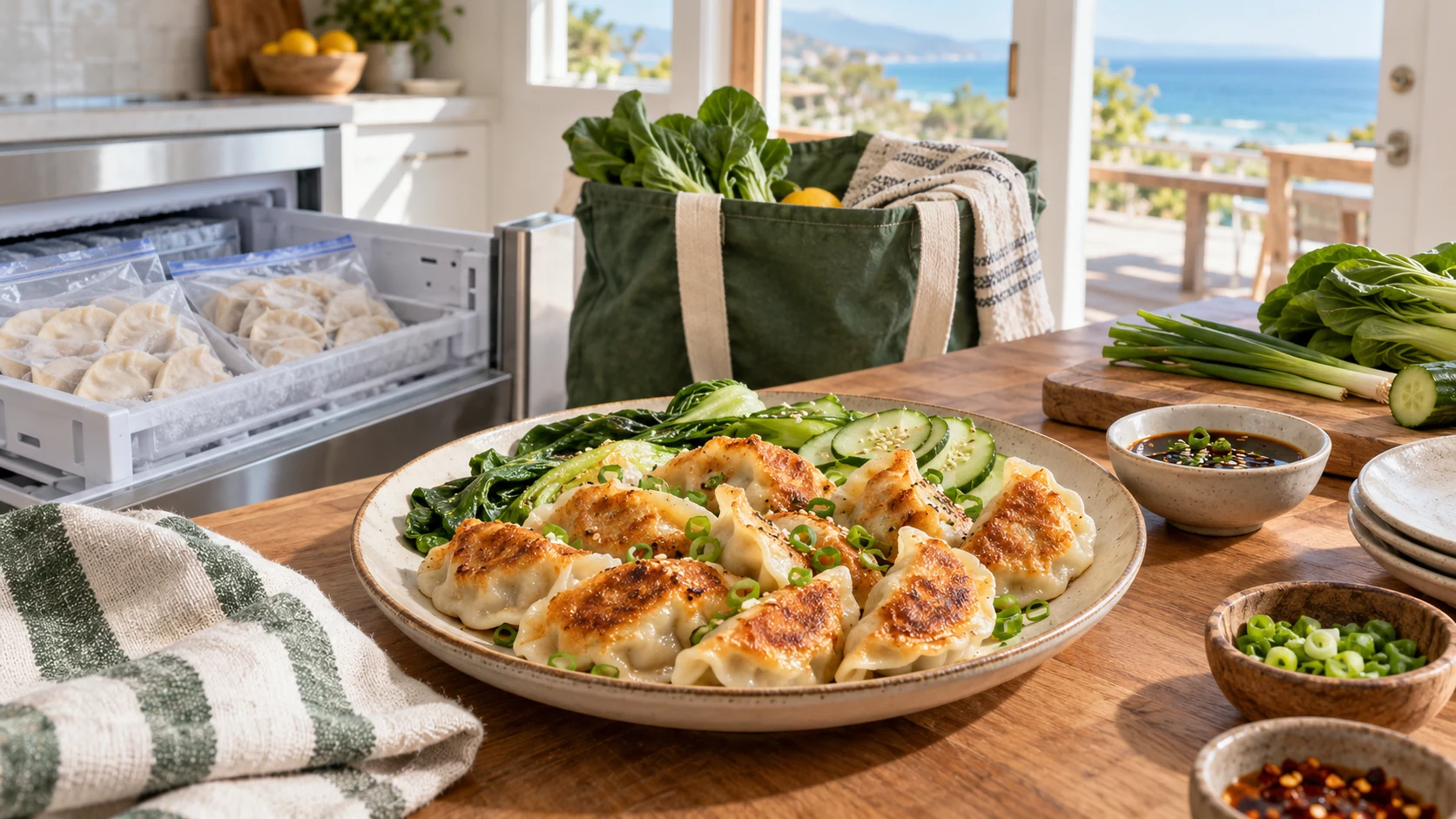
A vacation rental kitchen is where good intentions meet a small pan, a half-stocked drawer, a long grocery run and a table of hungry people who have just come back from the beach, the trail or the pool. Gluten-free frozen dumplings are made for that moment because they bring comfort, portioning and freezer convenience into one bag. The plan still needs care. You have to carry frozen food cold, read the current package, respect allergens, cook in manageable batches and avoid making promises the kitchen cannot support. This guide uses ABC Dumplings as the anchor for a practical rental-house dinner: how to buy, transport, store, cook and serve dumplings when the kitchen is not your own. Start with the ABC Dumplings flavors, check where to find ABC Dumplings near you, and use the safety links here as general information rather than medical, legal or regulatory advice.
Why vacation rental kitchens change the freezer meal plan
A regular home freezer has habits. You know which drawer runs cold, which skillet browns evenly, where the tongs live and how quickly your family eats a batch of dumplings. A vacation rental kitchen has fewer knowns. The freezer may be smaller than expected. The pan may be thin. The stove may heat unevenly. The counter may be crowded with snacks, paper towels, beach bags, water bottles and produce from a grocery stop. That does not make the meal difficult; it only means the plan should be simpler.
Gluten-free frozen dumplings are useful in a rental house because they do not ask the host to build a full recipe from unfamiliar tools. A bag of dumplings, one pan with a lid, water, oil, a cutting board, cucumbers or greens, rice or broth and two sauces can become dinner. The important move is to keep the dumplings frozen until cooking and to let the table follow the limits of the kitchen. If the pan is small, cook in two rounds. If the freezer is packed, place dumplings where they stay cold and flat. If guests have dietary needs, keep labels and tools visible instead of relying on memory. Premium hosting in a rental is not about a dramatic spread. It is about calm decisions that make dinner feel easy.
The rental-house rule
Choose a meal that still works when the kitchen is imperfect. Frozen dumplings, crisp vegetables, rice, broth and sauce can flex around the equipment you actually find.
Buy frozen dumplings like the trip has a clock
The grocery run matters more on vacation because the drive home may be longer, hotter or slower than usual. FDA safe-food-handling guidance advises keeping refrigerators at 40 F or below and freezers at 0 F or below, and it uses a practical timing rule for perishables: refrigerate or freeze within 2 hours of cooking or purchasing, or within 1 hour when the outside temperature is above 90 F. Treat those numbers as a conservative planning frame for a vacation grocery trip rather than as a challenge to stretch.
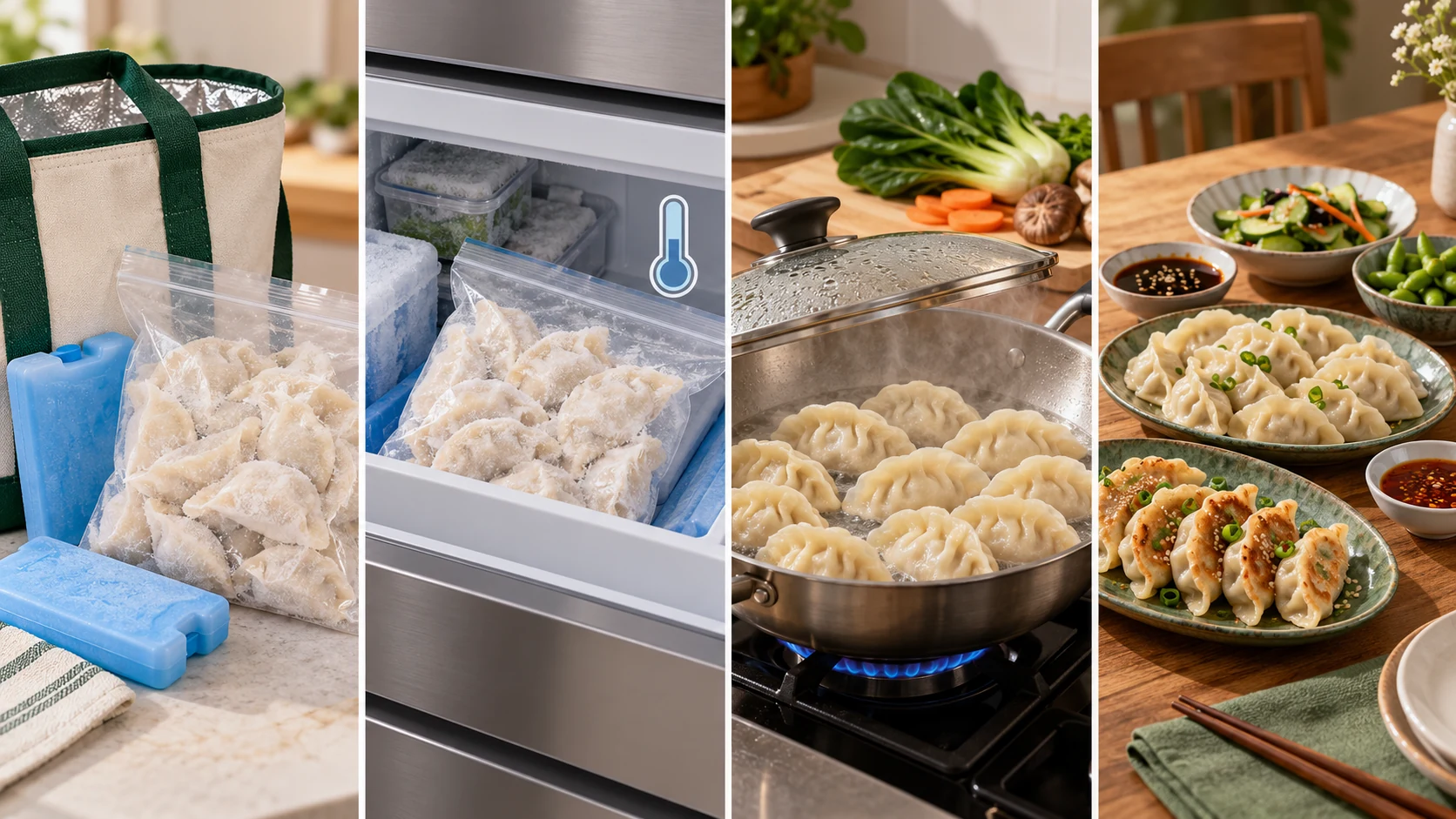
That means frozen dumplings should usually be one of the last items you take from the freezer case and one of the first items you put away at the rental. Bring an insulated tote or cooler if the store is not close. Use ice packs when the route includes traffic, errands or a warm trunk. Keep the bag sealed. Do not leave groceries in the car while everyone checks in, picks bedrooms or walks down to the beach. The more ordinary the routine feels, the more likely people are to follow it: frozen item last, insulated carry, direct freezer storage.
For ABC Dumplings, this cold-chain habit protects both safety judgment and texture. Gluten-free wrappers depend on starch structure, moisture balance and gentle handling. If the dumplings partly thaw, get crushed under bottles or refreeze in a clump, the dinner may still look convenient in theory but become frustrating in the pan. A little grocery discipline helps the meal stay as good as the idea.
Useful official references include the FDA's safe food handling guidance and its advice on handling food safely while eating outdoors. Always follow the current package directions and your own household's needs.
Keep gluten-free and allergen questions precise
A vacation rental can tempt people into shortcut language: gluten-free table, safe for everyone, allergy-friendly dinner. Those phrases may be warmer than they are accurate. The better approach is precise and humble. Read the current dumpling package. Read every sauce, side and garnish. Ask guests what they need before shopping. Keep original packaging available until dinner is over. If you transfer dumplings or sauces into bowls, do not throw away the information that explains what they are.
For gluten-free labeling context, the FDA explains that foods bearing a gluten-free claim must meet requirements including a gluten threshold of less than 20 parts per million, but that official labeling standard does not make a rental kitchen automatically suitable for every guest. Cross-contact can still happen through cutting boards, pans, sauces, shared utensils, toasters, crumbs and casual serving habits. The dumplings may be gluten-free, while a dipping sauce or side dish may not be. A host should separate those questions instead of bundling them into one comforting phrase.
ABC Dumplings sits naturally in this kind of dinner because the product story is already about modern gluten-free frozen dumplings rooted in American-born Chinese food memory. Still, the host's job is practical: read the label in hand, keep meat and vegetarian flavors separate when that matters, use clean utensils and avoid guessing about another person's allergy, celiac disease or medical requirement. This article is general information. It is not medical advice, and it should not replace professional guidance for diagnosed conditions.
For source context, read the FDA's gluten-free labeling overview and the FDA's consumer information on food allergies and labels.
Pack the rental kitchen before everyone is hungry
The best rental-house dumpling dinner starts before the pan gets hot. Look at the kitchen when you arrive. Is there a nonstick skillet or stainless pan? Is there a lid that fits closely enough to steam? Are there tongs, a spatula, a cutting board, a knife, sauce bowls and enough plates? If not, simplify. Dumplings can still work with one pan, a splash of water and a lid, but the host should know that before hungry people begin asking when dinner is ready.
Rental kitchen checklist
For a small group, plan one cooking pan, one lid, one serving platter per dumpling type, one set of tongs per platter, a small bowl for each sauce, a towel or trivet, a timer, an optional food thermometer and one cold side that does not fight the stove. Good sides include cucumber salad, blanched greens, rice, broth, snap peas, quick pickles, scallions, citrus wedges or a simple salad. Avoid adding complicated sauces if you cannot verify their ingredients or keep them separate.
Keep the freezer organized. Place dumpling bags flat instead of wedged into the door. Keep ice packs or frozen water bottles nearby if the freezer looks loosely packed. If you are feeding a mixed-preference group, put vegetarian dumplings and meat dumplings in different zones and keep the bags visible. Guests do not need a lecture; they need an orderly table. A little setup turns the meal from improvisation into hospitality.
Cook from frozen in an unfamiliar pan
The safest practical cooking posture is to follow the current package directions. In a rental kitchen, resist the urge to thaw dumplings to make cooking feel faster. Cooking from frozen protects shape and helps the wrapper behave predictably. If the pan is thin or the stove runs hot, lower the heat and give the dumplings more space. Crowding may save minutes at the start and cost texture at the end.
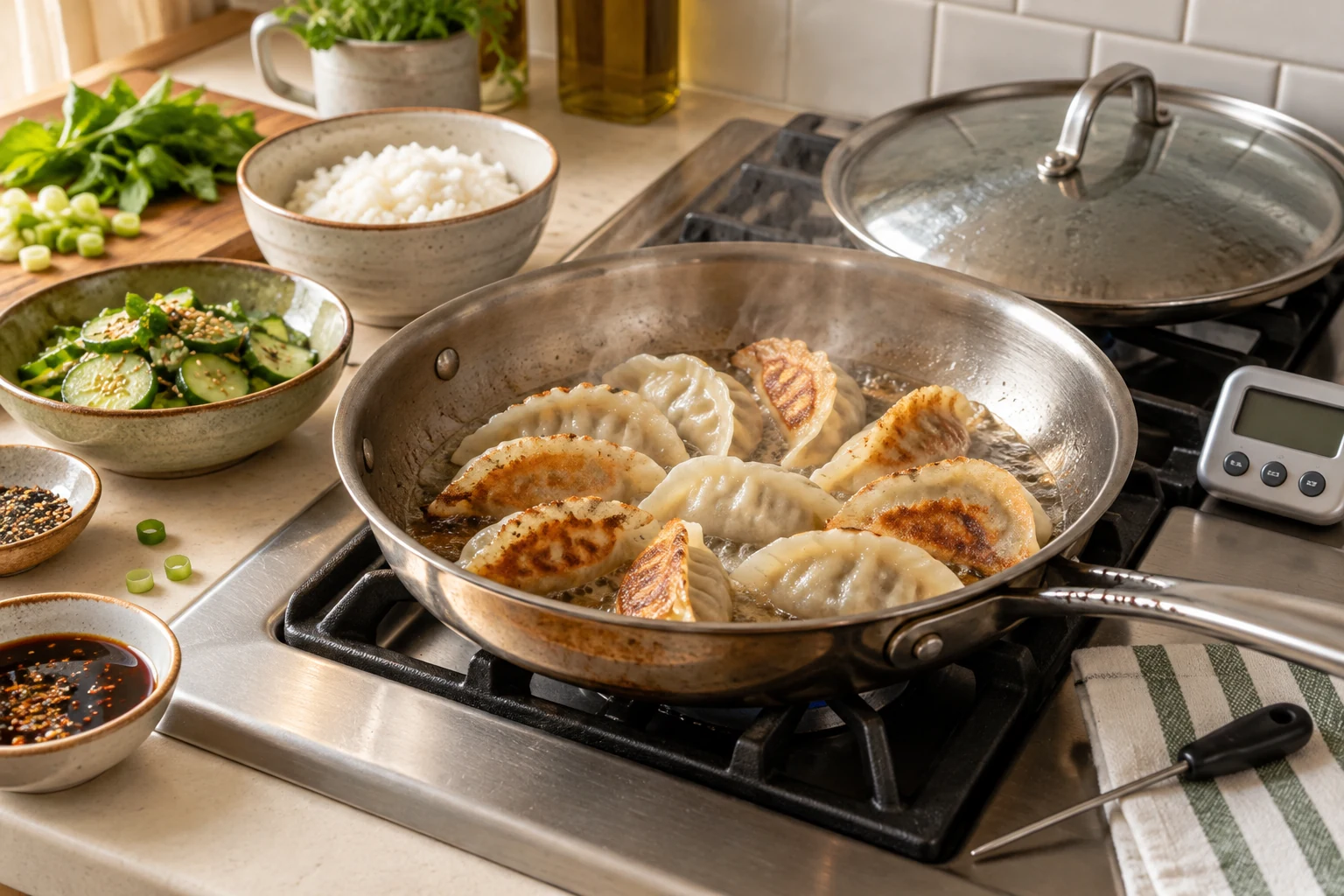
A pan-steam method is usually forgiving. Add a small amount of oil, arrange frozen dumplings with room between them, brown the bottoms gently, add water, cover and steam, then uncover so extra moisture can leave and the bottoms can re-crisp. If the pan is sticky, use less ambition and cook fewer dumplings at once. If the rental has only a pot, steaming or simmering may be easier than chasing a perfect crisp bottom. If the rental has an oven or air fryer, check the package and equipment instructions, because unfamiliar appliances can heat unevenly.
For meat-filled dumplings, the cook should be especially conservative. Use the package directions and, when appropriate, a food thermometer. FDA safe-food-handling guidance lists 165 F for poultry, leftovers and casseroles, which is a useful official reference point when thinking about hot prepared foods. Do not rely on wrapper color alone to judge the center of a dumpling. A golden bottom tells you about the pan contact, not the entire filling. When in doubt, cook a little longer, reduce heat to avoid scorching and serve a test batch only after the filling is hot.
Build a small table with separated choices
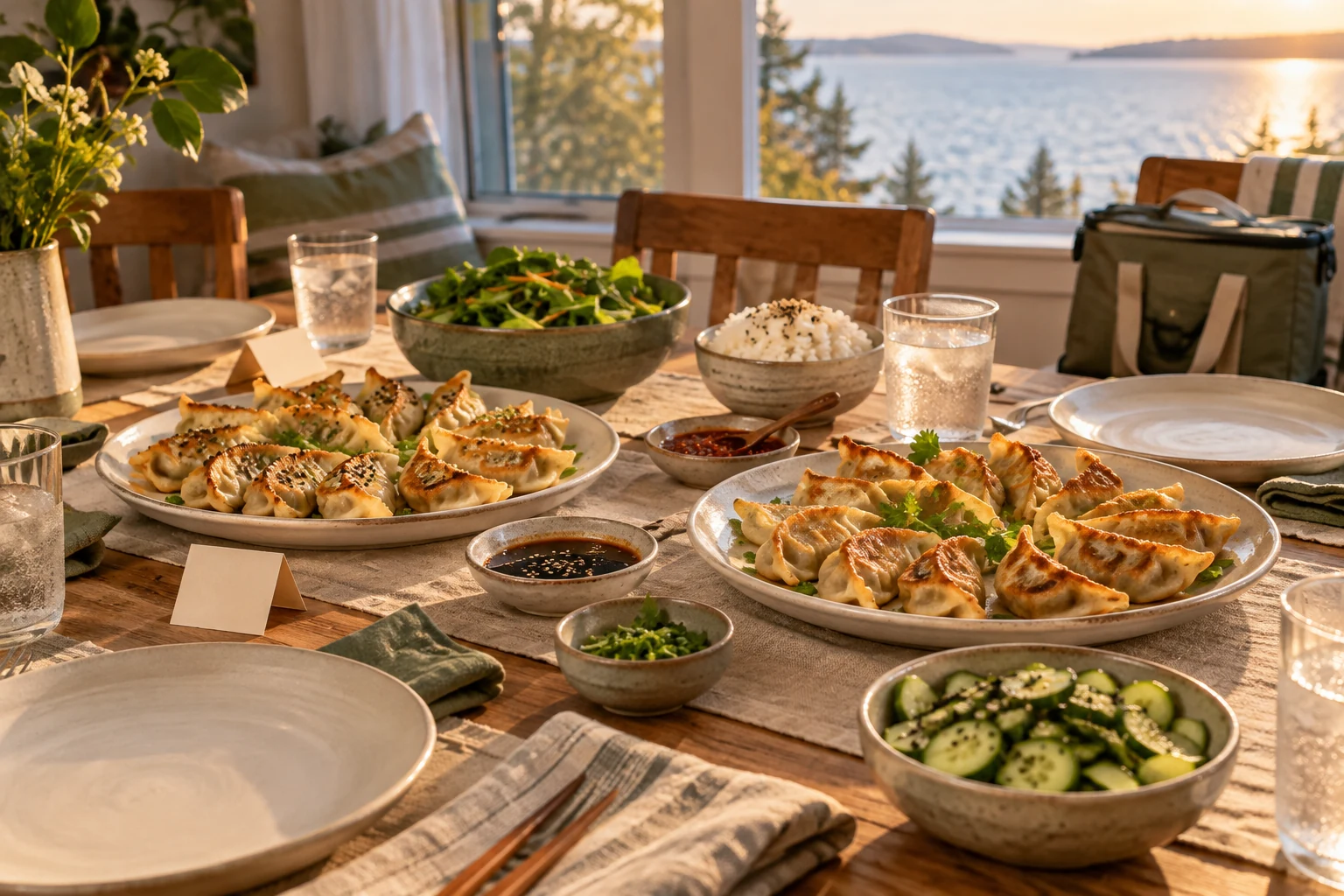
A vacation rental table should feel abundant without becoming a buffet nobody understands. Place dumplings on wide platters instead of deep bowls so they do not steam each other soft. If you are serving vegetarian and meat options, use separate platters and separate tongs. Put sauces in individual bowls or clearly separate shared bowls. Keep cucumbers, greens, rice and broth close enough to build a meal, but do not bury the dumplings under toppings. The dumplings are the anchor.
For a family after a beach day, a table might be as simple as organic chicken and chive dumplings, bok choy tofu mushroom dumplings, cucumbers, rice, a gluten-free tamari-style sauce if verified, chili crisp if everyone can use it, scallions and cold fruit. For a friend group, add a second vegetable and one broth. For kids, keep sauce on the side and make the first batch small so the host can learn how quickly the table eats. The goal is repeatable comfort, not a restaurant simulation.
This is also a good place to send readers deeper into the ABC Dumplings site. Browse the organic chicken and chive dumplings, the organic pork and chive dumplings or the bok choy, tofu and mushroom dumplings before a trip, then use the find us page to plan the grocery stop.
Host allergen-aware without overclaiming
Allergen-aware hosting in a rental house is mostly about boundaries. You can say, this sauce contains sesame. You can say, these are vegetarian dumplings and these are chicken. You can say, I kept the original packages on the counter. You should not say, this whole kitchen is allergen-free, unless you have the evidence and control to support that statement. A rental kitchen may have crumbs, pans, cutting boards and residues from previous guests. Even a thoughtful host cannot inspect every prior use.
That does not mean the meal has to feel anxious. It means the language should be accurate. Plate the guest with the strictest need first using clean utensils. Keep their food separate. Avoid shared sauce spoons if people have conflicting needs. Wash hands and surfaces before handling a different dumpling type or side. If a guest has a serious allergy, ask what process they prefer rather than assuming the host's routine is enough. Hospitality sounds like confidence only when the confidence is earned.
What to say at the table
A simple, useful script is: I kept the packages here so you can check labels; vegetarian and meat dumplings have separate platters and tongs; sauces are separate; tell me if you need a clean plate before anything is shared. That is warmer than a broad claim because it gives people information they can use.
Use leftovers conservatively
Leftovers are where a pleasant rental dinner can become sloppy. The table is relaxed, people keep talking, the sunset gets good and the last dumplings sit out longer than planned. Use time as part of the hosting flow. Cook in batches so fewer dumplings sit at room temperature. Put extra uncooked dumplings back in the freezer promptly if the bag has been out. Move cooked leftovers into shallow containers once dinner slows down, or discard food that has been out too long. A rental refrigerator may be crowded and slower to cool, so do not pack a deep container tightly and hope it chills quickly.
If a freezer door has been left open, if dumplings have thawed and warmed, or if you are unsure how long food sat out, be conservative. The FDA's safe-food-handling guidance emphasizes objective cold control, including an appliance thermometer, refrigerator temperatures at 40 F or below and freezer temperatures at 0 F or below. A vacation host may not have perfect temperature history, so the safer response is not to taste, sniff or negotiate with uncertainty. Keep frozen food cold, cook what you plan to eat and handle leftovers promptly.
Texture matters too. Gluten-free wrappers can become sticky or fragile if they thaw and refreeze. Even when a food-safety decision is acceptable under a specific condition, quality may still suffer. For the best dinner, protect the bag before cooking and make a smaller second batch instead of cooking everything at once.
Turn the vacation discovery into a local freezer habit
A good vacation dinner often creates a repeat habit at home. Someone discovers that dumplings can be the meal after a long drive, the food for a cabin kitchen, the freezer backup for a rainy day or the shared plate that makes a mixed-preference group easier to feed. That is the moment to connect the experience back to retail availability. If ABC Dumplings are already nearby, stock the home freezer with the flavors your household actually eats. If they are not nearby, use the suggest a store page to tell the team where you shop.
Retailers and specialty markets can also read the vacation pattern as demand information. Gluten-free frozen dumplings are not only a weeknight item; they are a travel-house, family-reunion, road-trip-return and easy-hosting item. A natural grocery freezer that makes those cues visible can help shoppers solve dinner without asking them to read a long recipe in the aisle. If you operate a store, cafe, market or food program, the become a reseller page is the right place to start a conversation.
No partner link is needed for this article. The strongest editorial fit is ABC Dumplings itself: freezer availability, practical cooking, gluten-free label awareness, family meals and the small decisions that turn a rented kitchen into a warm table.
Vacation rental dumpling dinner takeaway
Plan the grocery run with time and temperature in mind. Put frozen dumplings in an insulated tote, store them promptly, keep the original packaging, read every sauce and side, cook from frozen in modest batches and serve with simple vegetables, rice or broth. Use separate platters and tools when flavors, preferences or allergens require it. Keep claims narrow. Handle leftovers quickly. If the rental kitchen is imperfect, simplify the meal rather than forcing the equipment to behave like home.
ABC Dumplings works beautifully in this setting because the product is practical without feeling ordinary: gluten-free wrappers, clean ingredient cues, organic chicken or pork options, a vegetarian bok choy tofu mushroom option and the comfort of American-born Chinese food memory in a freezer-ready form. The vacation version of dumpling night should feel like that too. It should be warm, easy, generous and honest about what the host knows. That is enough to make dinner feel cared for, even in a kitchen you met that afternoon.