ABC Dumplings Journal
Retail Buyer Scorecard for Gluten-Free Frozen Dumplings
A practical retail buyer scorecard for evaluating gluten-free frozen dumplings across claims, texture, allergens, freezer handling and reorder fit.
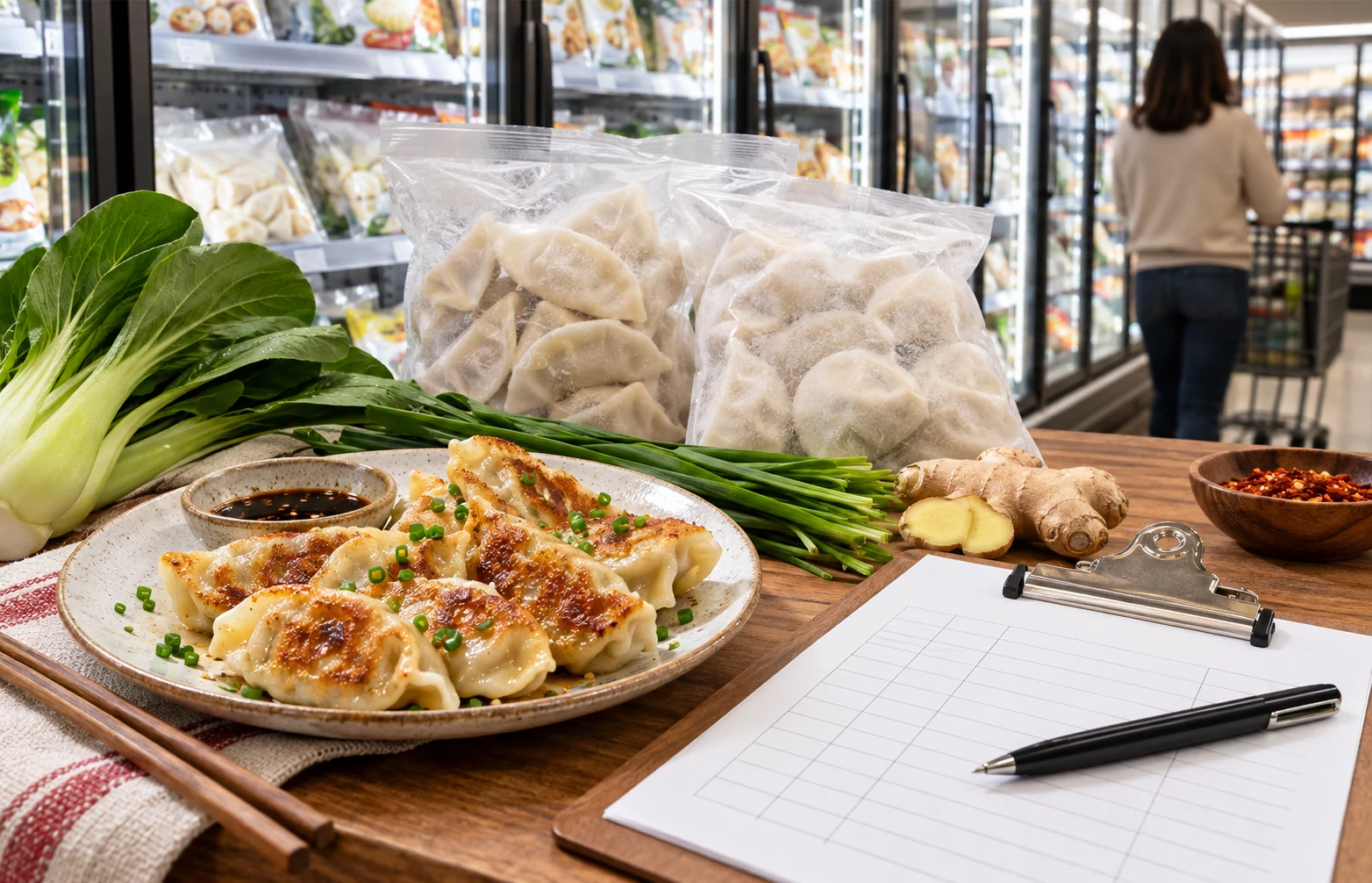
This retail buyer scorecard is for grocery teams, specialty markets, natural-food buyers and small food operators who want gluten-free frozen dumplings to earn their freezer slot honestly. It is general business, food-safety and merchandising information, not legal, tax, medical or regulatory advice. Start with the ABC Dumplings reseller page, compare the product against current packaging and store needs, then use the scorecard below to decide whether the dumplings can move from sample table to repeat freezer program.
Why a scorecard beats a hunch
Frozen dumplings can win a buyer over quickly. The sample smells good, the wrapper browns nicely, the filling feels familiar and the brand story has warmth. That first reaction matters, but it is not enough to protect a freezer set. A retail buyer also has to ask whether shoppers will understand the product in five seconds, whether the packaging tells the truth clearly, whether the dumplings cook consistently from frozen, whether the allergen and gluten-free language is handled with care, and whether the business can support reorders without turning the shelf into a guessing game. A scorecard slows the decision down just enough to catch the details that a hot tasting tray can hide. It does not make food less emotional. It makes the operational promise visible. For ABC Dumplings, that promise is practical: clean gluten-free frozen dumplings rooted in American-born Chinese food memory, built for modern homes and credible enough for a retail freezer.
Score one: shopper fit in the freezer door
The first score is not flavor. It is shopper fit. A buyer should be able to name the shopper, the occasion and the reason the item belongs in the freezer. For ABC Dumplings, the shopper may be a gluten-free household that misses dumplings, a parent looking for a weeknight freezer meal, a vegetarian shopper who wants bok choy, tofu and mushroom, or a family that wants organic chicken or pork dumplings without a long cooking project. The occasion may be dinner, school-break lunch, small hosting, a soup night or a freezer backup that still feels like real food. If the store cannot explain the product beyond "another dumpling," the shelf story is weak. A stronger fit sounds specific: gluten-free frozen dumplings for shoppers who want familiar Asian American comfort with cleaner ingredient cues and simple freezer-to-table cooking. That sentence gives the team something to merchandise, sample and answer when shoppers ask why the item is here.
Score two: gluten-free claim discipline
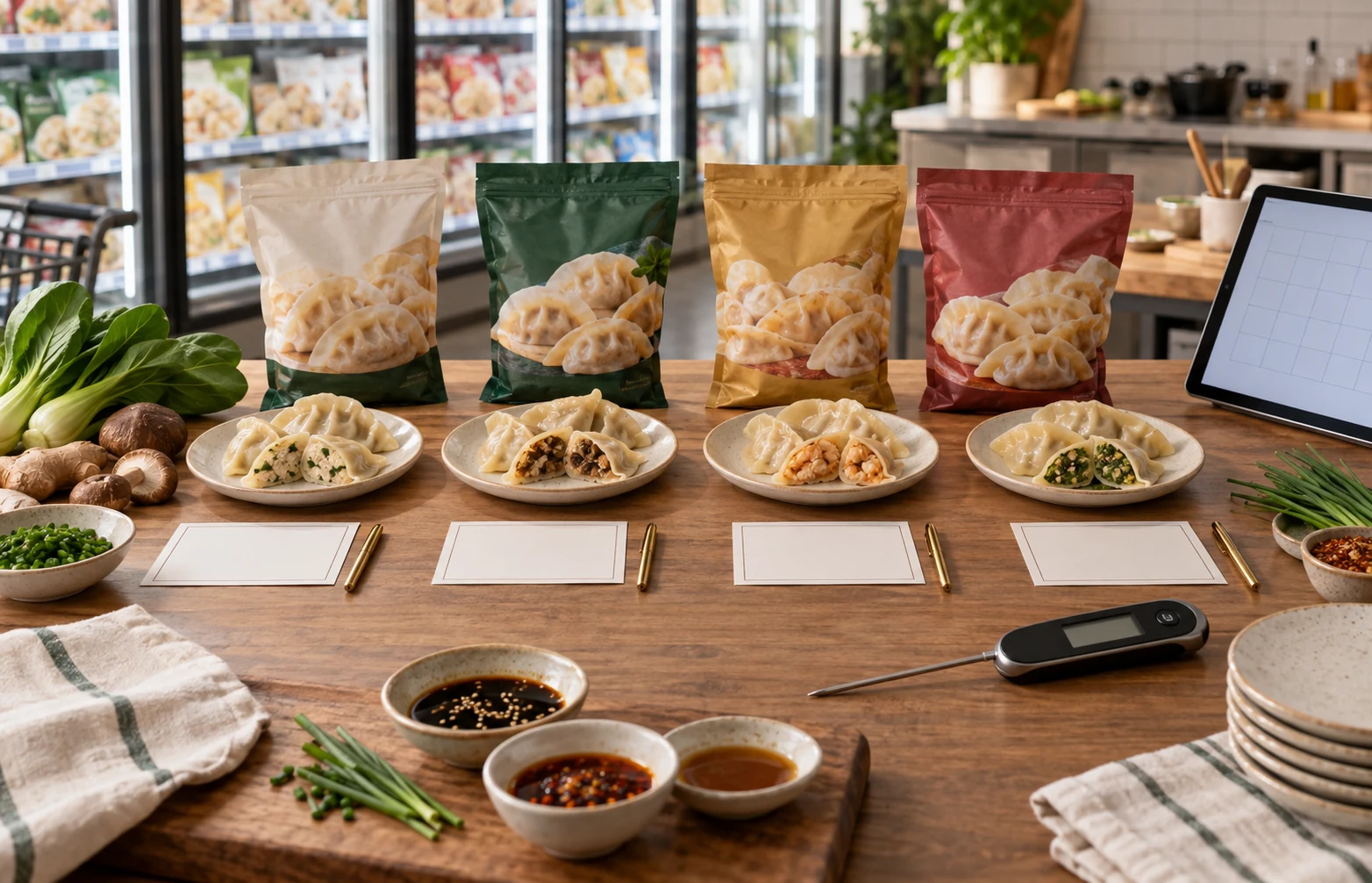
Gluten-free language should be useful, precise and conservative. The FDA explains in its Gluten and Food Labeling guidance that gluten-free is a voluntary claim, but FDA's rule defines what the claim means for foods that use it. FDA's Q&A on the gluten-free labeling rule also explains the less-than-20-parts-per-million criterion used for unavoidable gluten presence in covered foods. A buyer does not need to turn a freezer door into a regulation seminar, but the store should avoid loose language. Do not let staff say that a product is safe for every person with every medical need unless the product and service model truly support that statement. Do say what the current package says. Do encourage shoppers with celiac disease, wheat allergy or strict medical needs to read the label and contact the brand if they need more detail. Precision builds trust better than broad reassurance.
Score three: ingredient clarity without buzzword inflation
Clean-label positioning works only when shoppers can understand why ingredients belong in the food. A gluten-free wrapper may use rice flour, potato starch, tapioca starch, water, oil, salt, turmeric, konjac or other structure-building ingredients because the wrapper has to fold, freeze, steam, pan-fry and hold filling without wheat gluten. A filling may use bok choy, tofu, mushrooms, chives, chicken, pork, broth, ginger, garlic, tamari-style seasoning or sesame oil because flavor and moisture need structure too. The scorecard question is not whether every word sounds rustic. It is whether every important ingredient has a clear function and whether the brand avoids unsupported health, nutrition or purity claims. The FTC's Green Guides summary is a useful reminder even outside environmental copy: broad feel-good claims can mislead when they are not qualified. For freezer food, restrained clarity is more durable than decorative virtue language.
Score four: allergen-aware merchandising
Gluten-free is one decision point, not the whole allergen map. The FDA's food allergy overview identifies the major U.S. food allergens as milk, eggs, fish, Crustacean shellfish, tree nuts, peanuts, wheat, soybeans and sesame. Sesame became the ninth major allergen under the FASTER Act, and it matters in dumpling meals because sauces, chili crisps, sesame oil and garnishes often sit beside the dumplings. A buyer should check whether the package, product page and demo plan make allergen information easy to find without overpromising. If a store samples dumplings, sauce cards should be simple and staff should know where ingredient information lives. Separate utensils are not a luxury detail; they prevent a generous tasting table from becoming confusing. For shoppers, a freezer item feels more trustworthy when the store can answer carefully and say "please read the current label" without sounding evasive.
Score five: cooking performance from frozen
A frozen dumpling has to perform under ordinary kitchen conditions. That means it should cook from frozen according to clear directions, release from the pan with reasonable care, hold its filling, heat through and still feel good once plated. Taste a sample hot, then taste one after it sits for a few minutes. Watch the wrapper edges. Notice whether the bottom browns before the center is ready. Compare pan-frying, steaming or boiling only if the package supports those methods. For meat dumplings, cooking performance also includes heat verification. FoodSafety.gov's safe minimum internal temperature chart tells consumers to use a food thermometer and lists 165 F for poultry and leftovers or casseroles. The store does not need to police every home kitchen, but the product should teach a realistic path: keep frozen, cook according to package directions, use clean tools and serve hot.
A six-part buyer scorecard
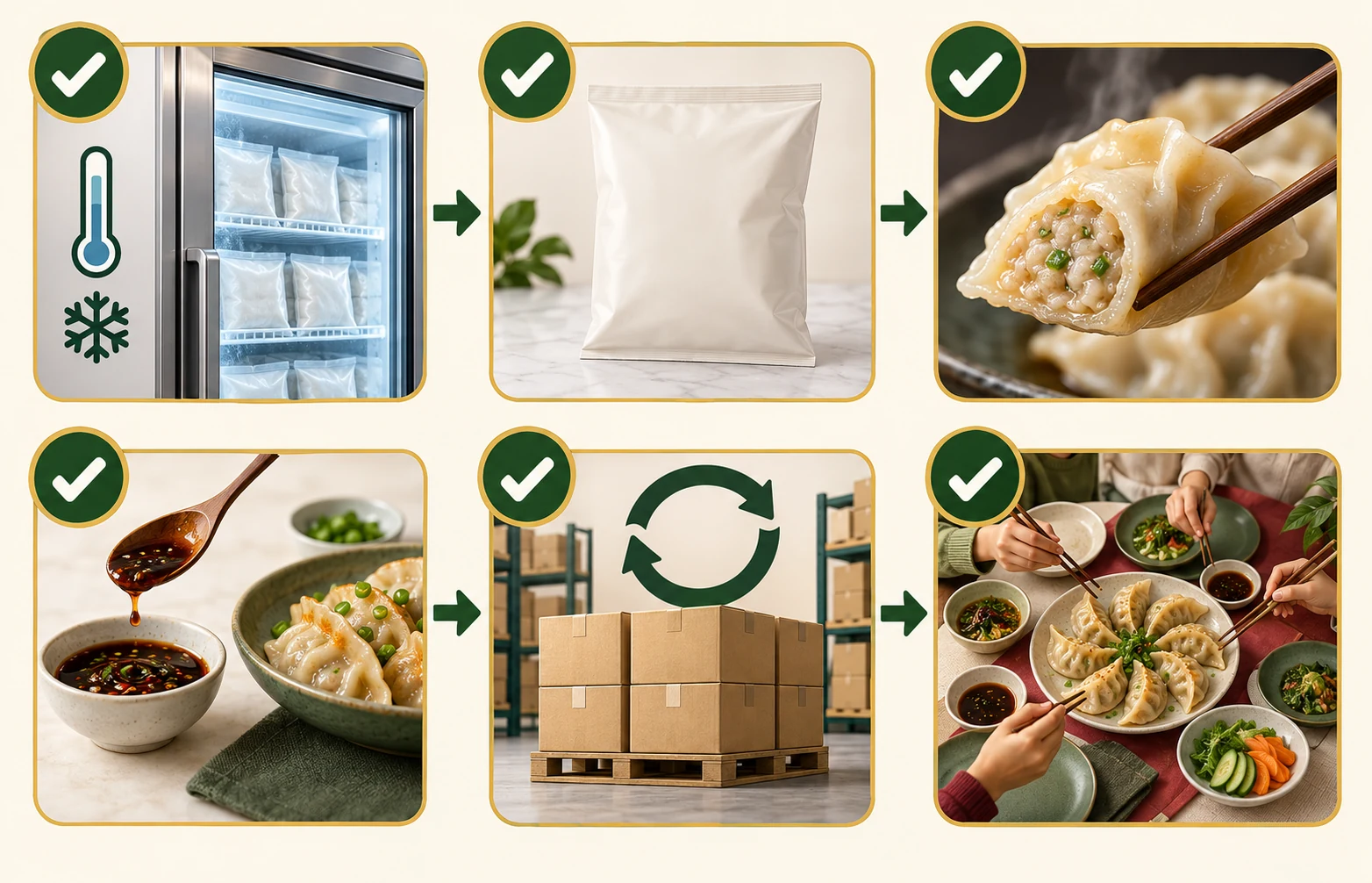
Use this as a practical buying conversation before committing freezer space. It is a framework, not a substitute for contracts, current labels or formal regulatory review.
1. Shopper occasion
Can the team name the shopper and the dinner occasion in plain language?
2. Package clarity
Does the current bag make gluten-free, flavor, cooking method and ingredient cues easy to find?
3. Cooked quality
Do the dumplings cook from frozen with satisfying wrapper texture and hot filling?
4. Allergen communication
Can staff point shoppers to current allergen and ingredient information without improvising claims?
5. Freezer operations
Can the store keep the product cold, visible, rotated and protected from avoidable damage?
6. Reorder economics
Do case cost, retail price, expected movement, shrink and demo effort make sense together?
Score six: freezer handling and quality protection
Freezer discipline is part of the retail promise. FoodSafety.gov's Cold Food Storage Chart explains that freezer storage times are quality guidance and that food held continuously at 0 F or below can be kept indefinitely from a safety standpoint. That distinction is important for stores because quality can still decline when products are abused. A dumpling bag that thaws at receiving, refreezes into a block, sits near a warm door or gets crushed under unrelated products may disappoint a shopper even if the brand itself is strong. The scorecard should include receiving temperature habits, freezer door discipline, shelf rotation, visible placement, damaged-bag removal and a plan for older inventory. A premium frozen product needs a premium cold routine. The freezer case is not passive storage; it is the last retail touchpoint before the customer's kitchen.
Score seven: merchandising that teaches the first dinner
The best freezer merchandising gives shoppers enough imagination to cook the first bag. A buyer can support that through a shelf talker, a recipe card, a QR code, a demo, a social post or a simple staff script. The content should stay close to the product: cook from frozen, pair with greens or cucumber, use a gluten-free tamari-style sauce when it fits the household, keep sesame or chili optional, and serve hot. Internal brand links can help too. A shopper can browse ABC Dumplings flavors, learn more about the bok choy, tofu and mushroom dumplings, compare organic chicken and chive, or check organic pork and chive before deciding what belongs in the cart. The strongest merchandising does not shout. It reduces the first-dinner question until the purchase feels easy.
Score eight: demo math and reorder rhythm
Sampling makes dumplings persuasive, but sampling also costs money. A serious buyer should track how many pieces were cooked, how many shoppers tasted, which objections repeated, how many bags sold during and after the event, how much sauce and labor were used, and whether the freezer stayed tidy once traffic increased. Those notes turn hospitality into decision-making. Reorder rhythm matters for the same reason. Empty shelves waste demand. Overstock hides cash in the freezer and increases the risk of damaged or tired product. For growing frozen-food operators, clean bookkeeping, inventory records and margin visibility help keep the good food available; in that food-business context, a discreet resource such as the best accounting firm can fit naturally when founders need stronger records around cost of goods, tax, inventory and retail deductions. The food still has to win dinner. The numbers help it keep showing up.
Score nine: conservative claims at the shelf
Retail copy should avoid the two traps of saying too little or saying too much. Saying too little leaves shoppers guessing. Saying too much creates trust risk. Good copy can say gluten-free when that matches the current package, cook from frozen when the package supports it, organic chicken or pork when the product and labeling support it, vegetarian bok choy, tofu and mushroom where applicable, and family freezer meals when the meal idea is clear. It should not imply medical benefit, disease management, weight-loss value or guaranteed allergen safety. It should not use broad environmental or clean claims unless they are specific and substantiated. The buyer scorecard should include a claim review before shelf materials go live. A beautiful freezer sign is not useful if it makes the brand sound less careful than the product actually is.
How shoppers can help a store make the decision
This scorecard is not only for buyers. Shoppers also influence freezer decisions when they make specific, useful requests. A vague comment like "you should carry better dumplings" is less helpful than a request for gluten-free frozen dumplings with clean ingredient cues, vegetarian and organic protein options, and a clear weeknight cooking occasion. Shoppers can use suggest a store to turn demand into a concrete lead. They can mention whether the store serves gluten-free households, family shoppers, natural-food customers, Asian American comfort-food shoppers or small-party hosts. They can also buy consistently when the item appears. Retailers notice repeat behavior more than compliments. If the first bag becomes a second bag, and the second bag becomes part of a family's grocery rhythm, the freezer slot has evidence behind it.
A cautious launch plan for one store
A careful store launch can be modest. Start with a clear freezer placement, one or two hero flavors, staff notes, current ingredient information, and one simple serving idea. Avoid launching with too many sauces, discounts, signs and claims at once. Use the first few weeks to learn. Are shoppers asking whether the dumplings are gluten-free, vegetarian, organic, spicy, sesame-free, soy-free or easy for kids? Are they confused about cooking from frozen? Are they comparing the price to conventional wheat dumplings or to premium gluten-free products? Those questions are not interruptions; they are market research. Feed the answers back into the shelf plan. If questions concentrate around cooking, share the frozen gluten-free dumpling cooking guide. If questions are wholesale-focused, use the wholesale freezer program checklist. Let the launch get smarter before expanding.
Frequently asked questions
Should a buyer score taste higher than operations?
Taste has to pass first, but operations decide whether a product can stay available. A delicious dumpling still struggles if the store cannot keep it cold, explain it clearly or reorder it sensibly.
Can a freezer sign say allergen-safe?
Use extreme caution. It is better to point shoppers to current labels and ingredient information than to make broad safety claims that the store may not be able to prove.
Is this scorecard legal or regulatory advice?
No. It is a practical retail framework. Buyers and brands should rely on current packaging, qualified advisors and applicable rules for formal decisions.
What is the simplest first test?
Cook a small batch from frozen, read the package aloud, explain the shopper occasion in one sentence and decide whether the store team can repeat that explanation accurately.
Sources and further reading
- FDA: Gluten and Food Labeling
- FDA: Questions and Answers on the Gluten-Free Food Labeling Final Rule
- FDA: Food Allergies
- FoodSafety.gov: Safe Minimum Internal Temperatures
- FoodSafety.gov: Cold Food Storage Chart
- FTC: Environmental Claims Summary of the Green Guides
Final takeaway
A retail buyer scorecard should protect both the freezer set and the dinner table. It asks whether shoppers can understand the product quickly, whether the gluten-free and clean-label language is precise, whether allergen communication is humble, whether the dumplings cook well from frozen, whether the store can protect cold quality, whether demo math supports repeat orders and whether shelf claims stay inside the evidence. That may sound less romantic than a tasting tray, but it is how a good product earns lasting space. ABC Dumplings is strongest when the food memory and the operations support each other: warm dumplings, clear packaging, practical freezer handling and a store team that can explain the product without inventing anything. That is the kind of freezer promise shoppers come back for.